Bucharest Through the Eyes of Foreign Writers: Fascination, Horror, Pleasure and Plenty of Prejudice
By Eddie Țone
- Articles
- 25 SEP 26
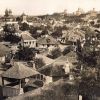
Bucharest often bewildered those who arrived here for the first time in the past. Travellers might see elegant houses, drawing rooms where French was spoken and theatre performances, then, just a few streets away, roads covered in dust or mud. The contrasts were so visible that they recur constantly in the accounts of foreign visitors.
Over the years, aristocrats, diplomats, memoirists and writers all passed through the city. Some saw it only briefly. Others stayed long enough to become familiar with its customs, high society, neighbourhoods and slums, and the inconveniences of everyday life. Hence the differences between their accounts. The Bucharest described by a traveller at the end of the eighteenth century obviously bears little resemblance to the city seen during the interwar years. Nor did those writing about it look at the city in quite the same way.
Still, several themes recur across very different periods. Foreigners notice the social contrasts, the bustle of fashionable life and the somewhat chaotic way in which the city had grown. Some find it picturesque. Others are irritated by it. There are also authors who look down on Bucharest through the usual prejudices of Westerners arriving in a part of Europe they knew very little about. This is precisely why their accounts need to be read carefully: they are important sources on old Bucharest, but also documents revealing how foreigners viewed this part of the continent. Let us take a look at some of the most significant accounts.
Lady Elizabeth Craven, 1786: French fashion reaches Mavrogheni’s court
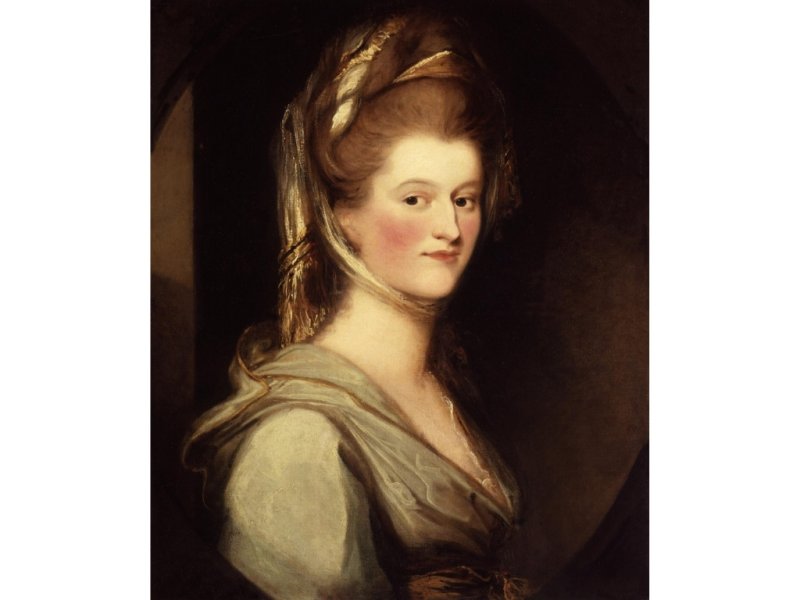 Lady Elizabeth Craven
Lady Elizabeth Craven arrived in Bucharest in the summer of 1786, during a journey that would later become the book A Journey through the Crimea to Constantinople, published in 1789. She was an English aristocrat well known in the society of her time, accustomed to European courts and mentally perfectly equipped for one of the favourite occupations of the eighteenth-century British aristocrat: examining other peoples.
The journey towards Bucharest makes an excellent impression on her. After crossing the Danube, Craven sees fertile fields and forests that form, in her account, a rich landscape. Nicolae Mavrogheni had arranged horses, provisions and an escort for her, while boyars rode out to meet her as she approached the capital. The reception had all the ingredients of an official visit, which also explains the privileged perspective of her journal. Socially speaking, Lady Craven sees Bucharest from above.
At the princely court, she enters the world of the women in Mavrogheni’s family, and the conversation produces one of those tiny details worth an entire chapter of cultural history. After the customary polite questions, the princess wants to know whether her visitor is wearing clothes “in the French fashion”. In Phanariot Bucharest in 1786, Paris had already become a reference point for clothing. The West reached the city through dresses before it arrived through boulevards.
Craven also looks at the women around her through the social lens of an Englishwoman from high society. Research into female education in the Principalities records her suspicions about the literacy levels of the women she encountered and the curiosity with which she examined their customs. Here we encounter the first significant prejudice in this series of Western travellers. Cultural difference quickly becomes cultural hierarchy, while the visitor comfortably assumes the position of someone measuring other people’s progress by her own yardstick.
Even so, her account remains extraordinarily valuable. Through Lady Craven’s eyes, we enter for a few moments a Bucharest that predates photography, where Western fashion was already beginning to unsettle the Oriental setting.
William Wilkinson, 1820: Bucharest looks splendid from a distance. Getting closer spoils the effect
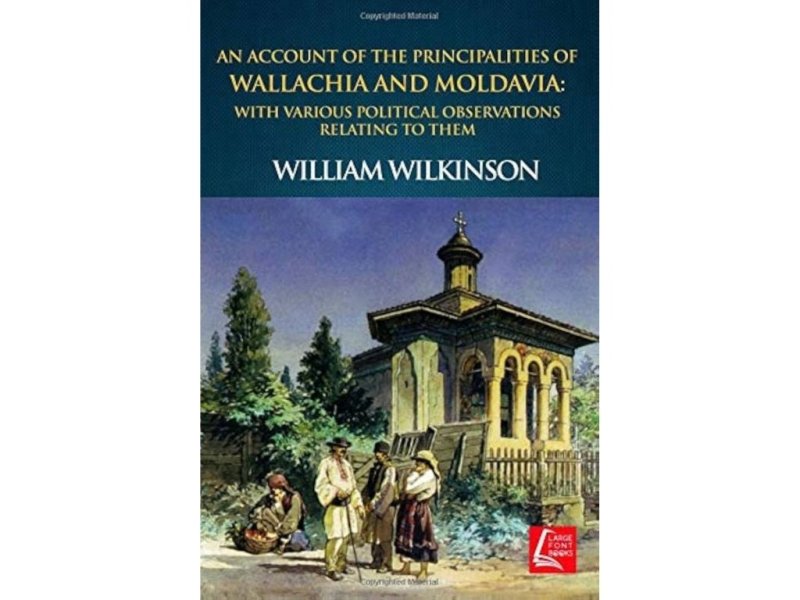
A few decades later, the British William Wilkinson finds a considerably less seductive city. He had served as British consul and lived mainly in Bucharest between 1813 and 1816. In 1820, he published in London An Account of the Principalities of Wallachia and Moldavia, one of the important Western accounts of the Principalities at the beginning of the nineteenth century.
Wilkinson describes Bucharest as a large and dirty city built on low, marshy ground. Houses were scattered among courtyards and gardens, giving the city an abundance of greenery. It is precisely this greenery that provides him with his most memorable comparison.
From a distance, Bucharest looks to him like “fine scenery of a theatre”. Up close, the scenery becomes “a coarse daub”. It is probably one of the most acidic urban reviews the Romanian capital has ever received.
The main problem was the streets. Bucharest was still using wooden “bridges”, made from beams laid crosswise. Rain produced liquid mud, while summer turned the surface into black dust carried away by the wind. Beneath such streets ran improvised drains that carried filth towards the Dâmbovița River. Wilkinson regards them with sanitary horror and recommends paving the streets with stone.
His image carries particular weight because it comes from a resident, and the city he describes predates the major urban interventions introduced under the Organic Regulations. During the 1830s, more coherent municipal institutions and the first systematic modernisation programmes would emerge. Wilkinson’s Bucharest was still at the stage where the capital had the ambitions of a European city and the infrastructure of an extremely daring administrative experiment.
Florence K. Berger, 1877: the “city of pleasure” and the Bucharest that defies classification
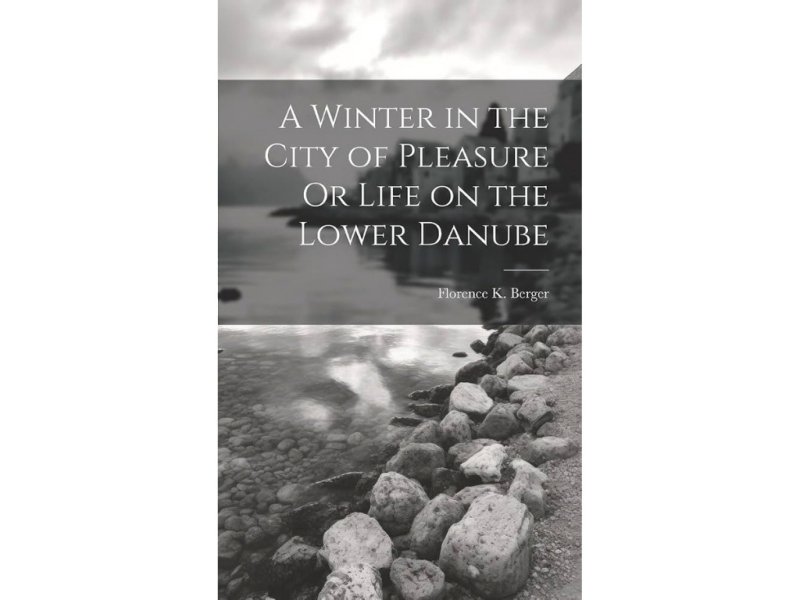
By around 1877, the tone had changed. Bucharest had already entered another era, and Florence K. Berger, a British writer and traveller, practically devoted an entire book to it, with a splendidly indiscreet title: A Winter in the City of Pleasure; or, Life on the Lower Danube.
The volume includes chapters about Bucharest, drives along the Șosea and social life, which gives a fair indication of where the author’s interests lay. The capital had already become spectacular enough for a visitor to spend an entire winter studying its amusements.
Berger perhaps formulates the city’s identity problem better than anyone. In her reading, Bucharest escapes both East and West. She regards it simply as… Bucharest, an urban organism governed by its own rules. Life strikes her as comfortable and intensely social, made up of customs originating in different cultural spaces. Yet she also sees Oriental laziness and languid luxury here, typical expressions from the British imaginary concerning Eastern Europe at the time.
What is interesting is how observation and prejudice coexist perfectly. Berger correctly notices the city’s hybrid character, then translates it through the cultural vocabulary available to a Victorian writer. The Orient means sensuality and slowness. The West means discipline and intellect. Bucharest is having fun somewhere in the middle and politely refuses to solve the problem.
The title “City of Pleasure” says enough. Bucharest entertainment had itself become a tourist attraction.
Around the same period, other travellers were also noticing the city’s café culture. Research devoted to foreign accounts mentions the observations of the American William Eleroy Curtis, who would write in 1911 that the number of restaurants and cafés in Bucharest seemed enormous in relation to its population. The capital had already discovered one of its most enduring vocations: sitting at a table with the seriousness of a full-time profession.
Paul Morand, 1935: Bucharest seen by a man who knew it from the inside
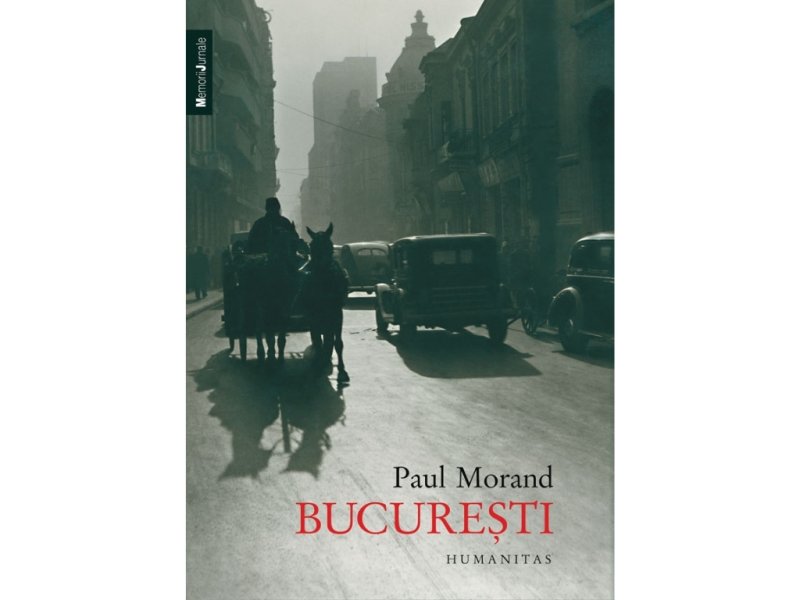
With Paul Morand, things become somewhat more complicated. The Frenchman was a diplomat and established writer, a friend of figures from the Paris literary world and, from 1927, the husband of Elena Suțu, née Chrissoveloni. Bucharest was a familiar world to him. His volume Bucarest was published by Plon in 1935 and remains one of the best-known foreign books devoted to the Romanian capital.
Morand sees the city from an aeroplane, arriving at Băneasa at a time when travelling by air was still a modern experience in the most literal sense. He immediately notices Bucharest’s vastness and low density. He finds it almost as large as Paris in surface area, but with a much smaller population spread across a sea of greenery.
For him, geography explains the city. Bucharest stands at a crossroads between Central Europe and Constantinople, between the north and the eastern Mediterranean. Băneasa airfield, with its flights to Paris and connections to other European capitals, confirms the city’s place within the modern continental network.
He is fascinated by the mixture. In the streets he sees Western fashion alongside Oriental remnants, motorcars alongside horse-drawn carriages. His Bucharest pulses quickly and lives its social life with almost theatrical energy. Capșa occupies the centre of this universe. Morand calls it “the heart of the city, topographically and morally”, a phrase that perfectly captures the café’s role in interwar Bucharest.
Morand also injects a little French acidity into the story of Latin brotherhood. The romantic formula describing Romania as France’s “Latin sister” strikes him as too generous; he prefers the degree of “cousin”. His affection for Romania sits comfortably alongside an evident pleasure in poking at local myths.
His portrait remains seductive precisely because of its ambivalence. Bucharest amuses, attracts and intrigues him. Morand sees its urban incoherence and turns it into personality.
Sacheverell Sitwell, 1937: the Englishman who discovers a country almost absent from the West’s mental map
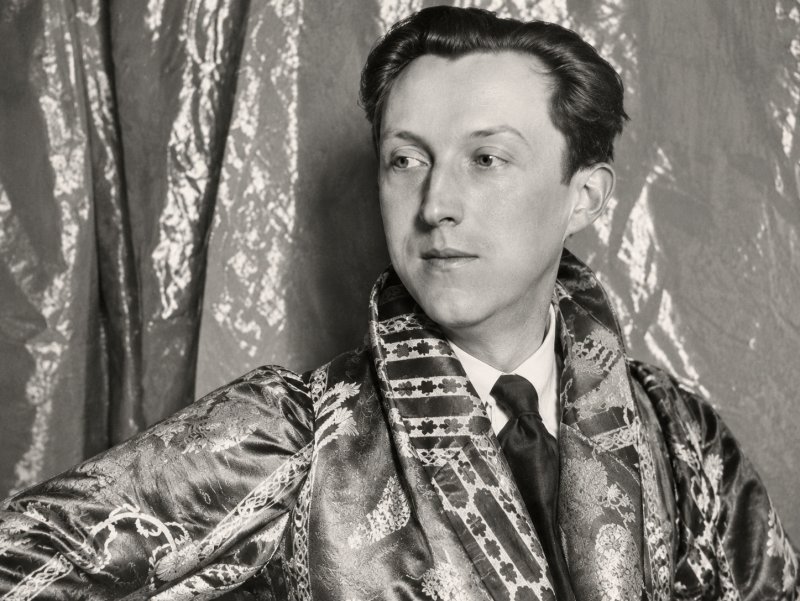 Sacheverell Sitwell / Photo: Wikipedia
The British writer Sacheverell Sitwell arrived in Romania in 1937 at the invitation of the Callimachi family and published Roumanian Journey a year later. The journey lasted four weeks, during which the author entered aristocratic circles and even met King Carol II.
His first observation says a great deal about the Western perspective of the period. Romania appeared to him as one of the European countries that was scarcely known in Britain. Bucharest and Sinaia were among the few points of reference in a space that was still perceived as exotic.
Sitwell, however, brings a more generous perspective than many of his predecessors. He is interested in architecture and art, and his encounter with Romania produces curiosity rather than judgement. Contemporary studies of British travel literature have even pointed to the idealised character of his book, influenced by his privileged itinerary and access to the aristocracy.
And here we encounter the other side of tourist prejudice. Wilkinson had seen the city’s insanitary conditions and almost turned them into its defining essence. Sitwell moves through an elegant Romania and risks turning privilege into a national landscape. Both tell truths, but each is looking through a very particular window.
Patrick Leigh Fermor, 1934: he walks into a brothel thinking it is a hotel and discovers high society
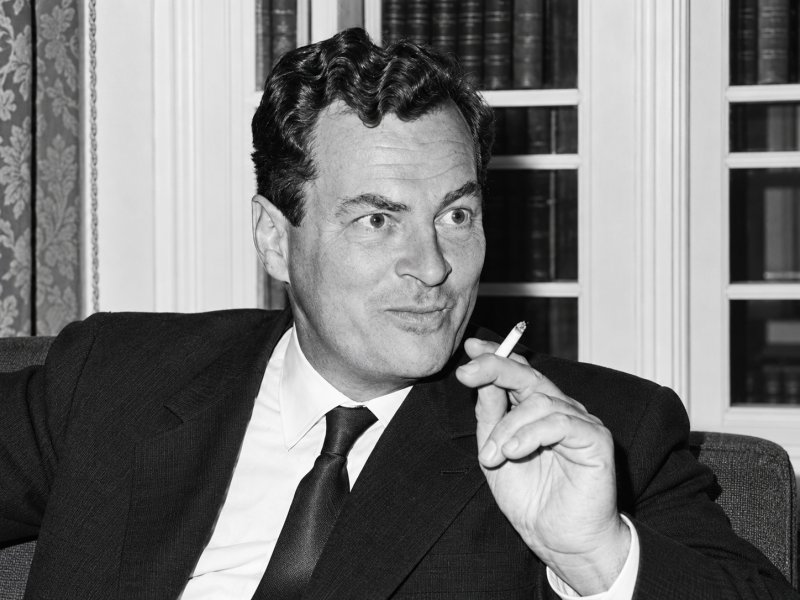 Patrick Leigh Fermor / Photo: Wikipedia
Patrick Leigh Fermor, the most highly regarded British travel memoirist of the twentieth century, an unconventional scholar and legendary secret agent during the Second World War, probably provides the most charming arrival in Bucharest in all of travel literature.
In 1933, aged just 18, he set out on foot from the Netherlands towards Constantinople. Romania occupied an important part of his route, and his experiences would later appear in his books. The Bucharest episode in The Broken Road, assembled from his manuscripts and published posthumously in 2013, begins magnificently.
Young Paddy finds a place called the Savoy-Ritz and assumes it is a modest hotel. He leaves his luggage there. That evening, he discovers the true nature of the establishment: it is a brothel.
The situation could have become sordid. In Fermor’s hands, it becomes tender. The women welcome him into the kitchen, give him wine and food, treat him affectionately and are amused by his innocence. The surviving account includes an image of the girls feeding him pieces of chicken directly from their forks with almost maternal care.
From there, Fermor’s social trajectory rises spectacularly. He enters Bucharest’s Francophile aristocratic world, goes to the opera and attends evenings where caviar and alcohol circulate with impressive generosity. A University of St Andrews study devoted to Fermor and Morand emphasises precisely the importance of discovering this Bucharest elite for the young Englishman.
There is something profoundly human about Fermor’s Bucharest. Social class changes from one doorway to the next. In the course of a single day, the city carries him from the fringes of respectability into the world of opera houses and drawing rooms. It sounds like the plot of a picaresque novel. It was, quite simply, Tuesday.
Olivia Manning, 1939: the capital seen at a moment when Europe was collapsing
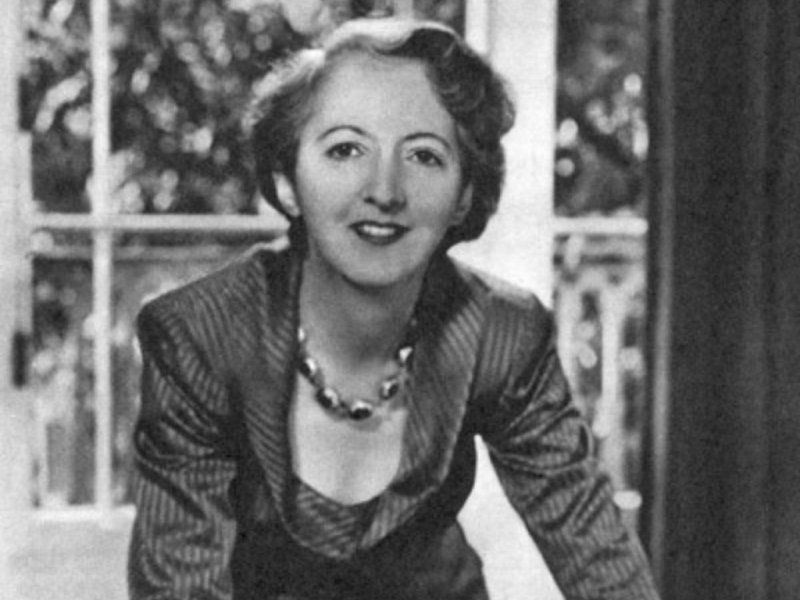 Olivia Manning / Photo via The Spectator
Olivia Manning, a British writer, novelist and poet best known for novels inspired by her own travels and her experiences during the Second World War, arrived in Bucharest in 1939 with her husband, R.D. Smith, a British lecturer. The experience became the material for the Balkan Trilogy, beginning with The Great Fortune in 1960. The characters are fictional, but the setting comes directly from the author’s life.
The city Manning encountered was living under the pressure of war. Polish refugees were arriving after the German invasion, Berlin’s political influence was growing, and the foreign community anxiously watched the map of Europe. The Bucharest of elegant cafés had also become a city of rumours.
Manning views Romania with a harshness that later generated critical discussion. The University of Bucharest summarises her perspective through phrases such as “a strange, half-Oriental capital” and “primitive, bug-ridden and brutal”. She enjoys the so-called cafe society, but contact with urban poverty fills her with revulsion.
Studies of her work have discussed its element of “Balkanism”: the Western tendency to transform Southeastern Europe into an intermediary territory portrayed as violent and incompletely modernised. At the same time, the biography published by Oxford University Press shows how closely Manning’s image of Bucharest was tied to her own experiences, the beginning of her marriage and the anxiety of war.
The literary result nevertheless remains powerful. Bucharest appears alive and uneasy, filled with people who continue going to cafés while the continent begins to burn.
A different city for every foreigner
Placed side by side, these accounts resemble photographs of the same person taken at different ages. Lady Craven encounters the Phanariot court and its interest in French fashion. Wilkinson encounters the wooden streets and foul smells of the early nineteenth century. Florence Berger discovers social pleasure. Morand sees the hurried, Francophile interwar metropolis. Fermor accidentally walks into a brothel and emerges, metaphorically speaking, through the drawing room of the aristocracy. Manning arrives when the party is nearing its end and war is already knocking at the door.
The most interesting thing, however, is the mechanism of observation itself. Foreigners arrive in Bucharest and constantly try to compare it with something familiar. This is why Paris inevitably appears. Constantinople lurks in the opposite direction. London supplies the sanitary standards. And the West, in general, provides the measuring stick. Except that… Bucharest slips through their fingers every single time.
Florence Berger had probably understood the situation best as early as 1877. Bucharest was… Bucharest. The formula sounds almost banal until you read two centuries’ worth of people trying to prove otherwise. And the capital continues, with admirable stubbornness, to ruin their theory.
You may also like: How Bucharest Residents Spent Autumn 100 Years Ago