Who was Iliaș Vodă and why does a street in southern Bucharest bear his name?
- Articles
- 09 NOV 26
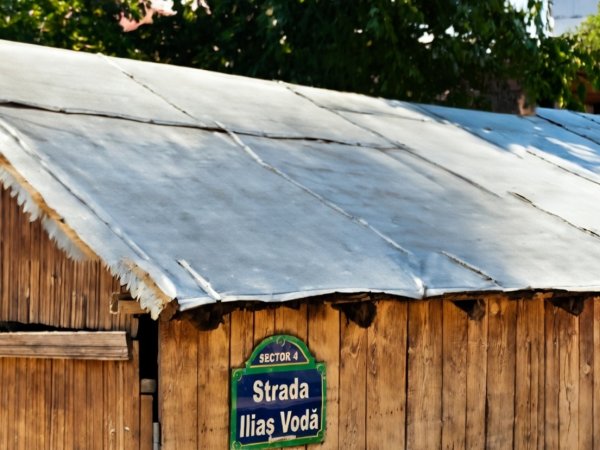
In southern Bucharest, there is a street so short that it can easily go unnoticed among the arteries of the Berceni neighborhood. Strada Iliaș Vodă begins at Strada Șoimuș and preserves a name that refers not to a figure from Bucharest’s history, but to a ruler of Moldavia who lived in the 15th century. The name is all the more interesting because the street was given this name in 1941, as part of a major renaming operation affecting the street network of the suburban commune of Șerban-Vodă. At that time, 269 street names were changed, and several roads were given the names of Romanian rulers. Among them were Constantin Vodă, Grigore Vodă, Ștefan Vodă, Vlad Vodă and Iliaș Vodă, five names that have survived to this day. But who exactly was Iliaș Vodă? Behind the seemingly solemn name of a small neighborhood street lies the story of a Moldavian ruler caught up in one of the most violent dynastic conflicts of the Romanian Middle Ages, a conflict that ended with his deposition and blinding.
Why was the street named after a Moldavian ruler?
To understand how Strada Iliaș Vodă appeared in Berceni, it is first necessary to look at the administrative situation of the area during the interwar period. Southern Bucharest was not yet entirely part of the municipality. The Bellu area and the surrounding settlements went through several administrative reorganizations, while the commune of Șerban-Vodă was one of the important administrative structures in this part of the city. In 1926, the commune was incorporated into Bucharest’s Sector III Albastru, while urban development continued in the following decades.
It was against this background that the 1941 decision to change a very large number of street names was made. Sources dedicated to the history of the Berceni neighborhood state that, in July of that year, 269 names in the commune of Șerban-Vodă were changed. Sixteen of the renamed streets received the names of rulers, without the official names always specifying which historical figure was intended.
In the case of Strada Iliaș Vodă, the sources consulted do not provide a direct documentary explanation for why the Nomenclature Commission chose this particular ruler. Therefore, it cannot be stated with certainty that the choice was connected to a specific event in Moldavian history or to a particular symbolic intention.
What is certain is that the name was introduced during a period when the authorities frequently used historical figures in reorganizing the urban street network. Thus, the very short street in present-day Berceni received the name of a ruler who had lived and reigned almost five centuries earlier.
Iliaș I was the son and successor of Alexandru cel Bun
Iliaș, known in historical sources as Iliaș I, was the eldest son of Alexandru cel Bun. Unlike some rulers who reached the throne without prior political experience, Iliaș had been associated with his father’s rule as early as 1414. This gave him considerable experience before Alexandru cel Bun died on January 1, 1432.
Following his father’s death, Iliaș took the throne of Moldavia. His first reign began in January 1432 and ended in 1433. Thus, the description that he ruled for only “a little more than a year” is approximate; traditional chronologies indicate a reign lasting nearly twenty months.
Iliaș’s main problem was not a lack of experience, but his conflict with his half-brother, Ștefan II. The two were sons of the same father, Alexandru cel Bun, but had different mothers. In an era when succession to the throne did not follow a simple and rigid rule, such family ties did not prevent bitter struggles for power.
The rivalry between the two brothers would turn Moldavia into a scene of political and military conflict, involving both domestic factions and figures from outside the principality.
Ștefan II challenged his brother’s claim to the throne
Ștefan II rebelled against Iliaș, and the conflict between the brothers quickly became violent. Outside allies also became involved, including rulers of Wallachia. Historical sources indicate that Ștefan received the support of Alexandru Aldea, while Vlad Dracul is mentioned in the context of the political and family relationships connecting the elites of Moldavia and Wallachia.
In 1433, Iliaș lost the throne and fled to Poland. He subsequently attempted to return to Moldavia, but the confrontation with Ștefan continued. In 1434, he suffered another defeat at Dărmănești, and his position once again appeared to be hopeless.
The political changes that followed the death of the Polish king Władysław II Jagiełło offered Iliaș another opportunity. The new king, Władysław III, supported his cause, and Iliaș returned to Moldavia in 1435. The ensuing military conflict failed to produce a decisive victory for either side, and the two brothers eventually agreed to share power.
Moldavia had two rulers at the same time
The following period is one of the most unusual chapters in the medieval history of Moldavia. Iliaș and Ștefan II came to exercise authority jointly, each maintaining his own sphere of influence. Iliaș remained associated with the northern part of the country, with Suceava as his principal political center, while Ștefan controlled the southeastern regions, including important areas around Vaslui and the Danube fortresses.
This arrangement did not mean that the rivalry had ended. The relationship between the brothers remained fragile, while Moldavia continued to be affected by political conflicts and external incursions. Historical sources record Tatar attacks in 1439 and 1440, during a period when central authority was already divided between the two rulers.
Around 1442, the balance between the brothers broke down once again. Iliaș lost the position he held, while Ștefan came to control Moldavia on his own. The exact chronology of the final confrontations differs among historical sources, but it is certain that Iliaș returned to the struggle for the throne and was eventually captured and blinded.
How Iliaș was blinded by his own brother
The episode that transformed the conflict between the two brothers into one of the most dramatic stories in Moldavian history was Iliaș’s blinding. Grigore Ureche’s chronicle relates that Ștefan captured his brother and had his eyes put out, preventing him from ever again being able to claim the throne.
Historians are not entirely in agreement about the exact date of this event. Some chronologies place it in 1442 or 1443, while other documentary research dates it to 1444. A study published in Acta Moldaviae Meridionalis mentions Iliaș’s return to Moldavia in May 1444, followed by his defeat, capture and blinding on Ștefan’s orders.
Regardless of the chronological differences, the outcome was the same. Iliaș was permanently removed from the struggle for the throne and fled to Poland. Ștefan II remained ruler of Moldavia, but the conflict did not end with his brother’s blinding.
Several years later, Roman II, Iliaș’s son, would take revenge. In 1447, Roman killed Ștefan II and took the Moldavian throne.
A second Iliaș Vodă makes the story even more complicated
There is another detail that makes the story of the Berceni street even more intriguing. Iliaș I was not the only ruler of Moldavia to bear this name. Approximately a century later, Iliaș Rareș, the son of Petru Rareș, came to the Moldavian throne and is known in historical sources as Iliaș II or Ilie Rareș.
Iliaș Rareș ruled from 1546 to 1551, following the second reign of his father. He ascended the throne on September 3, 1546, but at the end of his reign he chose a completely different path from that of his predecessor. In 1551, he renounced the throne and went to Constantinople, where he converted to Islam and took the name Mehmed. He subsequently became governor of Silistra.
This Iliaș also had a brother who succeeded him on the throne, Ștefan Rareș. The similarities between the two stories can create confusion, but there are major differences. Iliaș I was the son of Alexandru cel Bun and fought a prolonged struggle for the throne with his brother Ștefan II. Iliaș II, the son of Petru Rareș, voluntarily abandoned the throne and converted to Islam.
Therefore, when a street in Berceni bears the simple name “Iliaș Vodă,” without a numeral or any other qualification, a small degree of historical ambiguity remains.
Why is the street called Iliaș Vodă?
The historical sources consulted do not contain a document explicitly stating that the authorities in 1941 intended to honor Iliaș I rather than Iliaș II. However, the context in which the names were established provides an important clue: the sixteen streets renamed in the commune of Șerban-Vodă were given the names of rulers, without individual explanations for each choice.
Under these circumstances, identifying Iliaș Vodă with Iliaș I is plausible, particularly because he is the figure traditionally known in Romanian history by the established name “Iliaș Vodă.” However, without the original minutes or document of the Nomenclature Commission explaining the choice, the precise reason why this particular name was selected cannot be stated categorically.
The paradox is striking. A street consisting of only a few houses in southern Bucharest bears the name of a ruler whose reign was fragmented, who fought for years to regain the throne, and who ultimately ended up blinded by his own brother. His name survived not through a monument or statue, but through a discreet street in Berceni.
A small street with a remarkable story
Strada Iliaș Vodă is one of the examples through which Bucharest’s street names preserve fragments of history that might otherwise be forgotten. In this case, the name does not refer to a Bucharest event or to a figure directly connected with the city’s development, but to a medieval ruler from the history of Moldavia.
His story is also one of succession, alliances, family rivalries and the fragility of medieval power. Iliaș I had been prepared for the throne during the lifetime of his father, Alexandru cel Bun, but his reign was marked almost continuously by conflict with Ștefan II. After years of fighting, joint rule and renewed confrontations, Iliaș was captured and blinded, while his son would take revenge several years later.
Today, few people walking through Berceni have any reason to wonder who Iliaș Vodă was. The street is small, tucked between the neighborhood’s larger arteries and lacking any spectacular feature that might reveal its history. That is precisely what makes its name so intriguing.
Behind those few dozen meters of roadway lies the story of a medieval ruler, a fratricidal struggle for the throne of Moldavia and an age in which losing political power could mean not merely exile, but mutilation. The fact that this name has remained part of Bucharest’s urban landscape from 1941 to the present day turns the small Strada Iliaș Vodă into a discreet landmark of the historical memory of southern Bucharest.
We also recommend: Bucharest Stories: In 1935, the Capital’s Unemployed Received a Loaf of Dark Bread Twice a Week