15 Beautiful Places in Bucharest That No Longer Exist Today
By Eddie Țone
- Articles
- 23 MAR 26
Bucharest knows how to shed its skin without asking anyone’s permission. If you look closely, every corner of the capital hides a story that was once in plain sight, then discreetly pushed under asphalt, concrete, or oblivion. Of course, the city doesn't disappear; rather, entire chunks break away in silence, leaving behind only yellowed photographs, stubborn memories, and a few names that sound familiar even though no one remembers exactly why. In the places where you rush by today, important, elegant, noisy, or simply human things once happened. If you have the patience to dig a little, you discover a Bucharest that still breathes—it just does so under thick layers of the present.
15. The Scala-Algiu Building
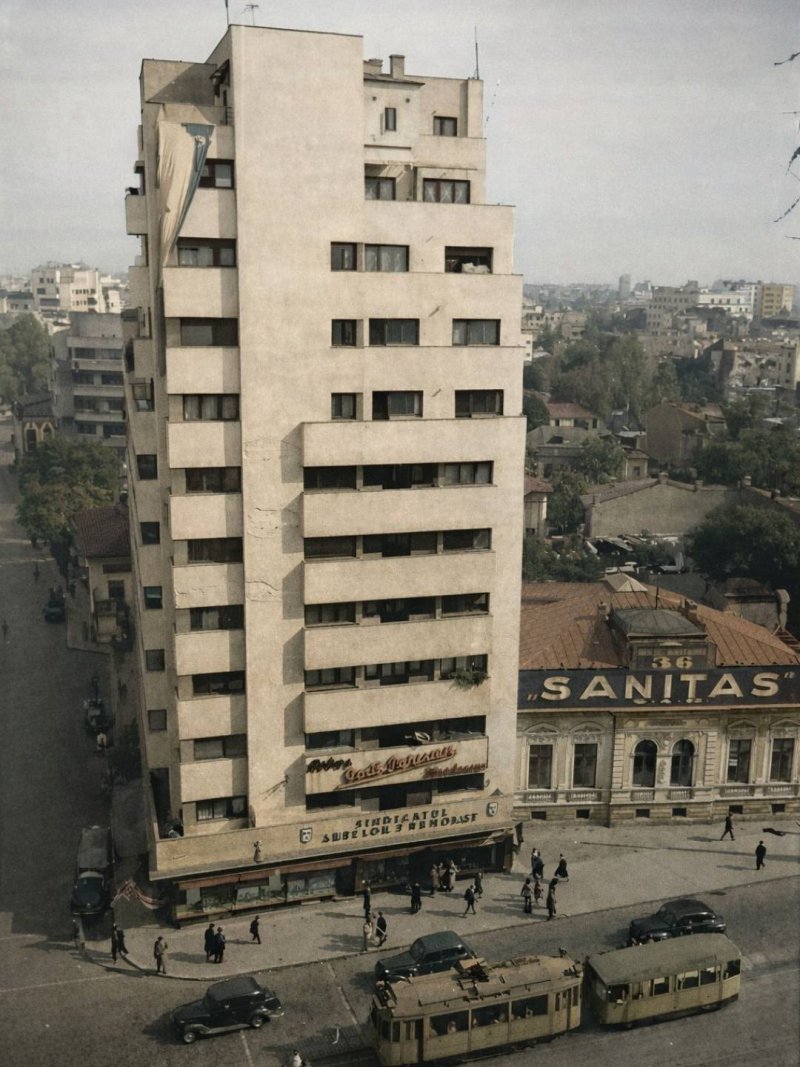
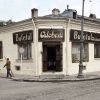
The Scala Building, a centerpiece of interwar Bucharest modernism, was erected in 1937-38 at the intersection of Magheru Boulevard and C.A. Rosetti Street. Originally named the Algiu Building (after its owner), it was built in an avant-garde Art Deco style on the site of a former one-story house. Its ground floor hosted the famous Scala confectionery, a symbol of 1950s Bucharest, which eventually gave the building its popular name.
Tragedy struck on the evening of March 4, 1977, when seismic waves hit the reinforced concrete structure, already weakened by the 1940 earthquake and risky interior renovations carried out over decades. In just a few seconds of violent swaying, the central body of the building collapsed spectacularly, turning luxury apartments into a mountain of rubble and dust atop the customers in the confectionery. The death toll there was among the highest of that dark night. The authorities of the time opted for a rapid clearing of the site. In place of the once-elegant edifice rose the current Scala II building—a much more somber construction completed in 1981, adhering to the new safety standards imposed after the catastrophe. Note: Do not confuse the Scala building with the building housing the Scala Cinema, which is located across the street!
14. Assan’s Mill (Moara lui Assan)
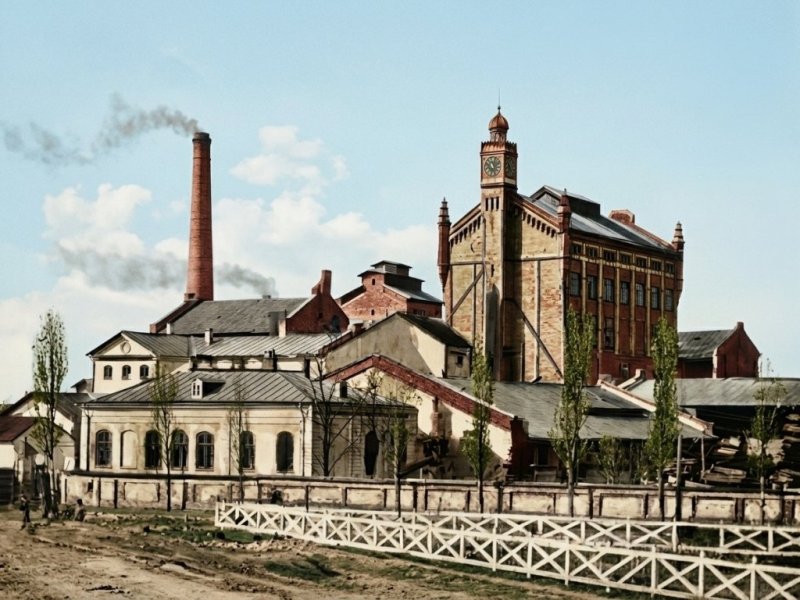
The story of Assan’s Mill begins in 1853, when George Assan and Ioan Martinovici defied the animal traction typical of the era by importing a Siegl steam engine from Vienna to build the first steam mill in Romania on the shores of Lake Colentina.
This mammoth construction, nicknamed "Assan’s Ship" due to its imposing industrial silhouette, quickly became the technological heart of Bucharest. It transformed from a simple wheat-grinding unit into a sprawling industrial complex including oil, paint, and soap factories. The Assan family continued to modernize the structure until the interwar period, adding massive concrete silos that dominated the Obor neighborhood skyline and cementing the site’s status as a monument to visionary entrepreneurship. After nationalization in 1948, decline became inevitable. The post-1990 years brought a tragic mix of abandonment, tangled restitution lawsuits, and repeated fires that eroded the historic red-brick masonry. Today, the remains of Assan’s Mill stand spectacularly and bizarrely amidst modern Bucharest—a colossal ruin preserving the entire history of the Romanian industrial revolution in its layers of dust and soot.
13. The Oteteleșanu Terrace
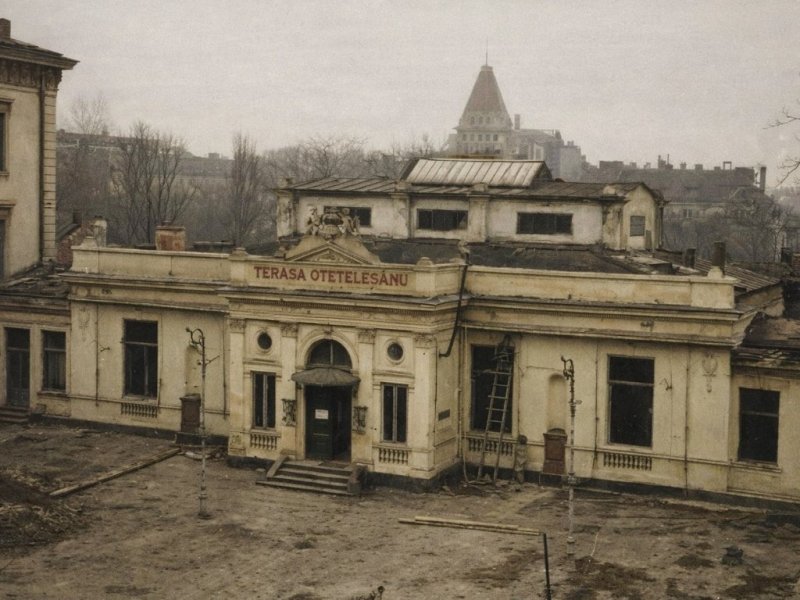
The Oteteleșanu Terrace appeared in 19th-century Bucharest as a natural extension of the elegant world created by the boyar Ioan (Iancu) Oteteleșanu. His houses on Mogoșoaiei Bridge (later Calea Victoriei) had already become a social hub—an unofficial club for grand ambitions and well-polished conversations.
Toward the end of the century, the site was transformed into a terrace-café that immediately pulsed with life, gathering writers, artists, and restless spirits like Arghezi, Minulescu, and Coșbuc. Set against a backdrop of shaded gardens and live music, it gave the impression that Bucharest was truly keeping pace with Europe. In the early 20th century, the terrace became a full-fledged stage where operetta and light theater mingled with drinks and debate. For a time, it functioned as an informal academy for the city, where reputations were made at the table and ideas traveled faster than the carriages on Calea Victoriei. After World War I, its charm began to fade and the artists scattered. In 1929–1930, the terrace disappeared completely, swallowed by the ambition of a Bucharest that wanted to look vertical and modern, making way for the Telephone Palace—a building that speaks more of speed and connections than of conversation and wine.
12. Văcărești Monastery
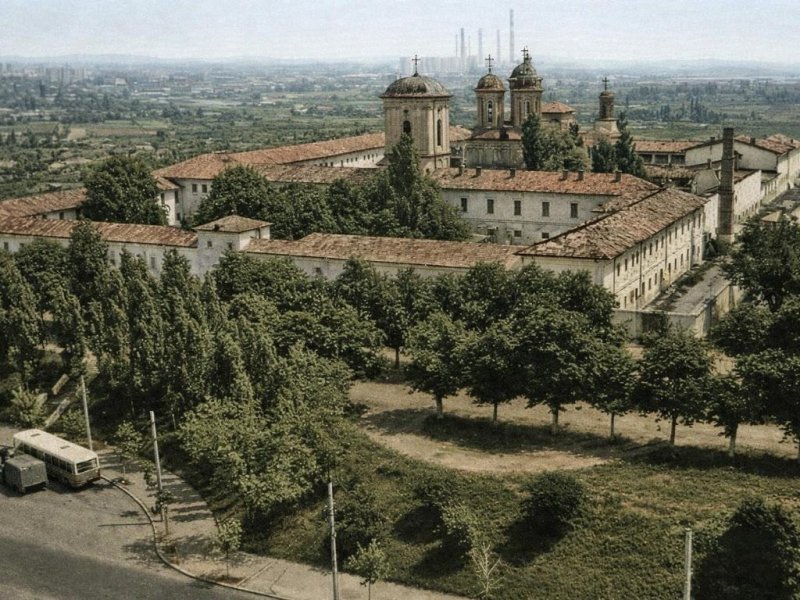
The Văcărești Monastery was the largest monastic architectural ensemble in Southeast Europe, a fortress of the spirit built between 1716 and 1736 by Nicolae Mavrocordat in a late Brâncovenesc style of dizzying elegance.
This "Jewel of the Balkans," equipped with a library that rivaled the great collections of the continent and decorated with frescoes of rare finesse, survived a bizarre transformation into a maximum-security prison in 1864, where holy walls began sheltering inmates instead of monks. Its fate took a tragic turn in December 1986, when the bulldozers of the Ceaușescu regime leveled the 18,000 square meters of built history, ignoring the vehement protests of academics, to make room for a gigantic court project that was ultimately abandoned. Today, where carved columns and imposing spires once rose, nature has reclaimed the land, turning the buried ruins into an unexpected urban delta (Văcărești Nature Park)—a wild ecosystem covering the memory of a masterpiece lost to the assault of "systematization" ideology.
11. Republicii Stadium
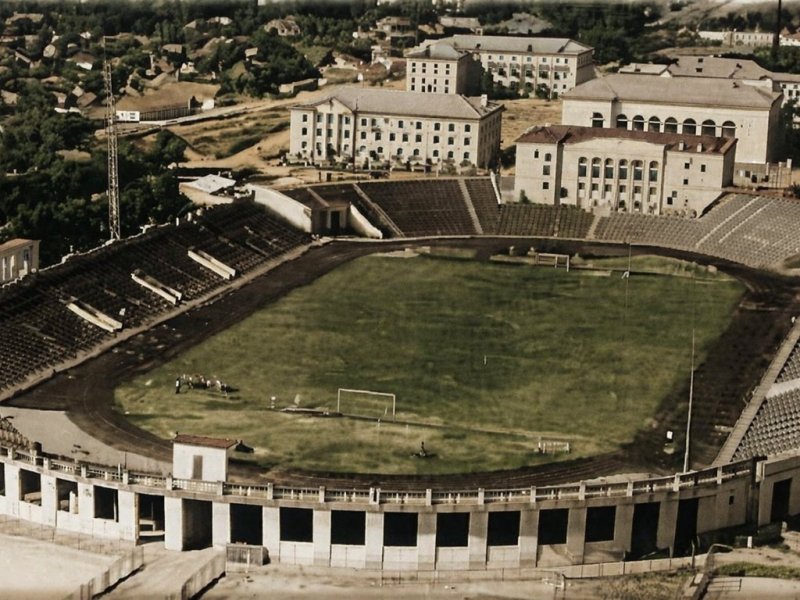
Inaugurated in 1926 as the ANEF Stadium, this edifice on Spirii Hill was, for decades, the beating heart of Bucharest sports. It was built according to the plans of architect Horia Creangă with a modernist elegance that masked its robust reinforced concrete structure.
The arena hosted Romania's first night match in 1933 before a stunned crowd and survived the 1944 bombings. It was later expanded to a capacity of 28,000 seats and renamed "Republicii" by the communist regime. Although its grass witnessed legendary national team victories and the world high jump record set by Iolanda Balaș in 1956, its destiny was abruptly cut short in the 1980s by Nicolae Ceaușescu’s urban planning ambitions. Bulldozers leveled the stands to make way for the House of the People (Palace of the Parliament), burying the vestiges of the arena under tons of earth and concrete. Today, only the Parliament’s underground garages remain as spectral evidence of its exact location.
10. Șerban Vodă Inn
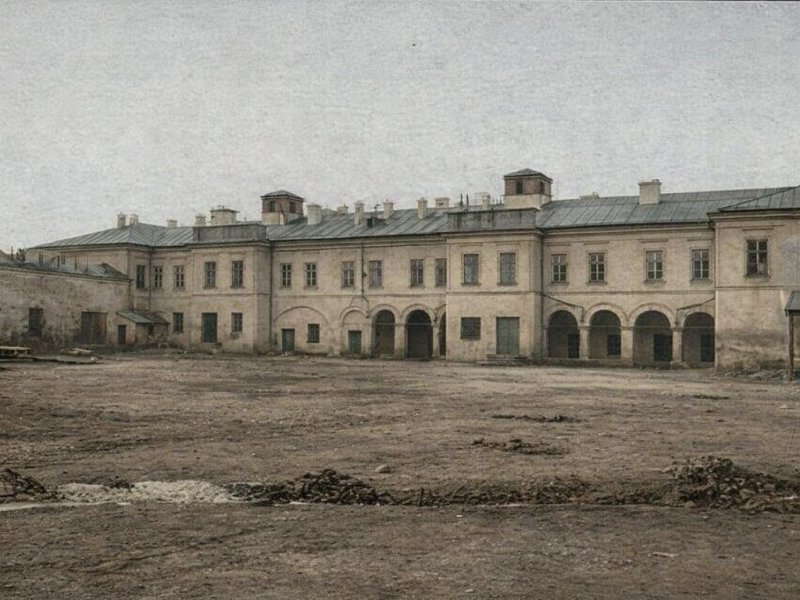
The Șerban Vodă Inn appeared in late 17th-century Bucharest as an ambitious project of Prince Șerban Cantacuzino, built between 1683 and 1685 in an area already pulsing with trade (modern-day Lipscani and Smârdan). Here, merchants hauled their goods, money, and hopes into a city that was still fragile and exposed.
The construction, with walls nearly a meter thick, no exterior windows, and a single gate, functioned as a hybrid of a warehouse, hotel, and urban fortress. It offered shelter to goods and people in an era when "safety" meant sleeping behind serious walls. Managed by the Cotroceni Monastery and intended as a source of income for it, the inn quickly became the most important in the city, an economic engine that gave its name to the surrounding streets. Over time, it endured fires, earthquakes, and golden eras hosting shops, printing presses, and even institutions, until Bucharest began dreaming of becoming a European capital and decided that Oriental walls no longer fit the scenery. Thus, in 1882, the inn was demolished to make room for the National Bank Palace. Of the building that once dominated the city, only foundations remain, occasionally uncovered by archaeologists—a stubborn reminder that modern Bucharest rose, as it often does, over its own layers of history.
9. Sfânta Vineri (Herasca) Church
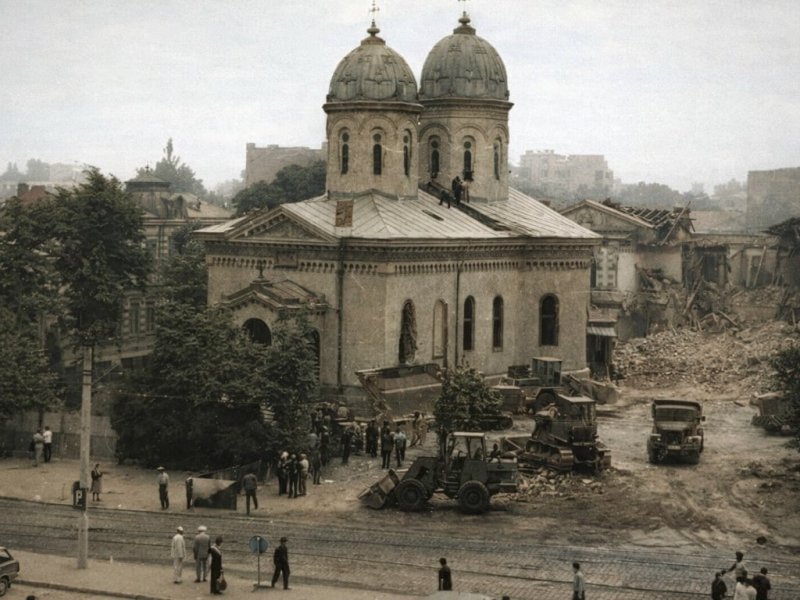
The Sfânta Vineri – Herasca Church appeared in Bucharest around 1645 during the reign of Matei Basarab. It was born in a city beginning to take shape between inns, shops, and boyar ambitions. Its name is linked to the Năsturel-Herescu family, who left their mark on the city with elegant and effective discretion.
In the 19th century, Constantin Năsturel-Herescu rebuilt it from its foundations, giving it a solid, balanced form—the air of a church that knew it would remain there for a long time, surrounded by an active community. The 1977 earthquake damaged its structure, and in the following years, Bucharest entered a phase of brutal remodeling where maps were redrawn with cold nonchalance. In June 1987, the church vanished completely, demolished by the Ceaușescu regime in a moment that said more about the era than any official speech. In its place remained a void and a stubborn memory. After 2000, a reconstruction appeared nearby, built with the clear desire to recover a piece of lost identity—a sign that the city, even after erasing its past, occasionally develops the reflex to bring it back.
8. Saint George Inn (Hanul Sfântul Gheorghe)
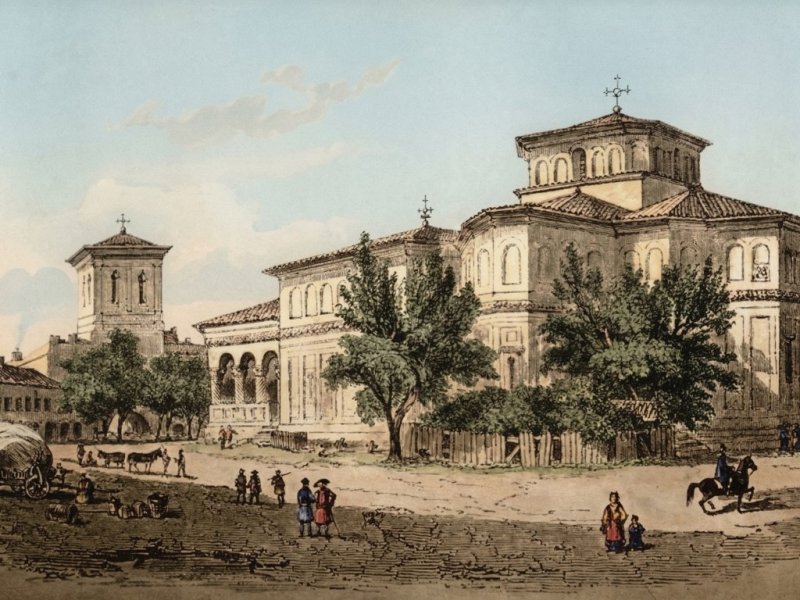
The Saint George Inn grew from a slow, almost stubborn evolution of the monastery of the same name. Its first cells appeared during the time of Alexandru II Mircea (1568–1574), but its decisive expansion came later through the interventions of Dragoman Panaiotache and, notably, the ambition of Constantin Brâncoveanu. He transformed the ensemble into a vast, solid, and spectacular construction for its time, featuring two rows of vaults, wide courtyards, and well-defined commercial functions.
Around 1698, a substantial part of the building began operating as an inn. By 1706, when work concluded, it had become one of the city's most important commercial centers. Goods from Leipzig, Galați, or Constantinople were unloaded into vaulted cellars, and prosperous merchants set the tone for a bustling urban economy. The monastery’s status, dedicated to the Patriarchate of Jerusalem, brought prestige, but success also invited improvisation—such as wooden shops leaning against the walls, choking the alleys and heralding the urban chaos familiar to any Bucharest resident. Resilient to earthquakes and fires for decades, the inn earned the reputation of a commercial fortress. However, the Great Fire of 1847 radically changed its fate. Despite the walls remaining standing, authorities decided to demolish it, erasing from the city center a space that for nearly two centuries had concentrated trade, religious power, and a serious dose of Balkan bustle.
7. Volga Cinema
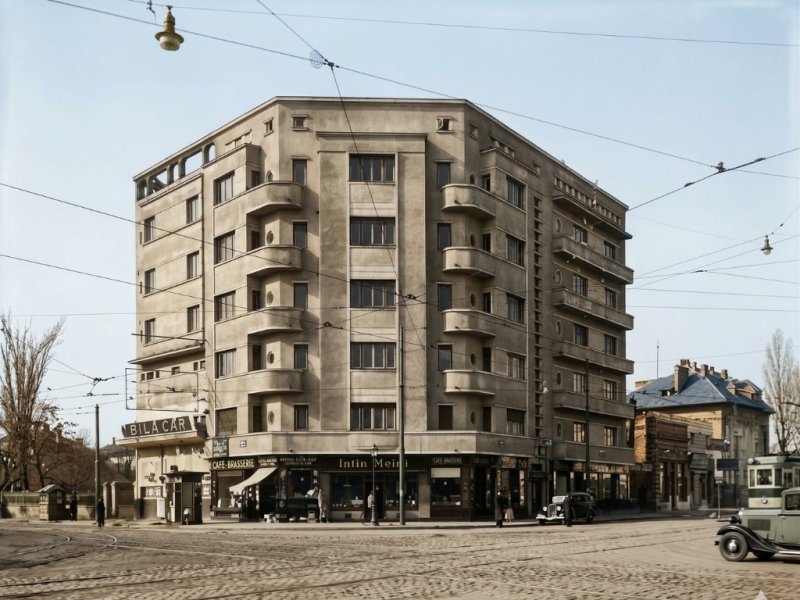
The Volga Cinema appeared in 1933, a period when the city began to acquire a taste for film as a serious urban ritual. It was established on Calea Dorobanților in a modernist building with a Western flair, where the cinema hall was hidden behind the main structure like a small sanctuary dedicated to darkness and the glowing screen.
The name "Volga" existed from the start. In the following decades, the place became a discreet landmark of the Dorobanți area, with a program dominated by popular films of the era, in an atmosphere that blended interwar elegance with the pragmatism of the 50s and 60s. After 1990, the space took on a double life, hosting both screenings and Studio Martin—a club that set the tone for Bucharest nights during a time when the city was relearning how to go out. Time did its work slowly; the building decayed, and the early 2000s brought an increasingly heavy silence until Volga almost completely disappeared in the last decade. It left behind the image of a cinema that crossed nearly a century without raising its voice, yet was present enough to stay in the city’s memory. The building was recently demolished.
6. The Colțea Tower
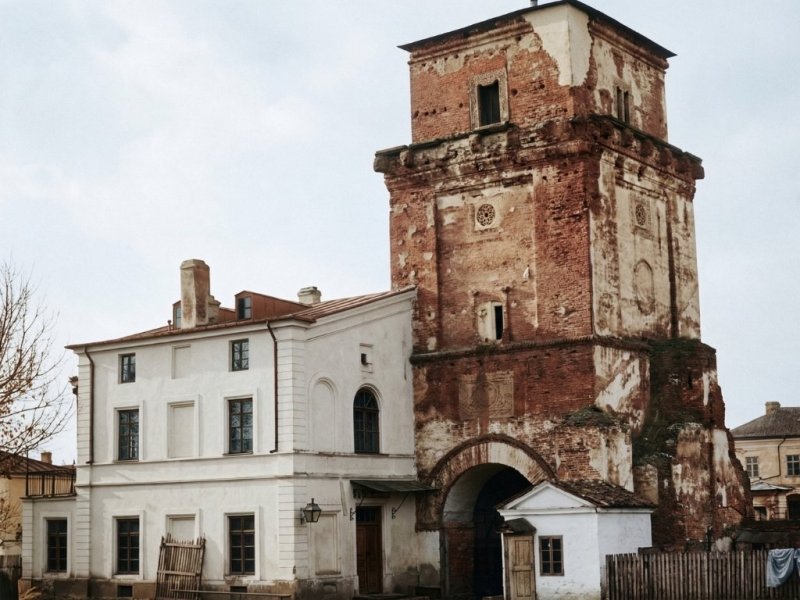
The Colțea Tower rose above Bucharest at the beginning of the 18th century as a declaration of ambition in a city just learning to breathe urbanely. Reaching nearly 50 meters, it dominated the capital's skyline without competition for over a hundred years.
Built between 1709 and 1714 by the soldiers of Swedish King Charles XII (who were retreating after the disaster at Poltava), the tower was part of the Colțea ensemble developed by Mihai Cantacuzino. A massive bell tower located right above the monastery gate, featuring a Baroque roof and four small corner turrets, it served both a religious and a practical role: it was used to watch over the city and signal fires in an era when Bucharest burned with almost disciplined regularity. Travelers described it as the "ornament of the city," and a clock mounted inside added an air of Western precision to a landscape still dominated by Balkan improvisation. On clear days, the tower could be seen from hours away. Inside, Cantacuzino had even hidden his secret archive, which was confiscated in 1714 by emissaries of the Ottoman Porte—making the belfry a place where politics, religion, and paranoia coexisted surprisingly well.
The 1802 earthquake severed its upper part, the 1838 quake weakened it further, and in 1888, under Mayor Pache Protopopescu, the tower was demolished. It was considered an obstacle to the widening of Colțea Boulevard (now Ion C. Brătianu). Residents protested, but the authorities raised the Fire Tower (Foișorul de Foc) a few years later—a more disciplined replacement, but lacking that strange story where Swedish soldiers, Wallachian boyars, and Balkan earthquakes collaborated to create one of old Bucharest's most recognizable silhouettes.
5. Sturdza Palace
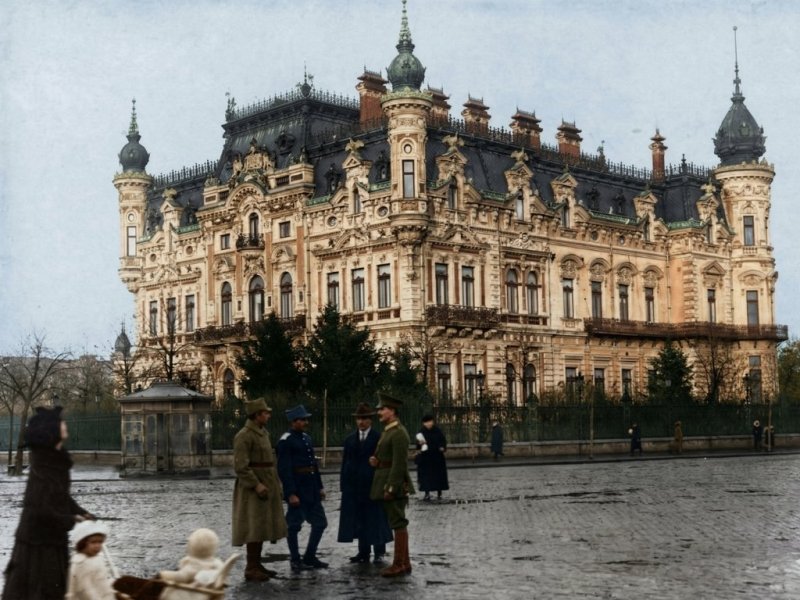
Sturdza Palace, built between 1898 and 1901 at the corner of today’s Victory Square (Piața Victoriei), was the pure expression of Grigore M. Sturdza’s personality—a man who combined the physical strength of a weightlifter with the pride of a prince who wanted his initials stamped even on the bricks.
The plans by architect Julius Reinecke resulted in a massive construction, ornamented to saturation with towers, stucco, and heraldic details. The interior was symmetrically organized with reception salons, guest rooms, and a "Turkish room" that betrayed the owner's Oriental tastes, all decorated with Murano chandeliers and Venetian mirrors. Irony struck fast: Sturdza died in the year of completion, and by 1904, the palace became the headquarters of the Ministry of Foreign Affairs. Though restored in the 1930s, the edifice was built on a questionable structure and suffered through fires and bombings. In 1946, it was demolished to make way for the new architectural order of Victory Square, leaving behind the reputation of an extravagant building—an exuberant mix of styles exactly to the taste of a Bucharest that, at the time, was trying to be everything at once.
4. The Old National Theater (Calea Victoriei)
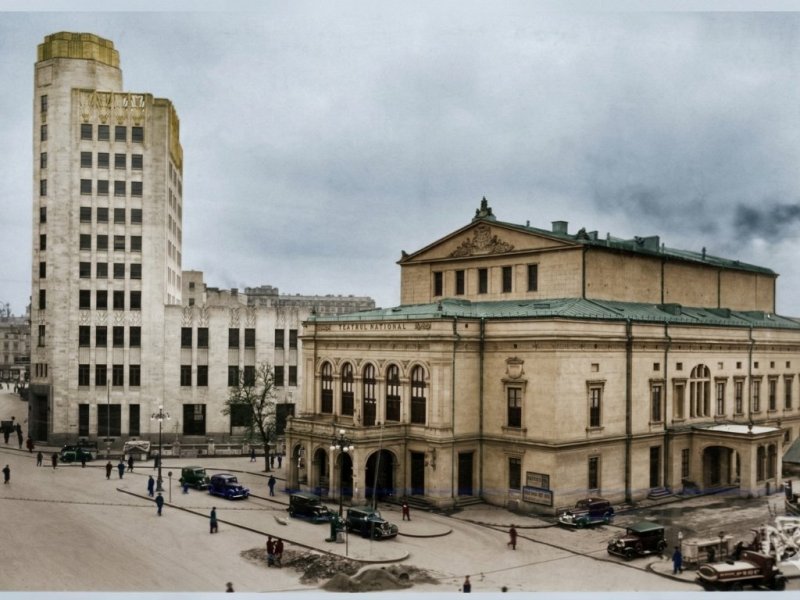
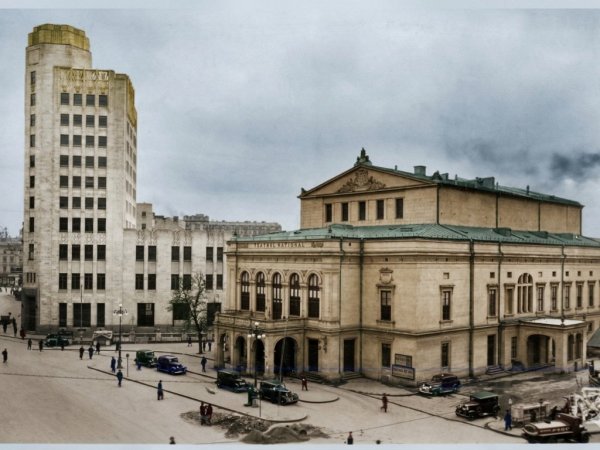
The Old National Theater, built on Mogoșoaiei Bridge (Calea Victoriei), emerged from the city's clear desire for a stage worthy of a European capital. The project took shape in the 1840s, supported by figures like Ion Heliade Rădulescu.
Interrupted by the 1848 revolution, construction resumed under Prince Barbu Știrbei according to the plans of Viennese architect A. Heft. Its inauguration on December 31, 1852, gave Bucharest an imposing building known as the "Great Theater." It quickly became the center of social life; carriages lined the entrance, and the public came to see and be seen. Cafés and hotels popped up around it, giving the city the air of a blossoming capital. In August 1944, Allied bombings struck the city center and left the theater severely damaged. In the following years, the ruins were demolished. Today, the reconstructed facade of the Novotel Hotel stands on its site, preserving the memory of a place where Bucharest learned to behave like a city with an audience, scripts, and applause.
3. The Băneasa Hippodrome
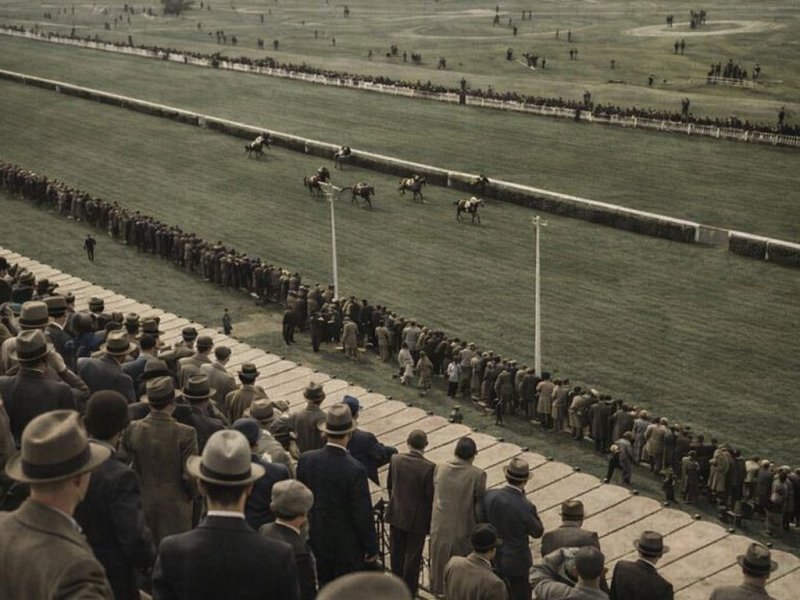
The Băneasa Hippodrome arose from the elegant and slightly obsessive ambition of the late 19th-century Bucharest elite who wanted to transform a Balkan town into a capital with Western reflexes. Thoroughbred horses and refined betting seemed like a decent start.
It took shape with the founding of the Jockey Club in 1875 under the patronage of King Carol I. The "jewel" was built on General Manu’s land following the plans of Ioan D. Berindey, who studied Parisian hippodromes and delivered a spectacular construction in 1908. Inaugurated in the presence of the Royal Family, it featured elegant stands, vast stables, and restaurants.
It was a place for Bucharest to flaunt its ambitions—from harness racing for the general public to aristocratic gallops, plus memorable moments like Louis Blériot's 1909 aviation demonstration. After WWI, the complex expanded with the Băneasa Country Club and the development of the National Park (future Herăstrău). The end came brutally in 1952 when part of the hippodrome was demolished for the Casa Scânteii (House of the Free Press), and in 1960 the rest vanished after the last Derby, replaced by the exhibition complex (Romexpo). It was a gesture that replaced elegance with propaganda.
2. The Central Halls (Halele Unirii)
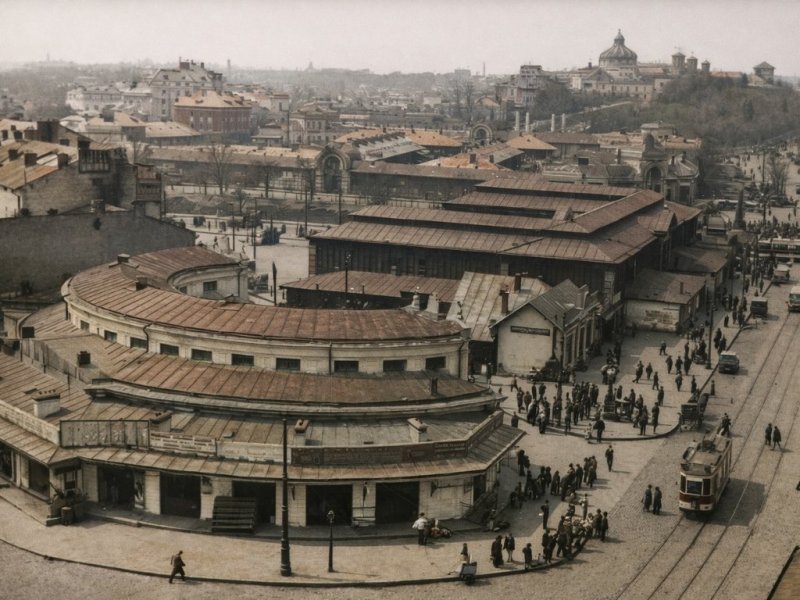
The Unirii Halls, long known as the halls of Bibescu Vodă Square, represented one of those places where Bucharest unashamedly showed its stomach and its nerves—exactly what kept it alive.
In the first half of the 20th century, the area pulsed from the early morning hours. Trams brought a constant flow of people determined to return home with full bags, as the smell of meat, fish, and vegetables blended into an unforgettable urban perfume. In the 1930s, alongside modernization ambitions, authorities began moving trade toward Obor and clearing the area of temporary structures, leaving only the Ghica meat hall as a stubborn relic. The plan looked perfect on paper, but reality had other ideas: merchants and customers kept coming, and the market maintained its central role.
After the war, and especially during the communist period, the entire area was radically remodeled. The old halls disappeared to make way for a wide, monumental square with fountains and grandiose perspectives—the kind of setting where the past is politely invited to leave without a trace. Behind this ordered space, however, remains the memory of a loud, living, and deeply human market.
1. The Uranus Neighborhood
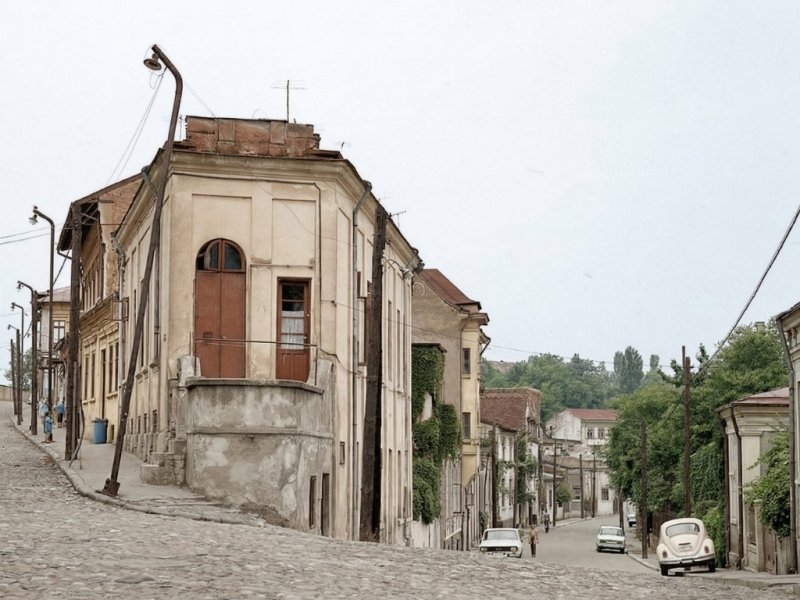
The Uranus neighborhood grew naturally on the hill of the same name in today's Sector 5. It was a compact world of narrow, sloping streets paved with cobblestones, where merchants, craftsmen, and small property owners lived at a calm urban pace.
Streets with picturesque names like Puțul cu Apă Rece (The Cold Water Well) or Sapienței (Wisdom St.) preserved an identity close to the old mahalas but with a stable, middle-class social structure. After the 1977 earthquake, communist authorities chose the area as "safe ground" for a new politico-administrative center. Fueled by Nicolae Ceaușescu’s fascination with grand Asian ensembles, 1982 saw the start of one of the most extensive urban transformations in Eastern Europe: approximately 7 square kilometers were leveled, over 40,000 people were relocated, and churches, hospitals, and historic buildings vanished. In place of the old fabric rose the Civic Center dominated by the House of the People. Of the Uranus neighborhood, mainly the name of a street and the memories of residents remain—residents who can still draw the map of a vanished Bucharest from memory with a precision that would make any urban planner sigh.
The Bucharest That Only Exists in Memory
All these places disappeared in different ways—some crushed by earthquakes, others erased by coldly drawn urban plans, others abandoned until they gave way on their own. But each left a clear mark on the city's memory. Today's Bucharest sits quietly atop them, with new apartment blocks, wide boulevards, and official explanations that always seem sufficient on paper but never quite cover the feeling that something important is missing. If you stop for a moment and look closer, you begin to see the outlines of that vanished city, which refuses to leave for good and which, in a stubborn and very "Bucharest" way, continues to exist exactly where it was left behind.
/ Images restored with A.I.
You may also like: From Vacant Lots to Playgrounds: Growing Up in Bucharest Over the Past 30 Years