From Vacant Lots to Playgrounds: Growing Up in Bucharest Over the Past 30 Years
By Bucharest Team
- Articles
- 30 JAN 26
It’s often said that a true Bucharest child grew up “outside,” even if today that childhood survives only as a hazy memory of scorching asphalt between apartment blocks and a mother’s voice calling from a window above. Beyond the ball that inevitably bounced into a parked Dacia and scraped knees treated hastily with spit or rubbing alcohol, Bucharest childhood was, for a long time, a natural extension of the city itself: chaotic, noisy, and surprisingly free.
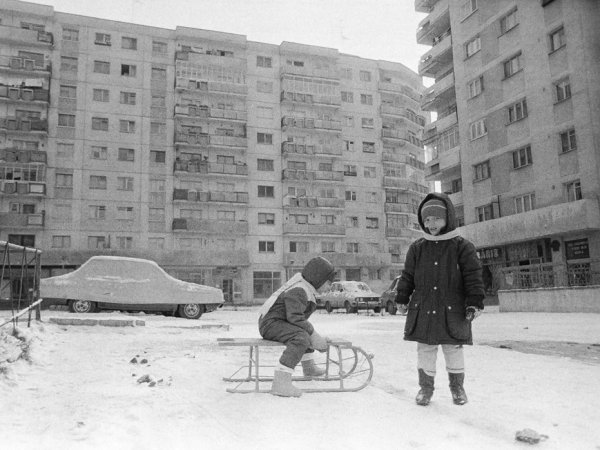
In the 1990s, Bucharest was an improvised playground. Children surfaced in the morning and vanished by evening into an informal network of stairwells, courtyards, vacant lots, and places “only we knew.” No one scheduled playtime, and no one asked exactly where we were going. The city wasn’t friendly, but it was permissive. Traffic was lighter, adults more absent, and childhood simply happened—somewhere between two shouts of “come inside.”
Then came the 2000s, bringing more fences and clearer rules. Bucharest began to organize itself, and childhood began to be managed. “Proper” playgrounds appeared, complete with standardized slides and benches for parents, and free play slowly started to look like an activity that required close supervision. Childhood moved out of the space in front of the building and into the calendar.
Gradually but steadily, Bucharest childhood shifted from the public realm to the private one. From the street to the apartment, from the yard to the car, from spontaneous play to organized activities. The city grew more crowded, louder, less forgiving of mistakes. Children became safer, but also kept closer.
Today, the Bucharest child lives in a hyperactive city that rarely makes time for them. Going outside involves routes, apps, parking, and careful risk calculations. Play no longer happens by accident; it has to be planned. Urban space is no longer a neutral backdrop to childhood, but an obstacle to be navigated.
It’s striking how we moved from the child who knew every neighbor to the child who knows friends mainly through scheduled activities. From spontaneous community to the family island. From excessive freedom to hyperprotection. Bucharest has grown up, but childhood has shrunk.
And yet, this is not a story of decline, but of transformation. Today’s children have access to things previous generations could hardly imagine: education, culture, information, safety. The price they pay is less space, less autonomy, and fewer moments when the city truly belongs to them.
Bucharest childhood hasn’t disappeared. It has adapted. It has retreated from the street and taken refuge among walls, screens, and schedules. And the way a city raises its children remains, perhaps, the most honest indicator of how that city understands its future.
Also recommended Growing up in Bucharest: emotional aspects of urban childhood
Photo: vice.ro