A “walk” into the past: The theaters and performances that defined Belle Époque Bucharest
- Articles
- 08 MAY 26
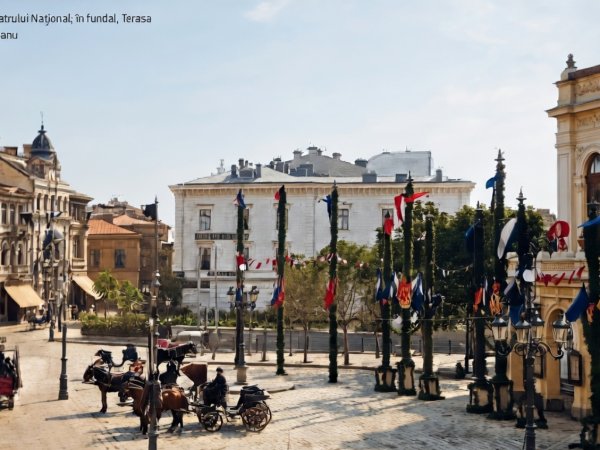
Belle Époque Bucharest remains one of the most fascinating periods in the history of the Capital. Between the end of the 19th century and the beginning of the First World War, the city underwent a profound transformation, both from an architectural and cultural point of view. The large boulevards, elegant buildings, cafés frequented by intellectuals, and the intense artistic life made Bucharest often called “Little Paris.” During that era, theater occupied a central place in the social life of the city. Performances were not just simple forms of entertainment, but true social events. The political elite, intellectuals, artists, and the rising bourgeoisie made their appearance in the elegant halls of Bucharest theaters, where culture, fashion, and the spirit of the time met.
Belle Époque Bucharest and the emergence of a modern cultural life
Belle Époque meant for Bucharest a period of unprecedented artistic effervescence. Theaters, operettas, revue shows, concerts, and dramatic performances became defining elements of urban life. Every evening, the city center came alive, and the lights of the theaters attracted the public eager to participate in the cultural life of the Capital.
At the end of the 19th century, Bucharest was going through a broad process of modernization. After the proclamation of Romania’s independence and then after the transformation of the country into a kingdom, the Capital began adopting Western models in architecture, education, and culture.
The new boulevards inspired by Paris, the monumental buildings, and the appearance of public lighting changed the image of the city. At the same time, the Romanian bourgeoisie was developing its taste for culture and entertainment. Theater thus became a symbol of modernity and urban refinement.
During that period, going to the theater had a strong social dimension. The audience came not only for the performance, but also to be seen. Ladies wore elegant dresses brought from Paris, gentlemen came in tailcoats and top hats, and the theater boxes had become true spaces of social prestige.
In the center of Bucharest there were numerous performance halls, and artistic life was extremely active. The repertoires included both Romanian plays and productions inspired by the great European theaters. The Bucharest public was attracted by drama, comedy, operetta, and musical performances, and the famous actors of the time had become true stars.
The National Theatre, symbol of Bucharest culture
One of the most important cultural landmarks of Belle Époque Bucharest was the National Theatre. The building of the old National Theatre, inaugurated in 1852 on Podul Mogoșoaiei, today’s Calea Victoriei, had become the center of Romanian theatrical life.
The most important dramatic performances of the time were staged here, and the theater stage hosted great names of Romanian culture. Actors such as Aristizza Romanescu, Grigore Manolescu, or Constantin Nottara were the idols of the Bucharest public.
The theater hall impressed through its elegance and sophisticated atmosphere. The audience came not only for the play, but also for the social experience offered by an evening spent at the theater. During intermissions, spectators discussed politics, literature, and the latest social events.
The National Theatre also had an important role in consolidating Romanian cultural identity. During a period in which Romania was defining its modern institutions, the theater stage became a space where the Romanian language and local dramaturgy gained prestige.
The plays of Ion Luca Caragiale had a major impact on the Bucharest audience. His comedies perfectly captured the atmosphere of the Capital, political customs, and the behavior of the new bourgeoisie. Caragiale’s characters seemed taken directly from the audience that filled the National Theatre hall night after night.
Operetta and musical performances were conquering the Capital
Besides dramatic theater, Belle Époque Bucharest was fascinated by operetta and musical performances. Viennese and Parisian influences quickly reached the Capital, and the public was attracted by spectacular productions, luxurious costumes, and elegant music.
Operetta had become one of the most popular forms of urban entertainment. The performances were full of color and refinement, and the halls quickly filled up at every premiere.
Theaters and summer gardens frequently organized musical performances, concerts, and variety shows. During the warm months, Bucharest had an extremely lively nightlife. Terraces and gardens became true open-air cultural centers.
The Bucharest public appreciated performances that combined music, dance, and humor. French influences were obvious, and local artists tried to bring to Romanian stages the atmosphere of Parisian cabarets and theaters.
It was also during this period that the first forms of revue theater appeared, which would become extremely popular in the following decades. These satirical and musical performances reflected the everyday life of the city and commented in an ironic manner on political and social events.
Cafés and summer gardens, extensions of the artistic stage
The artistic life of Belle Époque Bucharest did not take place exclusively inside theaters. Cafés, elegant restaurants, and summer gardens had an essential role in the urban culture of the era.
Places such as Capșa had become true centers of intellectual life. Writers, actors, journalists, and politicians met here to discuss performances, literature, and public life.
Many performances continued, in a way, even after the end of the shows. Actors went to restaurants and cafés in the center, where they were often recognized and admired by the public.
Summer gardens enjoyed enormous popularity. During the warm season, they offered musical performances, small theatrical representations, and concerts. The atmosphere was relaxed and cosmopolitan, and Bucharest was beginning to resemble the great European capitals more and more.
In these spaces met people from different social categories. From aristocrats and politicians to artists and clerks, everyone participated in the cultural effervescence of the city.
The famous actors of the era had become true stars
Belle Époque also represented the period in which actors began to become extremely popular public figures. The public followed with interest the lives of the great artists, and the press of the time frequently wrote about performances and famous actors.
Aristizza Romanescu was considered one of the great stars of Romanian theater. Her dramatic talent and stage elegance impressed spectators, and her appearances were true social events.
Constantin Nottara, one of the most important actors of the era, was appreciated for the strength of his performances and for his impressive stage presence. He had an essential role in the development of modern Romanian theater.
Grigore Manolescu, considered one of the greatest Romanian tragedians, attracted large audiences to every performance. The actors of the time had a status comparable to that of today’s great stars.
The cultural press strongly contributed to their popularity. Newspapers published theater reviews, commentaries, and information about the artistic life of the city. Thus, the public was permanently connected to the cultural events of the Capital.
The Bucharest public and the ritual of theater evenings
For the inhabitants of Belle Époque Bucharest, going to the theater was a true social ritual. The evening often began with a walk on Calea Victoriei, where the elegant world of the city showed itself before the performance.
Carriages stopped in front of the theaters, and the public entered the spectacularly illuminated halls for that time. The boxes were reserved for important families, and the position occupied in the hall often reflected the spectators’ social status.
The intermissions between acts were just as important as the performance itself. People discussed the play, exchanged impressions, and watched the social appearances. Theater had become a space of socialization and social affirmation.
The atmosphere of those evenings was elegant and sophisticated. Bucharest was building its identity as a modern European capital, and culture had a central role in this transformation.
For many inhabitants of the city, performances also represented a form of escape from everyday life. On stage, the public discovered dramatic stories, satirical comedies, or worlds inspired by the great European cultural capitals.
How the world of performances changed after Belle Époque
The First World War put an end to the Belle Époque period, and Bucharest was going to change profoundly in the following years. However, the cultural legacy of that era remained extremely important for the artistic development of the city.
Many of the cultural institutions consolidated then continued to play an essential role during the interwar period as well. Theater, operetta, and musical performances remained popular forms of entertainment for the Bucharest public.
In addition, Belle Époque created a true tradition of social and cultural life in the Capital. The idea of theater as a social and artistic space remained strongly present in the collective mentality of the city.
Even though many buildings of old Bucharest have disappeared in the meantime, the atmosphere of those years continues to fascinate. Period photographs, memoirs, and chronicles preserve the image of an elegant, cosmopolitan city deeply connected to European culture.
The artistic legacy of Belle Époque Bucharest
Today, Bucharest still preserves traces of that spectacular world. Some historical buildings, the old boulevard routes, and cultural institutions continue to recall the period when the Capital lived one of the most brilliant eras in its history.
Theaters still remain among the most important cultural spaces of the city. Although the entertainment world has changed radically, the charm of an evening spent at the theater continues to exist.
Belle Époque was more than a period of elegance and refinement. It was the moment when Bucharest built its modern cultural identity and became one of the most vibrant urban centers in Eastern Europe.
Through performances, music, theater, and intense artistic life, the Capital then created its image of a lively and sophisticated city, and this legacy continues to inspire even today.
We also recommend: 10 things about Belle Époque Bucharest you didn’t know until now