10 things about Belle Époque Bucharest you didn’t know until now
- Articles
- 09 APR 26
The Belle Époque period represented one of the most fascinating stages in the history of Bucharest, transforming the city into a true cultural, economic, and architectural center of Eastern Europe. Between the end of the 19th century and the beginning of the First World War, the Romanian capital experienced an unprecedented effervescence, earning the reputation of “Little Paris”. Beyond the elegant buildings and sophisticated lifestyle, this period hides numerous lesser-known details. In the following lines, you will discover ten surprising things about Belle Époque Bucharest that will change your perspective on the city.
Bucharest was one of the most modern cities in Europe
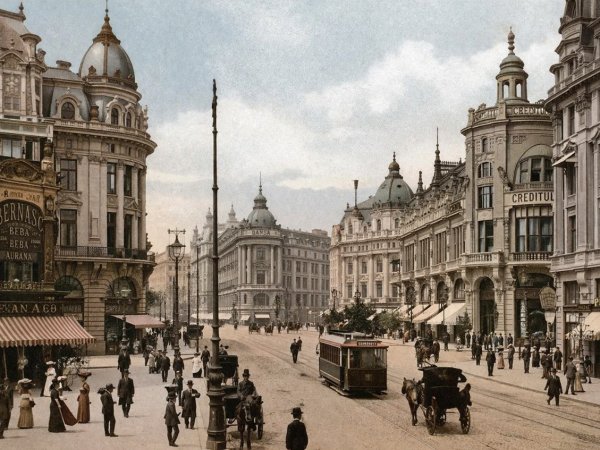
Surprisingly, at the beginning of the 20th century, Bucharest was more modern than many European capitals. Electric public lighting was introduced early, and the city benefited from an electric tram network as early as 1894.
On major boulevards, such as Calea Victoriei, electric lights created an impressive nighttime spectacle, and nightlife was extremely lively. Cafés, theaters, and restaurants stayed open late, attracting the city’s elite.
Architecture was a spectacular eclectic mix
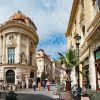
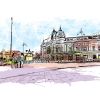
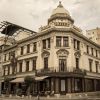
Belle Époque Bucharest did not have a unified architectural style. Instead, the city was a fascinating blend of neoclassical, eclectic, Art Nouveau, and French influences. Buildings such as CEC Palace or Romanian Athenaeum reflected the Western aspirations of the Romanian elite. This mixture contributed to the city’s unique charm, but also to the lack of a uniform architectural identity.
Bucharest was nicknamed “Little Paris” for real reasons
It was not just a metaphor. Bucharest truly resembled Paris, both in architecture and lifestyle. French architects were involved in constructing many buildings, and the French language was fluently spoken by the elite. Fashion, etiquette, and even social customs were inspired by the French capital, making Bucharest one of the most Francophile cities in Europe.
Social life was extremely active and sophisticated
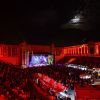
Balls, soirées, and receptions were held constantly. Aristocratic families organized lavish events where politics, art, and literature were discussed. Theaters were full, and performances attracted audiences from all social classes. National Theatre Bucharest was one of the main cultural centers, contributing to the development of a vibrant artistic life.
Bucharest had one of the most developed café networks
Cafés were true centers of intellectual debate. Writers, politicians, and artists met daily to discuss ideas and projects. These spaces were inspired by the Parisian model and offered not only coffee but also international newspapers and an elegant atmosphere. It was the place where opinions were formed and public life was influenced.
Fashion was a symbol of social status
In Belle Époque Bucharest, clothing was not just a necessity but a clear indicator of social position. Ladies wore elaborate dresses, often ordered from Paris, while gentlemen adopted Western clothing styles. Central streets became true fashion runways. Public appearances were carefully planned, and elegance was considered an essential virtue.
Urban transport was surprisingly advanced
In addition to electric trams, Bucharest also had elegant horse-drawn carriages, used both for transportation and leisure rides. There were also the first automobiles, considered an extreme luxury. They attracted attention and symbolized modernity and technological progress at the time.
Bucharest was an economic center in full development
The Belle Époque period coincided with accelerated economic growth. Banks, trade, and industry experienced significant development. Institutions such as National Bank of Romania played an essential role in stabilizing the economy and attracting investment. The city had become an important financial hub in the region.
There were strong social contrasts
Behind the elegance and luxury, Bucharest also hid a less pleasant reality. The differences between social classes were very large. While the elite lived in palaces and attended balls, a large part of the population lived modestly in poor neighborhoods. These contrasts actually defined the complexity of the city.
Bucharest Belle Époque was marked by general optimism
This period was characterized by confidence in progress and the future. People believed in development, technology, and modernization. Grand constructions, investments, and cultural effervescence reflected this mindset. Everything seemed possible, and the city was rapidly transforming into a modern European capital.
The Belle Époque legacy is still visible today
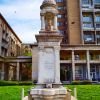
Even though many buildings were destroyed or modified, traces of this era are still visible in Bucharest. Historic districts, heritage buildings, and the atmosphere of certain streets still preserve the charm of the past. Walking through the city center, you can still feel the influence of that golden age.
In conclusion, Belle Époque Bucharest was not just a historical stage but a defining moment for the city’s identity. Modernity, elegance, and social contrast created a unique urban landscape whose echoes are still felt today.
We also recommend: Stories from pre-war Bucharest: grand balls, luxury, Western influences and La Belle Époque