10 places where you can still see Phanariot Bucharest
By Eddie Țone
- Articles
- 23 JUN 26
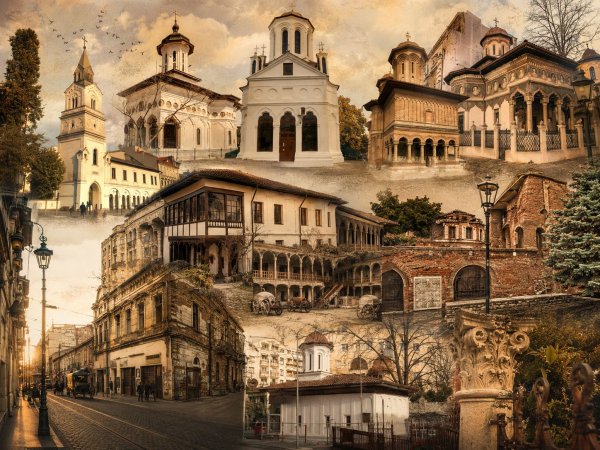
Phanariot Bucharest had little in common with today’s city of boulevards, office buildings and impatient traffic lights. In the 18th century, the capital resembled a sprawling market town, crossed by wooden-paved roads and scattered with boyar estates, inns, gardens, churches and neighbourhoods that often bore the name of a community, a trade or a patron saint.
The Phanariot reigns, which took place in Wallachia between 1715 and 1821, left Bucharest with a complex imprint. The city absorbed Greek, Ottoman, Balkan, Levantine and Western influences, in a mixture that accommodated both princely ceremony and highly practical commerce. A family of merchants could build a house with a veranda, a Greek abbot could finance a monastery through the revenues of an inn, and a parish church could become the centre of a small world of orchards, shops and scattered households.
The traces of that city became seriously thinner after fires, earthquakes, urban redevelopment schemes and Bucharest’s repeated enthusiasm for demolition. Still, a few places continue to preserve the proportions, materials, atmosphere or urban memory of the period. Some stand in plain sight, while others require a little patience and a detour around a few apartment blocks. Yet all deserve to be seen as fragments of a Bucharest that operated by different rules and clearly moved at a less frantic pace than Piața Unirii on a Thursday at 6 p.m.
1. The Melik House
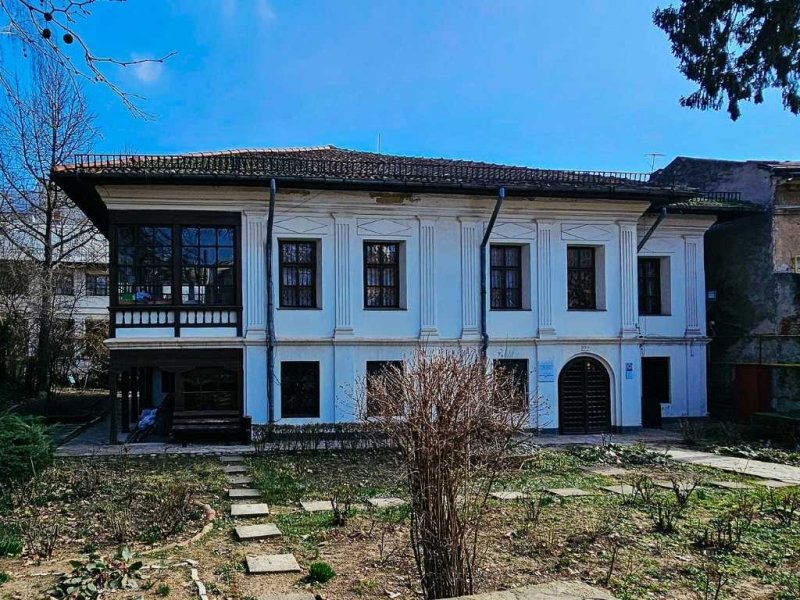
The Melik House, on Spătarului Street in the Armenian Quarter, remains one of the most valuable surviving civilian buildings from 18th-century Bucharest. The most widely accepted dating places it around 1760, during the Phanariot period, and the building is generally considered the oldest surviving residence in the capital. Its present form bears the marks of later interventions, yet its basic structure clearly preserves the logic of a boyar or merchant residence on the edge of town.
The house has a veranda, a high tiled roof, wide eaves, rooms arranged around a central space and a wooden staircase that recalls local 18th-century architecture. It was once surrounded by gardens, household annexes, courtyards and far more extensive grounds than the present plot. The area stood close to the eastern edge of the city, near the road that would later become Calea Moșilor.
The house takes its name from the Melik family, who owned it in the 19th century. Before that period, the property had belonged to the Armenian merchant Kevork Nazaretoglu. Today it houses the Theodor Pallady Museum, and the contrast between Pallady’s Parisian drawings and the architecture of the old house creates one of Bucharest’s rarer cultural combinations: 18th-century Wallachia, the Armenian community and European modernity under the same roof.
2. Manuc’s Inn
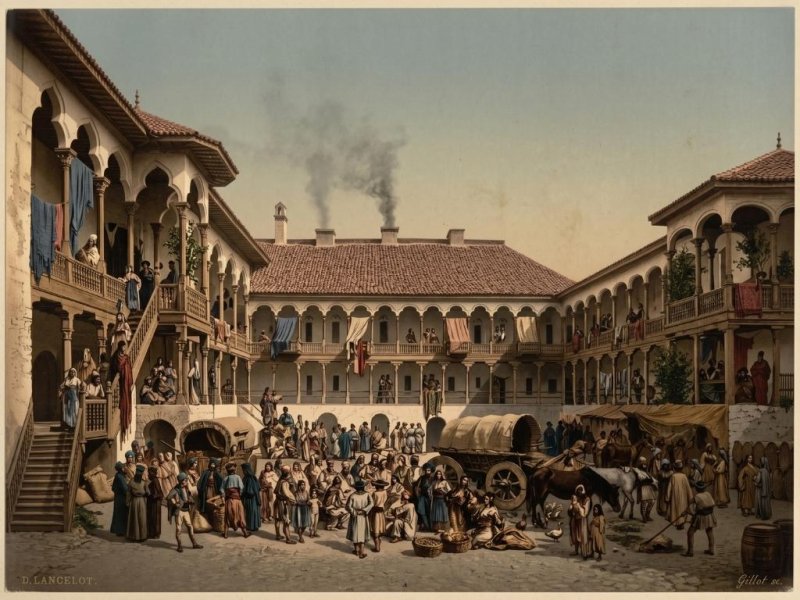
Manuc’s Inn dates from 1806–1808, a period immediately before the end of the Phanariot regime. Built by Manuc Bei, also known as Emanuel Mârzaian, the inn belongs to that Balkan world in which diplomacy, trade, hospitality and political manoeuvring all passed through the same inner courtyards.
The building preserves the typology of a large commercial inn: a central courtyard, wooden galleries, rooms for merchants and spaces designed for the movement of goods, animals and travellers arriving from the roads of the Ottoman Empire, the Romanian Principalities and Central Europe. Bucharest at the beginning of the 19th century needed such urban hubs, places where contracts could be concluded, news could be gathered, transport could be negotiated and, very often, a serious meal could be enjoyed after days on the road.
Manuc Bei was a merchant, dragoman and influential figure in the relations between the Ottoman Empire, Russia and the Romanian Principalities. His inn hosted negotiations that preceded the Treaty of Bucharest of 1812, a document with severe consequences for Moldavia through the annexation by the Russian Empire of the territory between the Prut and Dniester rivers. The place therefore preserves the memory of both trade and diplomacy conducted over plenty of coffee, plenty of tobacco and probably quite a few cautious glances over the shoulder.
3. Stavropoleos Church
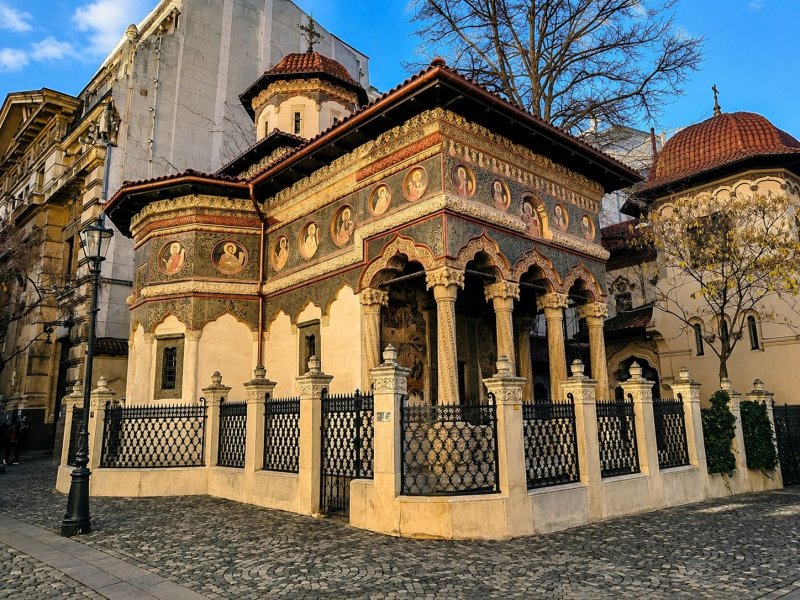
Stavropoleos Church, built in 1724, offers one of the most concentrated images of Phanariot Bucharest. Its founder was Archimandrite Ioanichie Stratonikeas, a Greek monk from Epirus, who built the church, monastery and inn associated with the complex during the reign of Nicolae Mavrocordat.
The monastery also functioned through the revenue generated by its inn, a perfectly logical arrangement in a city where faith and economics supported one another with an efficiency that modern administrations may occasionally regard with envy. The inn produced income, the income maintained the religious foundation, and the church became a spiritual and urban landmark in an area dominated by merchants, small shops and narrow streets.
The church façade, with its carved columns, arches, vegetal friezes and carefully worked stone, preserves the late Brâncovenesc style, adapted to a more compact urban sensibility. The original complex lost its inn and many of its annexes during the 19th century, yet the church survived, restored and protected, as a fragment of a Greek, Orthodox and commercial city caught between the terraces of Bucharest’s Old Town.
4. Kretzulescu Church
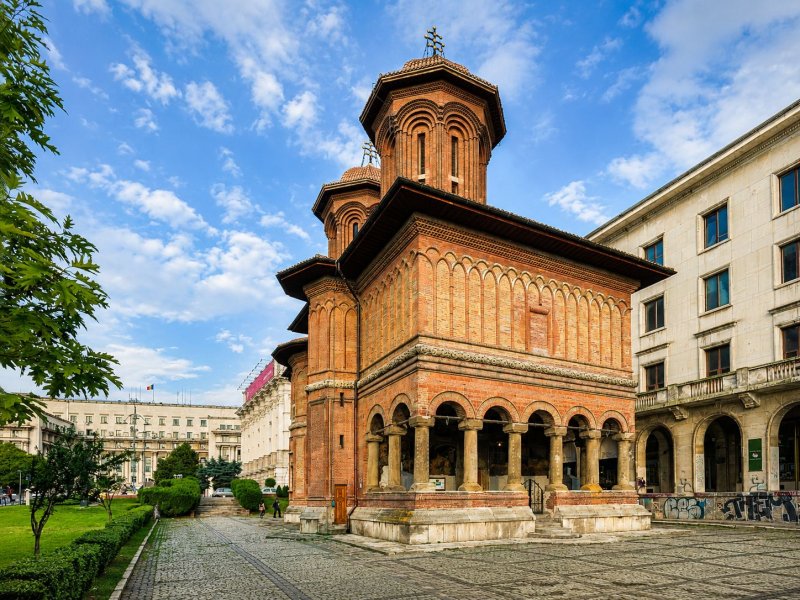
Kretzulescu Church was built between 1720 and 1722 by the logothete Iordache Kretzulescu and his wife Safta, daughter of Prince Constantin Brâncoveanu. The foundation belongs to the period of Nicolae Mavrocordat’s second reign and preserves one of the most expressive examples of Brâncovenesc architecture in Bucharest.
The building has exposed red-brick masonry, balanced proportions, carved decoration and a plan that reflects the period’s taste for order, family prestige and public representation. At the beginning of the 18th century, the area around it stood on the edge of the city, with gardens, boyar estates and far more open land than today’s square in front of the Romanian Athenaeum.
The church survived earthquakes, renovations and political episodes that completely reshaped the centre of the capital. During the 1980s, its demolition was discussed in the context of plans to reorganise the area, yet the monument remained standing. Seen today among the buildings of Calea Victoriei, Kretzulescu still retains the scale of a Bucharest in which a church functioned as a neighbourhood landmark, a family mausoleum and a discreet declaration of social rank.
5. The Maicilor Hermitage
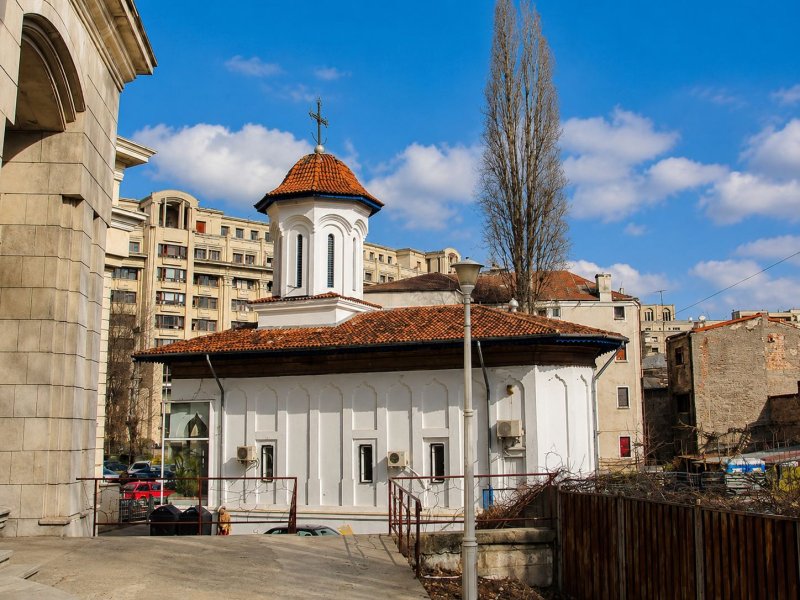
The Church of the Annunciation, part of the Maicilor Hermitage, offers one of the strangest encounters between Phanariot Bucharest and the systematised Bucharest of the 1980s. The church belonged to a monastic complex built in the 18th century and associated with Tatiana Hagi Dina, a woman who had been held in Ottoman slavery and founded the religious settlement after her liberation. Its inscription indicates that the church existed before 1 October 1726.
In 1982, the church was physically moved to make room for redevelopment projects in the Dealul Spirii area. The operation relocated the monument over a considerable distance, and the building ended up hidden between apartment blocks, far from its historic site and from the monastic complex that had once given it context.
Today, the Maicilor Hermitage still conveys the feeling of an old-city fragment placed inside a completely different setting. That rupture gives the place much of its power. The church speaks of the Phanariot era, while its present location also tells the story of communist Bucharest, with relocated monuments, redesigned neighbourhoods and histories saved by the narrowest of margins.
6. Old St. Elefterie Church
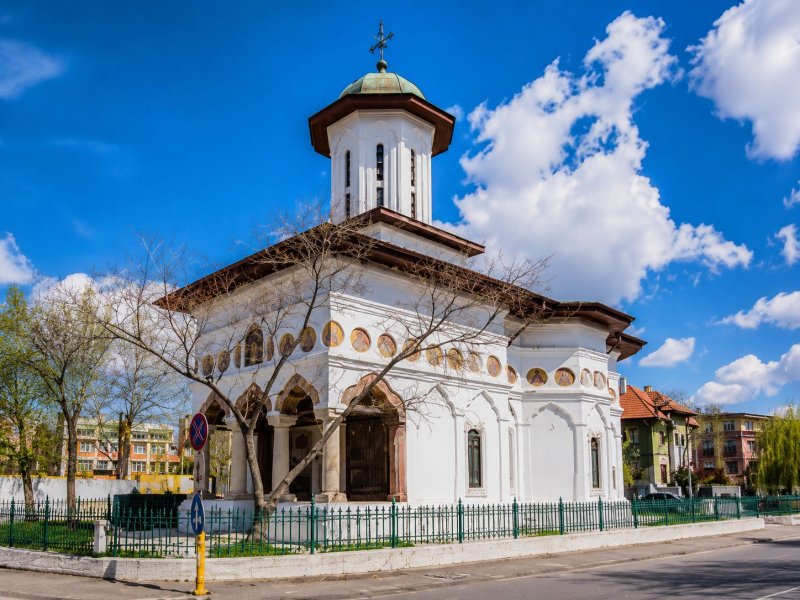
Old St. Elefterie Church was built in 1744, during the reign of Mihail Racoviță. Its foundation is associated with Metropolitan Neofit and wealthy merchants, including Andrei Zarafii and Constantin, the son of Maxim Cupețu. The monument preserves the memory of a neighbourhood that then stood at some distance from Bucharest’s crowded centre.
Today’s Cotroceni, with its embassies, institutions, traffic and interwar villas, would have seemed like an extraordinarily exotic geography to the inhabitants of the St. Elefterie district. In the 18th century, the area had a peripheral character, with households, open land and roads climbing toward Cotroceni Hill. The church became the religious centre of this growing community.
Its discreet exterior and modest dimensions say much about the Bucharest of the old mahalale, or neighbourhood districts. Phanariot Bucharest included grand princely residences as well as communal spaces built through the contributions of people with local means. Old St. Elefterie preserves this second category, less spectacular in photographs yet far closer to the city’s ordinary daily life.
7. The Catholic Bărăția
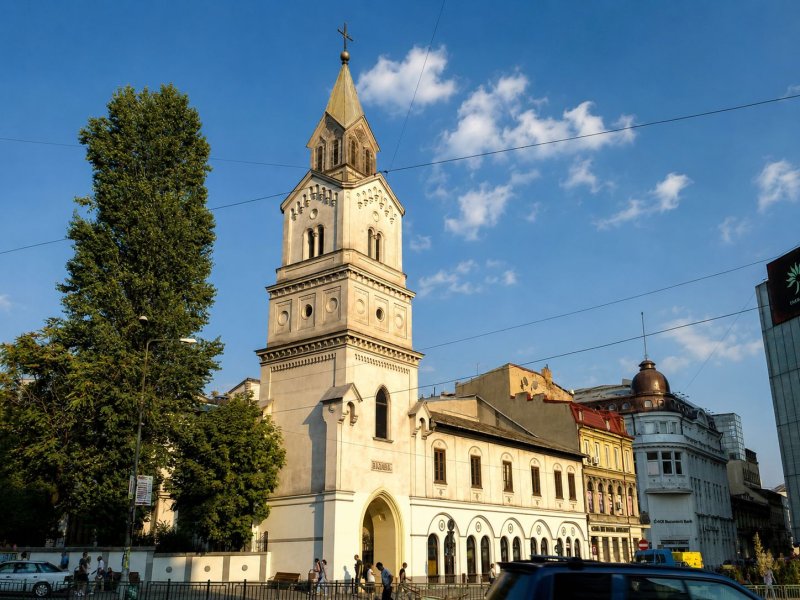
The Bărăția, or the Church of Saint Mary of Graces, marks the continuity of Bucharest’s Roman Catholic community, present in the city since the 17th century. The Parish of Saint Mary of Graces was founded in 1629, and during the Phanariot period the site functioned as an important point for the city’s Catholics, including communities of German, Italian, Hungarian and Armenian Catholic origin.
There is, however, an essential nuance. The church visible today dates from 1850, after the fire of 1847 severely affected the earlier complex. The site therefore preserves the Phanariot continuity of the community and the location, while the present building belongs to post-Phanariot Bucharest, even though its spirit comes from the Phanariot world.
The Bărăția helps explain an aspect often oversimplified in stories about old Bucharest. The city had a clearly Orthodox majority, yet it functioned as a cosmopolitan space, with merchants, diplomats, clergy and craftsmen arriving from different parts of Europe and the Ottoman Empire. Around this place, the thread of that diversity remains visible.
8. Foișor Church
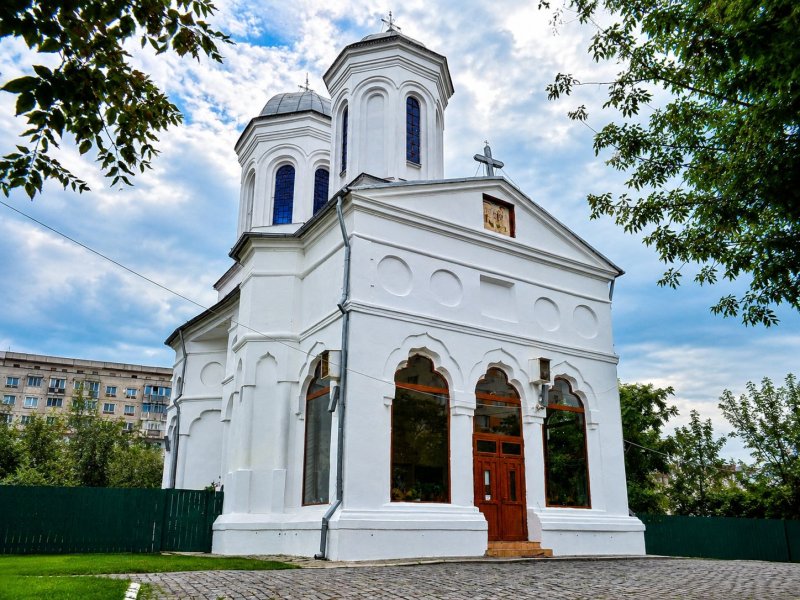
Foișor Church, dedicated to the Nativity of the Mother of God, is linked to the Mavrocordat family and to the princely residences in the old Dâmbovița area. Local tradition and historical documents mention a foundation by Lady Smaranda Mavrocordat, the wife of Nicolae Mavrocordat, near the palaces and a pavilion, or foișor, that gave its name to the district.
The dating requires caution, however, since the sources point to different phases in the history of the complex. Some documents connect the site with the year 1718, while parish tradition mentions the construction of the present church near the princely residence in 1745. What remains certain is the Phanariot context and its direct link to the Mavrocordat family.
The church survived after the disappearance of the residences and the aristocratic landscape that once surrounded it. Today, the area offers a very Bucharest-like lesson in urban memory: palaces may vanish, yet their names can survive on a street or in a church, while the city continues to grow over the foundations of former princely courts.
9. The Old Princely Court and St. Anthony Church
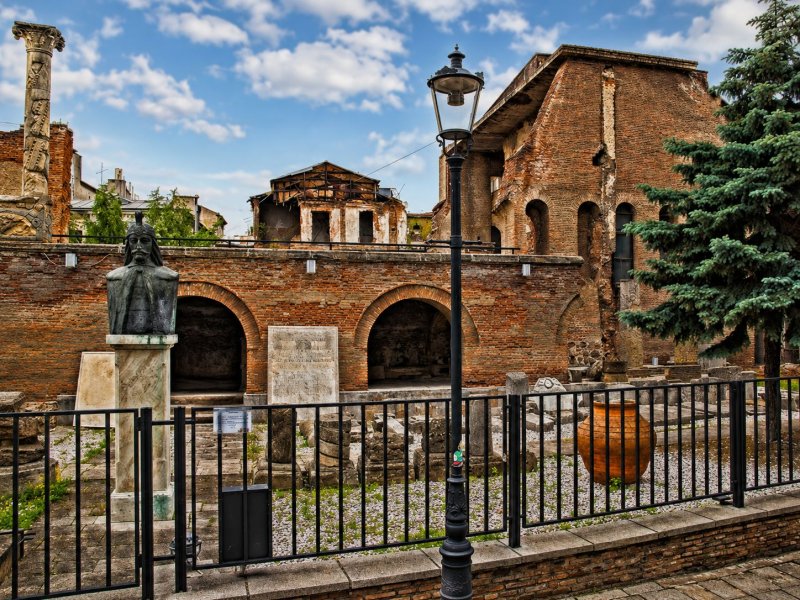
The Old Princely Court has medieval origins, while St. Anthony Church was built in the 16th century during the reign of Mircea Ciobanul. Yet the site remained a princely and ceremonial centre during the Phanariot reigns, until the centre of gravity of the princely residence shifted toward Dealul Spirii, where Alexandru Ipsilanti built a new court in 1775.
For centuries, St. Anthony Church served as a place for princely ceremonies and coronations. During the Phanariot period, the Old Princely Court area remained an administrative, commercial and symbolic landmark, even as the space gradually lost its exclusive political role. The routes of merchants, officials, clergy and people heading toward the centre of the market town still intersected here.
The ruins of the Old Princely Court and the nearby church offer an image of Bucharest as a layered city. Medieval foundations are visible alongside interventions from later centuries and traces of a place inhabited by rulers for more than five centuries. For the Phanariot period, its value lies in continuity: the old city still retained its core of power even as power began searching for other addresses.
10. Calea Moșilor
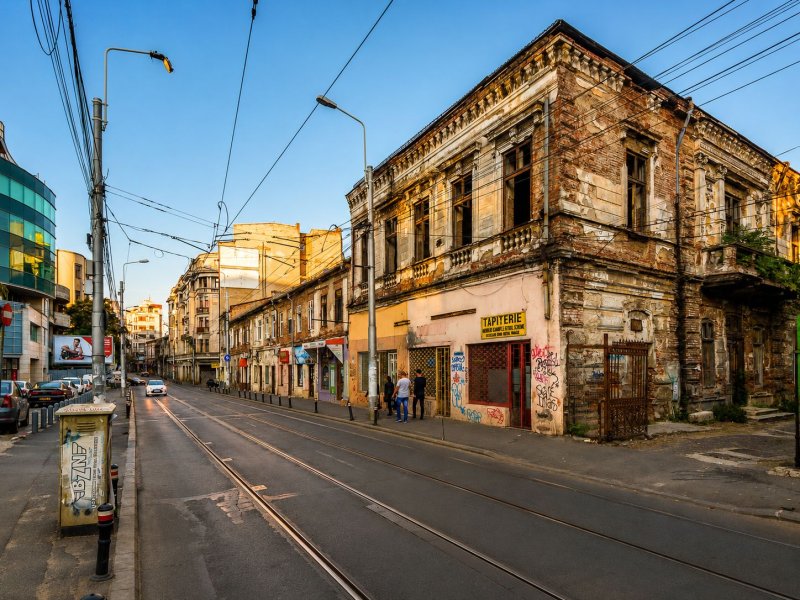
Calea Moșilor was long known as Podul Târgului de Afară, or the Road of the Outer Market. The term “pod,” meaning bridge, referred to the road itself, which was covered in certain sections with wooden beams, a practical solution in a city where rain could turn getting around into an involuntary ice-skating demonstration. The route began in the area of the Princely Court and led toward the Outer Market, linking the commercial centre with trading spaces and the roads toward Moldavia and Brăila.
During the Phanariot era, the route concentrated shops, households, courtyards, parish churches, workshops and commercial areas. The road played a fundamental urban role, serving as one of the arteries that connected the political city with the economic city. The Moșilor Fair, organised near Obor, reinforced this function and turned the area into a place of intense movement for goods, animals and people.
Today’s Calea Moșilor preserves mainly the logic of the route rather than the complete image of the old road. The low houses, commercial fragments, churches in the side streets and the old plot pattern of nearby roads still help reveal the city of the past. Phanariot Bucharest appears here less as a perfectly restored monument and more as a living urban structure: occasionally disorderly, always stubborn and surprisingly resilient.
Phanariot Bucharest survives today in fragments: a house with a veranda, a church built by an official, a princely court turned into an archaeological site, a commercial route that still cuts across the city toward Obor. Seen together, these places reconstruct a capital of merchants, boyar families, religious communities and neighbourhood districts. The modern city rose over that world with an admirably consistent appetite for demolition, yet a few pieces remained above ground. They are worth seeking out before Bucharest decides that there is still room for another apartment block between them.
You may also like: Before Little Paris, There Was Little Constantinople. How the Phanariote Era Shaped Bucharest in the 18th–19th Centuries