“With a Cigarette in His Mouth, He Casually Walked Out Through the Main Gate!”: Top 3 Escape Attempts from Văcărești Prison 100 Years Ago
- Articles
- 04 NOV 26
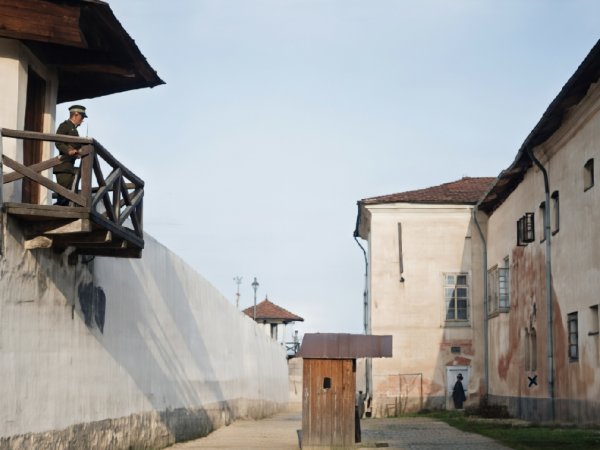
About a century ago, Văcărești Prison was one of Bucharest’s important penitentiary institutions, and its walls witnessed not only imprisonment, but also numerous attempts by inmates to regain their freedom. Some plans were elaborate and involved digging tunnels, others relied on disguises, while the most spectacular ones simply took advantage of the guards’ lack of attention. The newspapers of the time recorded such incidents in considerable detail. Publications such as Dimineața, Lumea and Timpul turned escape attempts into genuine sensational stories, reporting on inmates with colorful nicknames, ingenious plans and, sometimes, mistakes that meant freedom lasted only a few minutes. The following three episodes, which took place in 1920, 1928 and 1940, offer a fascinating glimpse into life inside Văcărești Prison.
The secret tunnel dug beneath the prison during the 1920 revolt
In September 1920, Văcărești Prison became the scene of a prisoners’ revolt, and the authorities’ investigation uncovered an escape plan that could have had serious consequences had it not been discovered in time. An article published in Dimineața on September 27, 1920, mentioned the investigation conducted by examining magistrate Cernescu and the people considered responsible for the outbreak of the revolt. Among them were inmates known by nicknames such as “Chioru,” “Briceag,” “Huiduma” and “Broscoiu.”
The investigation was also to reveal another side of the events. According to the account published by the newspaper, a group of inmates had attempted to dig a tunnel beneath the prison grounds. The plan was simple in principle, but extremely difficult to carry out: the prisoners intended to advance underground and create an escape route out of the penitentiary.
The tunnel began in the basement of the chapel, and the work had already reached an advanced stage. The prisoners reportedly had only about two meters left to dig before the project could be completed. They used objects and materials they could obtain inside the prison, including pieces of iron and wood.
Among those identified by the newspaper as being involved in digging the tunnel were Kis Lajoș, Vaida, Bella, Moki Sturza, Titowitz Fischer, Vasile Hanciu and Dumitru Constantinescu, known as “Broscoiu.” The plan never reached completion. According to the newspaper account, following stricter measures introduced by the prison administration, two of the inmates revealed the existence of the tunnel.
The episode is also significant because it reflects the atmosphere inside Văcărești during the interwar period. The penitentiary was not simply a place where inmates served their sentences, but also an environment in which the ingenuity of those determined to escape could become a serious problem for the administration. Digging a tunnel beneath a prison building required time, cooperation and a good knowledge of the premises. In the case of 1920, none of these were enough to make the plan succeed.
In 1928, a fake beard was supposed to turn Lascover into a free man
Eight years later, the escape attempt at Văcărești followed a completely different strategy. Instead of an extensive underground operation, the plan in December 1928 relied on a disguise. Its protagonist was Abraham Lascover, described by the newspapers of the time as a dollar counterfeiter and international criminal who was serving a previous sentence at the prison.
According to an account published by Lumea on December 31, 1928, Lascover attempted to escape with the help of Marcu Schor, a man who lived on Calea Văcărești. Schor came to the prison under the pretext of visiting him and brought the necessary items for the transformation. They were hidden inside a basket of food and included gray pencils and a fake beard.
The idea was for Lascover to look sufficiently different so that he could pass through the exit checkpoint. The beard was supposed to alter his appearance and make him look, at least at first glance, like an ordinary visitor. The plan, however, had an obvious weakness: the transformation itself was so noticeable that it ultimately gave him away.
When the disguised man reached the prison gate, the gatekeeper noticed something suspicious. He remembered that no bearded visitor had entered the prison that day. Instead of allowing him to pass, he stopped him and handed him over to the guards. His accomplice, Marcu Schor, was also arrested shortly afterwards.
The contemporary press presented the episode as an attempted escape based on a rather modern idea, but the plan failed precisely because of a detail its authors had not taken sufficiently into account: the gatekeeper’s memory. Historical newspaper archives confirm that Lascover was placed under close scrutiny, while Schor was also taken into custody.
The story is almost cinematic in its simplicity. A basket of food, an artificial beard and the hope that nobody would notice the change might have seemed sufficient to deceive the guards of a prison. In reality, a single mundane detail was enough to bring the entire plan crashing down.
Marin Sovancea walked out through the main gate with a visitor’s ticket
The most spectacular of the three stories took place in January 1940 and was reported by Timpul in an article published on January 19. The journalist described it as the boldest escape to have taken place at Văcărești in the previous 20 years. Unlike the plans of 1920 and 1928, the protagonist did not dig a tunnel and did not rely on an elaborate disguise.
Marin Sovancea simply walked out through the main gate.
Everything began on a day when “visiting hours” were scheduled at Văcărești. This was the period when the families of convicted prisoners and remand detainees were allowed to come and speak with those held inside the prison. Visitors received a small control ticket, which allowed them to enter and subsequently leave the penitentiary.
A boy of approximately 15 had come to the prison to see his father and was holding the ticket he had received at the entrance. An inmate named Bresan noticed the document and realized that the small piece of cardboard could become the key to freedom. He asked the boy for the ticket, and the child, unaware of whom he was giving it to, handed it over.
Bresan then showed the ticket to his cellmate, Marin Sovancea. For him, the plan immediately became clear. There was no need for a ladder, tunnel or weapon. All he needed was a visitor’s ticket and clothes that would make him appear to be someone from outside.
Sovancea asked other prisoners for civilian clothes and a cap. He claimed that he had to report to the authorities and did not want to appear wearing his striped prison uniform. The prisoners gave him the clothes without realizing their true purpose.
Soon, Sovancea was ready. He pulled the cap down over his eyes, lit a cigarette and headed toward the main gate. He did not hide, did not try to run and gave no impression that he was afraid. On the contrary, according to Timpul, he passed the gatekeeper with remarkable calm and presented the visitor’s ticket.
The strategy worked. At that moment, approximately 1,200 inmates were being held at Văcărești, and there was a large number of people entering and leaving because it was a visiting day. The gatekeeper did not recognize Sovancea and had no obvious reason to suspect that the man in civilian clothes was actually a prisoner.
Thus, Marin Sovancea walked out of the penitentiary through the main gate, holding another person’s visitor ticket and smoking a cigarette. After leaving the premises, he headed toward a bus and calmly boarded it, attempting to disappear into the city as naturally as possible. The contemporary newspaper account compared the escape with those of several notorious Văcărești inmates, including Brandabura, Broitman and Schwarz.
The irony of the entire story is that Sovancea was not immediately identified as an escaped prisoner. The alarm was raised only after the identity of the person who was supposed to leave the prison began to be clarified. The children arrived at the gate without the required control ticket, and the situation became suspicious. By then, the document that had enabled Sovancea to leave the prison was already in the fugitive’s possession.
Three plans, three different ways of seeking freedom
The three episodes reveal three completely different types of escape attempt. In 1920, the prisoners relied on patience, hard work and a tunnel dug underground. In 1928, Lascover tried to transform himself into another man with the help of a fake beard. In 1940, Sovancea used a simple visitor’s ticket and relied on the most ordinary appearance possible: that of a man who had nothing to hide.
Beyond their spectacular nature, these stories also reveal something about Văcărești Prison and interwar Bucharest. The penitentiary was a large and crowded institution, and security depended not only on walls and gates, but also on the vigilance of the people guarding them. A breach could emerge through a basement, an ill-chosen disguise or a small control ticket.
The Văcărești Monastery and prison complex disappeared in the 1980s, when the entire ensemble was demolished during the communist regime. Today, the site no longer preserves the image of the complex that had dominated this part of Bucharest for centuries. Its history can nevertheless be reconstructed through documents, testimonies and newspaper reports that recorded the events of the time.
Among all the stories preserved in the archives, the January 1940 episode may be the hardest to imagine: a prisoner dressed in civilian clothes, with his cap pulled down over his eyes, casually smoking a cigarette and walking out through the main gate of one of Bucharest’s best-known prisons. He did not need a tunnel, a ladder or a key. All he needed was another man’s visitor ticket and a few moments of inattention.
We also recommend: Mânăstirea Văcărești, simbolul Bucureștiului distrus de Ceaușescu: de la faimosul lăcaș de cult la închisoare politică