Architects who shaped the city of Bucharest: Ion D. Berindey, the architect with golden hands who designed the city’s most beautiful buildings
- Articles
- 26 FEB 26
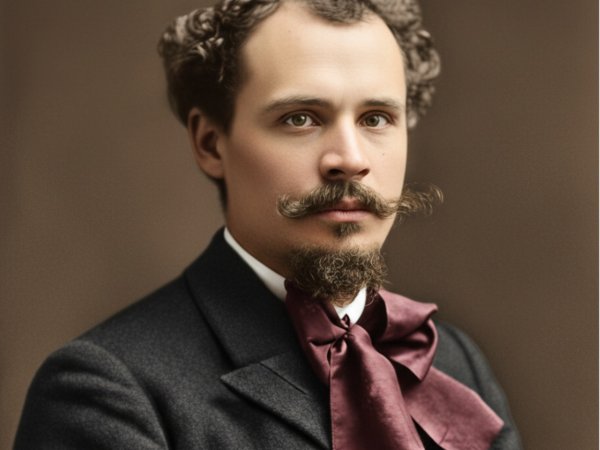
Ion D. Berindey is undeniably one of the architects who placed Romania on the European architectural map and transformed the country into a land of style and elegance. Considered the most prolific Romanian architect of his era, Berindey left behind a rich legacy, including masterpieces such as the Palace of Culture in Iași, the Astronomical Observatory in Bucharest, the Small Trianon in Florești, and the House of the People of Science. His contribution reshaped not only Bucharest but also other major cities, setting the tone for early 20th-century Romanian architecture.
A scion of architectural excellence
Born in 1871, Ion D. Berindey grew up in a family where architecture was more than a profession; it was a tradition. His father, Dumitru Berindey, was the first Romanian-born architect to graduate from the École des Beaux-Arts in Paris, a prestigious institution that influenced the architectural trajectory of Europe. Ion followed in his father’s footsteps, attending the same school and immersing himself in the French academic style, which combined classical rigor with creative expression.
Berindey’s early years included work on international projects and the accumulation of expertise that would later inform his Romanian masterpieces. Returning to Romania in 1897, he quickly established himself, and by 1899 he became chief architect at the Technical Service of the Ministry of Internal Affairs. From this position, he began shaping the capital city’s architectural identity during a period of intense urban growth after the 1878 War of Independence.
Architectural philosophy and style
Berindey was known for his insistence on quality and precision. He refused to compromise, meticulously overseeing every detail of his projects. This relentless dedication ensured that his buildings were not only aesthetically impressive but also structurally sound. His approach contrasted with the often superficial construction practices of the era and set a new benchmark for Romanian architecture.
His style is eclectic, seamlessly blending classical elements with emerging European trends. Every building he designed was the product of careful planning, innovative solutions, and a deep understanding of proportion and ornamentation. His work reflected both the grandeur expected by Romania’s elite and the cultural aspirations of a country eager to assert its modern identity.
Iconic buildings in Bucharest
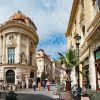
Among Berindey’s most celebrated achievements is the Gheorghe Grigore Cantacuzino Palace on Calea Victoriei, commonly known as the House with Lions. Constructed between 1898 and 1903 for the wealthy nabob Cantacuzino, the palace is a symbol of architectural perfection. Its intricate details, elegant façades, and stately interiors exemplify Berindey’s commitment to craftsmanship. Although modern renovations have altered some elements, the building remains a benchmark of Bucharest’s architectural heritage.
The palace also holds a unique cultural history. Cantacuzino’s daughter-in-law, Măruca, married George Enescu, Romania’s legendary composer, and although the family mostly resided in a smaller house behind the palace (now the George Enescu Memorial House), the palace itself became associated with music and culture.
Between 1904 and 1905, Berindey designed the home of industrialist George Assan, today known as the House of the People of Science. This residence, like many others, reflects his attention to detail, from façade ornamentation to interior layout. His buildings were commissioned mostly by Romania’s wealthiest families, and his fees, typically between 7 and 10 percent of the project’s total value, made him the architect of the elite.
Berindey’s influence extended beyond residences. On Bulevardul Kiseleff, one of Bucharest’s most prestigious streets, he designed the house of diplomat Nicolae Titulescu, among others. His work created a harmonious urban landscape, blending functionality with grandeur, shaping the aesthetic of the capital in ways that remain visible to this day.
Beyond the capital
While Bucharest bears much of Berindey’s mark, his talent extended to other regions of Romania. He designed Florești Castle in Prahova, inspired by the Small Trianon in Versailles, as a personal gift for Cantacuzino’s eldest granddaughter, Alice. The construction was partially completed in 1914, but the outbreak of World War I halted further work.
Another highlight is the Palace of Culture in Iași, arguably Berindey’s magnum opus. Built between 1907 and 1926 on the foundations of a medieval princely court, the building originally served as an Administrative and Justice Palace until 1955. Covering 36,000 square meters and housing 298 rooms, the Palace exemplifies Berindey’s monumental vision and meticulous planning. Its clock tower, meticulously adjusted by Berindey and his son before the inauguration in 1925, continues to mark the rhythm of the city with the melody of Hora Unirii.
A mentor and pioneer
Beyond his architectural creations, Berindey was committed to advancing the profession in Romania. He advocated for architects’ rights and helped establish frameworks for their professional organization, encouraging young architects to unite and elevate their craft. His urban planning work included contributions to Bucharest and Craiova, and although the General Plan of Bucharest (1904–1906) remained unrealized due to limited resources, it reflected his strategic vision for a modern capital.
Legacy and enduring impact
Ion D. Berindey passed away in 1928 at the age of 57, leaving behind a body of work that includes over 60 surviving buildings, each a testament to his skill, creativity, and dedication. Some of these structures have endured remarkably well, others suffered decay or demolition, while a few underwent careful restoration.
The House of the Farmer N.N. Popp in Padea, Dolj, built in 1907, demonstrates his residential style, while the Palace of Culture in Iași remains the crowning achievement of his career. His influence went beyond bricks and mortar; he shaped generations of architects, imparting a standard of excellence and a vision of architecture as both art and societal instrument.
Berindey’s work positioned Bucharest among European cities with refined architectural identity. He combined elegance, functionality, and modernity, leaving a lasting imprint that continues to define the capital’s urban landscape.
Ion D. Berindey was not merely an architect; he was a creator of cultural landmarks, a mentor to his contemporaries, and a visionary who transformed Romania’s architectural scene at the dawn of the 20th century. His buildings stand as symbols of style, quality, and aesthetic integrity, while his influence on urban planning and professional organization cemented his role as a pivotal figure in Romanian architectural history.
Even a century later, walking through Bucharest or visiting Iași, the work of Ion D. Berindey commands respect and admiration. His legacy endures not only in stone and mortar but in the artistic standards and aspirations he instilled in future generations of architects. Berindey’s life and creations exemplify the perfect blend of artistic genius, technical skill, and unwavering dedication, securing his place as one of Romania’s most celebrated architectural masters.
We also recommend: Symbols of Bucharest: La Caru' cu Bere, 130 years ago, drinks arrived in horse-drawn carriages along Calea Victoriei