How Bucharest Streets Got Official Names and Why They Lost Them So Often
By Eddie Țone
- Articles
- 09 MAY 26
You walk through Piața Victoriei and stop at the corner where Calea Victoriei makes its solemn entrance into history. You take out your phone, check the map, get your bearings. Everything seems natural. But have you ever wondered how you would have done this in the 19th century, when streets had no names, only nicknames given by locals? “The lane behind the church,” “the lane where Manolache the merchant lives,” “the road to Bucur’s fountain.” Bucharest functioned like a large village, where everyone knew where everyone else lived. Until someone — an enlightened prince or a zealous clerk — realized that a city aspiring to be a European capital could hardly function on the “ask for the house with the blue fence” system.
The first official street names appeared in Bucharest only in the mid-19th century, alongside the modernization of urban administration. But what does “official” mean? It means plaques fixed to building corners, printed maps, registers in which clerks wrote full addresses. It means the postman no longer had to know each recipient personally. And, above all, it means the street became an instrument of power: whoever controls the names controls collective memory.
The moment Bucharest put on a European suit
The first serious attempt at systematization came during the reign of Barbu Știrbei, between 1849 and 1856. After the Organic Regulation and the reforms that accompanied it, the Wallachian administration realized it needed clear addresses. According to documents from the National Archives, the first complete cadastral plan of Bucharest, drawn up between 1846 and 1847 by engineer Franz Liedl, also marked the first standardized street names. You were no longer on “Gheorghe’s lane,” but on “Saint George Street.” The difference is subtle, but revolutionary, indicating the shift from private possession to shared landmark.
Podul Mogoșoaiei — the future Calea Victoriei — was already famous, but it earned its first official name precisely because it was the road leading to the mansion of boyar Mogoș. It was the city’s most important artery, yet its name was tied to a family, rather than to an abstract concept. Only later, after Independence, would it become “Victoriei,” celebrating a collective event rather than private property.
In the 1850s, according to studies by Ionel Căndea published in Revista Arhivelor, Bucharest had approximately 120 streets with official names. The others — and there were many — still functioned on the basis of local consensus. You can picture the map: an orderly center, with streets bearing grand and respectable names, and an outskirts where no one knew exactly whether “Poplar Lane” was the same as “the road to Ioniță’s garden.”
The golden age of changes: from Carol to communism
A strange pattern can be observed in Bucharest’s history: after every regime change, the streets begin changing their names as if suffering from collective amnesia. Regina Elisabeta becomes 6 Martie, 6 Martie becomes Kogălniceanu, then Regina Elisabeta again. Like a game of musical chairs played with enamel street signs.
The first major wave of changes came after 1878, with Independence. Streets received names celebrating victory: Calea Victoriei, formerly Podul Mogoșoaiei; Plevna; Grivița. It was a moment when Bucharest wanted to show that it belonged to a grand club, because European cities were naming their streets after battles, heroes, or monarchs. We did the same. Boulevard Haussmann in Paris, Unter den Linden in Berlin, Calea Victoriei in Bucharest.
King Carol I left his mark everywhere: Bulevardul Carol, Carol Park, Piața Carol. According to data from the Monitorul Oficial of the period, more than 200 Bucharest streets were renamed between 1880 and 1914. But these changes were not arbitrary; they followed a logic: the center was reserved for the monarchy and institutions, residential districts received the names of cultural figures — Mihai Eminescu Street, Ion Creangă Street — while the outskirts kept their old names or received simple geographical ones, such as Șoseaua Colentina or Drumul Taberei, although the latter came later.
After the First World War, the wave of renaming accelerated. Queen Marie, aviation pioneer Traian Vuia, generals, politicians — all received a street. Bucharest was growing rapidly, expanding its outskirts, and every new neighborhood became a blank canvas for the City Hall’s naming committees. But these changes were relatively gentle: new names were added more often than old ones were erased.
Communism and the obsession with renaming
Then came 1948. And with it, the largest renaming campaign in the history of Bucharest. In just a few years, according to research by historian Stelian Tănase, more than 60% of the central streets changed their names. This was not a matter of addition, but of systematic erasure.
Regina Elisabeta became 6 Martie. Bulevardul Regele Carol became Bulevardul Republicii. Bulevardul Mareșal Ion Antonescu became Bulevardul Stalin, then Aviatorilor. The former Piața Palatului became Gheorghe Gheorghiu Dej. The communist regime wanted to completely rewrite memory. You look at maps from 1950 and you simply no longer recognize the city, as if someone had rubbed out everything that smelled of “bourgeois,” “monarchist,” or “reactionary.”
But this obsession also had a practical side: in a totalitarian regime, urban geography becomes an instrument of propaganda. When you walk along Bulevardul Muncii or head toward Piața Scânteii, you are constantly reminded where you are and to whom the city belongs. Every street is a slogan, every enamel metal plaque leading toward an ideological manifesto.
The irony is that many of these changes were superficial. Locals continued to use the old names in conversation. “We’ll meet at Elisabeta,” they would say, even though officially it had been 6 Martie for ten years. Oral memory proved more resilient than metal plaques. And the regime knew it, which is why it continued changing names every decade, hoping that at some point the new name would take root.
1990 and the great return home
December 1989 brought, among other things, a revenge of history upon street signs. Within a few weeks, Bucharest began recovering its old names. Bulevardul Victoria Socialismului became Bulevardul Unirii. Bulevardul Ana Ipătescu became Bulevardul Lascăr Catargiu. Bulevardul Gheorghe Gheorghiu Dej was divided into Bulevardul Elisabeta and Bulevardul Mihail Kogălniceanu. Bulevardul Armata Poporului became Bulevardul Iuliu Maniu. Bulevardul 1 Mai was renamed Bulevardul Ion Mihalache. Strada Gheorghe Dimitrov became Strada Doamnei. Piața Scânteii became Piața Presei Libere. Streets such as Proletarului, Muncitorului, Solidarității, and Scânteii were replaced with names of historical or cultural figures.
But things were not so simple. According to data from Bucharest City Hall, the post-December renaming process lasted almost ten years and involved more than 300 streets. Some returned to their interwar names. Others received new names, belonging to heroes of the Revolution or cultural figures who had previously had no place on the map. Strada Henri Coandă, Bulevardul Corneliu Coposu, and so on — all reflect a desire for recalibration, for balance between memory and recognition.
Street names as political archaeology
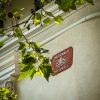
When you walk through Bucharest today and read the plaques on building corners, you are in fact moving through a cemetery of ideologies. Every name is a layer of power, deposited and then erased, or tolerated, or rediscovered. Calea Victoriei survived because the victory of 1878 is still acceptable. Bulevardul Carol reappeared in memory of the monarchy. Bulevardul Aviatorilor remained because aviation is politically neutral, at least on the surface.
And yet, within this nebula of changes, renamings, and recoveries, one strange constant remains: Bucharest never completely lost its mental map. Even when streets changed their official names, locals preserved the old versions in memory.
Today, when you walk through the city with GPS switched on, you no longer think about this. But the street you are walking on carries in its metal plaque not only a name, but several political regimes, three wars, two dictatorships, and a revolution. And if you stop at the corner and read carefully, you may realize that, in fact, it is not the street that changes its name. It is power trying to convince you that history begins with it.