Famous shows and performances in old Bucharest. How Bucharest residents used to have fun
By Raluca Ogaru
- Articles
- 07 JUL 26
Old Bucharest was not only the city of carriages, elegant cafés and promenades along Calea Victoriei. It was also a city of performances. In the evening, the capital came alive around theatres, summer gardens, cinemas, concert cafés and the circus. People went out to see famous actors, satirical couplets, vaudeville, revue shows, silent films, acrobatic acts, concerts and open-air performances.
For Bucharest residents of the 19th century and the interwar period, entertainment was not just a break from everyday life, but also a form of socialising. You went to a show to laugh, to be seen, to comment on fashion, politics, actors and the latest news in the city. Bucharest enjoyed itself with appetite, sometimes refined, sometimes noisy, but almost always with an urban energy that remained part of the city’s memory.
Theatre, the place where Bucharest displayed its elegance
One of the great landmarks of Bucharest entertainment was the old National Theatre on Calea Victoriei. The history published by the Bucharest National Theatre notes that in 1852, the Great Theatre of Bucharest opened, with Costache Caragiale as its first director, and the first performance took place on 31 December 1852, with the play “Zoe or A Romanian Love”.
For Bucharest at that time, theatre was not only culture, but also a social event. An evening at the theatre meant elegant outfits, boxes, conversations, meetings and reputation. The audience did not come only to watch the play, but also to take part in the city’s social life. In a way, the theatre was one of the stages on which Bucharest looked at itself.
The Bucharest Municipality Museum recalls that only in 1875, under the directorship of Alexandru Odobescu, did the name “National Theatre” appear on the building’s façade. Until then, the institution had been known as the Great Theatre, but its role in the life of the city was already established: it was the space where public taste was shaped and where Romanian theatre gained prestige.
The building on Calea Victoriei disappeared after the bombings of 1944, but its place remained in the imagination of cultural Bucharest. Today, the entrance of the Novotel Hotel recalls the façade of the old theatre, like an urban echo of the evenings when Calea Victoriei filled with spectators, carriages and conversations about actors, plays and premieres.
Constantin Tănase’s Cărăbuș and the fashion of Bucharest revue
If classical theatre was the area of elegance, revue was the place where Bucharest laughed at itself. Revue theatre caught on very well in a city where politics, fashion, manners and the small absurdities of daily life begged to be commented on from the stage. This is where couplets, dances, music, satire and characters recognisable to the audience appeared.
The history of the “Constantin Tănase” Revue Theatre shows that Romanian revue is linked to the name of Constantin Tănase and the “Cărăbuș” Company. On 23 May 1919, on Academiei Street, on the site where the “Amicii orbilor” summer garden had once operated, the foundation stone of the “Cărăbuș” Garden was laid.
Cărăbuș was not just a summer theatre, but a phenomenon. Bucharest came there to have fun, but also to recognise itself in the jokes. Revue worked like a living newspaper, sung and performed. What happened in politics, on the street, in the family, in fashion or in administration could quickly reach the stage, transformed into a couplet and irony.
Constantin Tănase’s success came precisely from this closeness to the audience. He did not merely offer shows, but a comic mirror of the city. Bucharest residents laughed at bureaucracy, prices, politicians, neighbourhoods, social pretensions and their own weaknesses. In a city caught between tradition and modernisation, revue became one of the most beloved forms of entertainment.
Summer gardens, open-air performances and long city evenings
Old Bucharest had a strong culture of summer gardens. Before air conditioning, malls and online platforms completely changed the way people spent their evenings, summer meant going out to open-air shows. The gardens offered theatre, music, revue, film, conversation, cool air and the feeling that the city did not end when evening fell.
The magazine of the “Carol I” Central University Library published an article about the theatres and summer gardens of old Bucharest, highlighting their role in the city’s cultural life and the potential such spaces would still have today for performances, concerts or screenings.
One of the best-known gardens was Alhambra, a landmark of interwar Bucharest. București.ro has already written about its history, from its inauguration in 1916 as the first summer theatre in Bucharest to the transformations the place went through over time.
The charm of these gardens came from the mixture of performance and social life. It was not the same experience as sitting in a solemn theatre hall. The audience was more relaxed, the evenings were longer, and the city seemed to take part in the performance. People ate, drank, commented, applauded and left late, while Bucharest still vibrated around its boulevards and gardens.
Cinemas, the new fascination of modern Bucharest
With the development of cinema, Bucharest discovered a new form of spectacle. Film radically changed urban entertainment. A stage and actors present in front of the audience were no longer necessary. The screen brought distant worlds, stars, modern stories and a new technological fascination.
Via București notes that a walk through interwar Bucharest was dotted with illuminated cinema advertisements, with names such as Vox, Lucifer, ARPA, Aro, Liric, Puiu or Intim, and that cinemas were found not only in the centre, but also in areas such as Văcărești, Dudești, Rahova or Uranus.
One symbol of this era was the ARO Cinema, later known as Patria. Arhitectura magazine shows that the ARO Cinema hall was built in 1934 and inaugurated in January 1935, being at the time the largest cinema hall in Bucharest, with almost 2,000 seats and the possibility of hosting theatre performances or conferences as well.
Cinema also changed the rhythm of going out in the city. Bucharest residents went to the movies for stories, but also for the atmosphere: lights, posters, premieres, stars, foyers, crowds and discussions after the screening. In the interwar period, cinema became one of the most democratic forms of urban entertainment, accessible to a wider audience than fashionable theatres.
Sidoli Circus, the miracle that brought acrobats, horses and sensation
Before television and the internet brought spectacle directly into people’s homes, the circus was one of the most powerful forms of visual entertainment. For audiences of the past, the circus meant amazement: animal acts, horses, acrobats, clowns, risky numbers and characters who seemed to come from a parallel world.
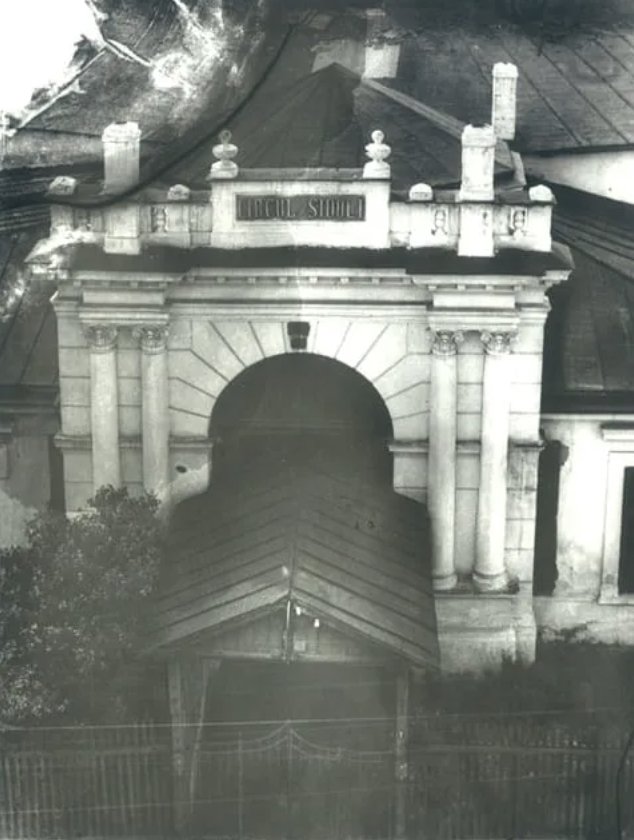
Sidoli Circus, Bucharest 1920 - Photo source: http://imagoromaniae.ro/
Sidoli Circus is one of the essential names in this history. Historia writes that Theodor Sidoli founded the first professional circus in Romania in 1874, and that the circus building was initially erected on the site of today’s Hotel Cișmigiu. After the fire of 1887, a new building was to be constructed at the intersection of Poliției and Sapienței streets.
The Bucharest Municipality Museum published, in “București – Materials of History and Museography”, a study dedicated to Sidoli Circus, presented as the first permanent circus in the capital, founded by Theodor Sidoli. The fact that this subject appears in museum research shows how important the circus was in Bucharest’s cultural and urban life.
For Bucharest residents of that time, the circus was a complete experience. You did not go only to see one act, but to enter a universe of the extraordinary. In a city that was modernising quickly, the circus preserved something of the world of fairs, but wrapped it in a professional, spectacular and memorable form.
How Bucharest residents actually had fun
Entertainment in old Bucharest cannot be reduced to one single type of show. People went to the theatre, revue, cinema, circus, summer gardens, concerts, balls, cafés and restaurants with live music. The city had several rhythms of entertainment, depending on season, social class, neighbourhood, fashion and income.
For the elites, theatre, balls, concerts and central cafés were spaces of social visibility. For the wider public, cinema, summer gardens, revue and the circus offered access to fun, emotion and novelty. Bucharest had layered entertainment, but these layers often intersected in the centre, on the boulevards, in front of posters and on summer evenings.
An important detail is that the show did not necessarily end when the performance was over. It continued in the street, at the café, on the tram, at home or at work the next day. A good premiere, a successful couplet or a sensational circus act became a subject of conversation.
That is why the famous shows and performances of old Bucharest say more than the history of entertainment. They show how the city lived, how it laughed, what it admired, what it criticised and what it wanted to become. In those evenings of theatre, revue, film or circus, one can see a lively, curious, fashionable, ironic Bucharest, always eager for something new.
What remains of Bucharest’s old world of spectacle
Many of the famous places have disappeared or completely changed their function. The old National Theatre on Calea Victoriei no longer exists, many historic cinemas are closed, and summer gardens have become rare. Even so, their memory has not disappeared. It is preserved in photographs, chronicles, posters, transformed buildings and urban stories.
Some landmarks continue in other forms. The “Constantin Tănase” Revue Theatre carries on the revue tradition, Calea Victoriei remains an artery of cultural promenade, and the city’s performance halls still gather audiences. Even if the city has fun differently today, the desire for spectacle has remained the same.
READ ALSO:
The “Pescăruș” restaurant in Bucharest, the favorite place of the communist nomenklatura
For tourists, this history can become an urban route: Calea Victoriei and the site of the old National Theatre, the Academiei area and the memory of Cărăbuș, the old cinemas on the boulevards, Cișmigiu and the story of Sidoli Circus, then the gardens and theatres that still preserve the atmosphere of summer performances.
Old Bucharest was not a quiet city. It was a city that applauded, booed, laughed, commented and went out in the evening to see what was new. And from this appetite for spectacle, an important part of its charm was built: a capital that always knew how to turn entertainment into urban life.
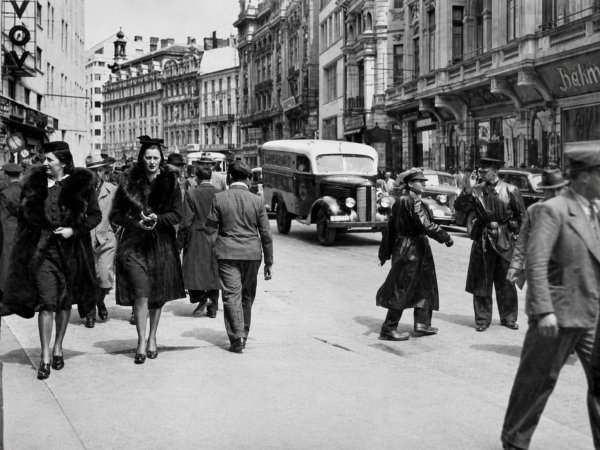
Main image source: Bucharest residents on Calea Victoriei, https://www.bucurestiivechisinoi.ro/