The History of Veranda Mall: The Transformation of the Prodplast Industrial Platform into Obor’s First Neighborhood Mall
- Articles
- 20 AUG 26
Piața Obor is, without a doubt, one of Bucharest’s oldest and most dynamic commercial hubs. With a history reaching deep into past centuries, when the area was home to the famous “Moșilor Fair,” Obor has always preserved a vibrant mercantile spirit, characterized by the direct, noisy, and diverse interaction between traders and shoppers. However, with the arrival of the 21st century and the rapid expansion of modern retail concepts, this traditional area of the capital needed structural revitalization capable of bringing its historic local charm into dialogue with the demands of the contemporary consumer.
A new urban planning paradigm in the heart of Bucharest’s commercial district
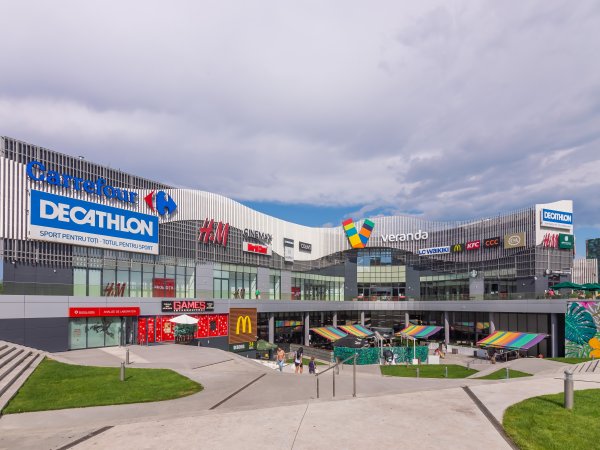
The answer to this need for modernization came in the form of a bold and unconventional real estate project for the Romanian market: Veranda Mall. Opened in the autumn of 2016, it was not conceived as a gigantic regional shopping center, but established itself as Bucharest’s first “neighborhood mall.” Its history is the story of a successful urban conversion, in which a former industrial platform from the communist period was transformed into an open community space capable of redefining the visual and economic identity of the entire Sector 2.
The industrial roots: the legacy of the Prodplast factory
To fully understand the origins of Veranda Mall, it is necessary to go back in time, to a period when the land at 23 Ziduri Moși Street did not echo with the footsteps of shoppers looking for clothes or entertainment, but with the noise of heavy machinery. For decades, this site housed the famous Prodplast plastics factory, an emblem of Bucharest’s industrialization.
Founded and developed during the socialist regime, Prodplast was one of Romania’s main suppliers of plastic products, ranging from industrial packaging to consumer goods. The factory occupied a substantial area right next to the central hall of Obor Market, benefiting from excellent logistical connections, typical of an era when large factories were strategically located inside cities to facilitate access to the workforce.
With the collapse of the communist regime and the transition to a market economy, the presence of a chemical and industrial production facility in the middle of a densely populated area became increasingly difficult to sustain from an environmental and urban planning perspective. The factory’s owners, controlled by the Romanian entrepreneurial Pogonaru family, through Florin Pogonaru and later his son, Andrei Pogonaru, understood that the real value of the asset no longer lay in the production activity carried out on the site, but in the enormous real estate potential of the land.
In 2012, the strategic decision was made to completely relocate Prodplast’s production capacities to the Faur industrial platform in eastern Bucharest. This move left behind approximately 3–4 hectares of vacant land in the Obor area, paving the way for one of Bucharest’s most spectacular urban regeneration initiatives.
Planning and concept: the birth of the first “neighborhood mall”
After the land was cleared, Prodplast Imobiliare S.A., later renamed Professional Imo Partners S.A., began outlining the new project. Unlike other major shopping centers in Bucharest, developed by international investment funds with colossal budgets and enormous dimensions, Veranda Mall was a purely Romanian entrepreneurial venture. The initial investment was estimated at approximately €60 million, a considerable sum for a local developer at the time.
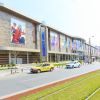
The project was entrusted to the architects at the renowned international studio Chapman Taylor, a firm with extensive experience in the design of modern retail spaces. The main challenge for the architects was not to create an isolated “concrete box,” but a complex that would breathe and naturally communicate with its surroundings. Thus emerged an architectural concept based on transparency and openness, with a massive glazed façade and a generous outdoor area as its central elements, details that directly inspired the project’s name: Veranda.
The “neighborhood mall” concept was the central pillar of both the marketing and functionality of the project. Andrei Pogonaru, who coordinated the project’s implementation, explained at the time that the objective was not necessarily for people to spend four or five hours in the mall during every visit, but rather to integrate the shopping center into their daily routine. Veranda was meant to be the place where residents of the Obor, Colentina, Pantelimon, or Moșilor neighborhoods could stop on their way to work or home to do some quick shopping, have a meal, or take care of everyday services.
Actual construction began in the autumn of 2014. The construction site progressed at a steady pace despite the major logistical challenges posed by extensive underground works, including a multi-level parking facility, in an extremely crowded area with heavy car traffic typical of the Obor intersection.
The grand opening in 2016 and the original layout
October 27, 2016, officially marked Veranda Mall’s entry onto Bucharest’s retail map. The opening was met with enormous enthusiasm from the local public; during the first weekend after the inauguration, more than 150,000 visitors crossed the threshold of the new mall, eager to discover the shopping alternatives it brought to an area historically dominated by street commerce and market stalls.
At the time of its launch, Veranda Mall had a gross leasable area (GLA) of approximately 30,000 square meters, arranged across two main shopping levels. The project’s main anchor tenant was the Carrefour hypermarket, which occupied a substantial area of approximately 10,000 square meters on the ground floor of the complex and was the first major tenant signed by the developers.
The tenant mix was strategically designed to cover all price segments and consumer needs, including popular international brands such as H&M, C&A, CCC, Deichmann, LC Waikiki, and Pepco. Alongside the fashion and footwear area, particular emphasis was placed on the restaurant and food court area, where major operators such as McDonald’s, with a Drive-Thru location, and KFC established units.
One of Veranda Mall’s major distinguishing advantages was its 15,000-square-meter outdoor green space. This generous esplanade was landscaped with parks, children’s playgrounds, and terraces, providing the Obor neighborhood with an outdoor leisure area that had been almost entirely absent from an urban landscape dominated by communist-era apartment blocks and narrow streets. The project also provided more than 1,200 parking spaces, offering some relief for traffic congestion around the market.
The project’s evolution and maturation: expansions and adaptations
The success of a neighborhood shopping center depends directly on its ability to listen to community feedback and adapt to changes in consumer behavior. During its first years of operation, although visitor traffic was consistently high thanks to its excellent location, the need for an expansion focused on entertainment became apparent.
In 2019, Veranda Mall underwent a significant expansion and space optimization process, following a major new investment financed partly through a long-term loan provided by CEC Bank. This step brought two major additions that transformed the mall from a simple quick-shopping destination into a complete leisure destination.
One of these additions was Cinemax cinema, a modern Slovak multiplex operator that opened its first cinema in Romania at Veranda, equipped with state-of-the-art audiovisual technology and special halls for children.
The second major addition was a World Class fitness center. The leader of Romania’s wellness market opened an expanded club within the mall, attracting a loyal community of customers focused on a healthy lifestyle.
This expansion raised the shopping center’s occupancy rate to nearly 99%, strengthening its position against competitors represented by other projects in the eastern half of the capital, such as Mega Mall.
Another turning point in the mall’s history came in 2020, marked by the COVID-19 pandemic. At a time when health restrictions severely affected physical retail, Veranda Mall’s management demonstrated digital agility by launching the first online marketplace operated by a shopping mall in Romania. The initiative allowed small retailers and brands inside the mall to continue selling to nearby customers through an integrated digital platform, creating an innovative omnichannel model.
Sustainability and community integration today
Looking back, a decade after the first construction works began, Veranda Mall has gone beyond the status of a simple real estate investment, becoming an organic part of the identity of the Obor neighborhood. The project has distinguished itself through a coherent strategy focused on sustainability and social responsibility. An illustrative example is the implementation of a large-scale photovoltaic project on the building’s roof, designed to provide partial energy independence and reduce the complex’s carbon footprint.
Over the years, the mall’s outdoor and indoor spaces have regularly hosted local producers’ fairs, cultural events, donation campaigns, and educational activities for children, thus preserving a symbolic connection with the community spirit of old Obor, but in a civilized, clean, and safe format.
A successful model of urban regeneration
The history of Veranda Mall in Bucharest represents a lesson in modern urban planning and visionary management. The transformation of a polluting plastics factory into a green, spacious, and vibrant shopping center demonstrated that neighborhood retail can bring enormous added value to citizens’ everyday lives. By keeping Romanian capital at the helm and constantly adapting to the real needs of Sector 2, Veranda remains a successful example of how a mall is not merely built in a neighborhood, but gradually learns how to belong to that neighborhood.
We also recommend: The history of Promenada Bucharest, the mall of corporate employees in the northern area of the Capital