The story of maestro Ștefan Tapalagă: from national fencing champion to the great actor of Bucharest
- Articles
- 21 AUG 26
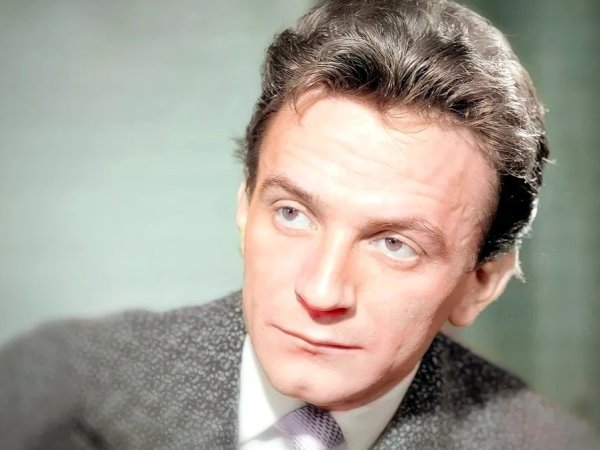
Ștefan Tapalagă holds a special place in the history of Romanian theatre, cinema and entertainment. An actor with a distinctive expressiveness, endowed with spontaneity, intelligence on stage and an unmistakable sense of humour, he managed to create memorable characters both on stage and in front of the film cameras or radio microphones. His story is all the more interesting because, before becoming one of the acclaimed actors of Bucharest, Tapalagă had a career in competitive sports and became a national champion in foil fencing. Born on April 4, 1933, in Dorohoi, Ștefan Tapalagă began his life far from the great stages of the capital. However, he was to reach Bucharest through an unexpected path, first thanks to sport and then because of an artistic vocation that gradually became the centre of his existence. He died in Bucharest on May 21, 1994, at only 61 years of age, leaving behind an impressive career and a series of characters that continue to be discovered even today by theatre and film lovers.
Childhood in Dorohoi and his passion for fencing
Ștefan Tapalagă was born at a time when Dorohoi still retained the atmosphere of an important urban centre of Moldavia. He spent his school years here, attending primary school and then high school. After the war, his family moved to Bucharest, and the capital would offer young Tapalagă the opportunity to discover both the world of competitive sports and, later, the universe of theatre.
As a teenager, he became interested in fencing, a sport that required not only physical fitness, but also speed, discipline, concentration and very good control over one's emotions. For Tapalagă, the fencing piste became the place where he demonstrated his talent. He competed in foil, and his performances propelled him into the elite of Romanian fencing.
In 1954, he received the title of Master of Sport and began representing Romania in international competitions. He was part of the foil team of the Steaua club, then known as CCA, and participated in international tournaments. In 1956, he became national individual champion in foil, while sources dedicated to the history of sport mention that, together with his team, he won the national championship several times.
Paradoxically, his very temperament could become an obstacle in his sporting career. Tapalagă was a strong competitor, but emotions and impulsiveness sometimes affected his performances. In one competition he could defeat highly rated opponents, only to fail to reach the same level of performance in the next one. The actor would later admit that specialists had told him that, had he been calmer during competitions, he could have gone even further in sport.
However, this experience was not lost. Fencing taught him reflexes, discipline, attention and the ability to anticipate an opponent's reaction. All these qualities would later prove useful on stage, where the actor also had to pay attention to every gesture, line, pause and reaction of his partner.
From the fencing piste to the theatre institute
In the second half of the 1950s, Tapalagă made one of the most important choices of his life: he gradually gave up competitive sport in order to pursue acting. It was not a random change. Even during the period when he practised fencing, he had a strong attraction towards the world of entertainment, while films and heroic characters fed his imagination.
He entered the “I.L. Caragiale” Institute of Theatre and Cinematographic Art in Bucharest, an institution that would train many of the great actors of his generation. He graduated in 1961, as part of a class that would go down in the history of the Romanian theatre school. Among his classmates were actors such as Traian Stănescu, Candid Stoica, Dorina Lazăr, Melania Ursu and Mitică Popescu.
An important role in his training was played by Sanda Manu, an acting teacher who would later become his wife. Together with teachers such as Ion Finteșteanu, Tapalagă acquired the foundations of the acting profession, while his student years also gave him his first contacts with the world of cinema.
In 1958, before graduating from the institute, he made his film debut in the comedy “Hello, You Have the Wrong Number!”, directed by Andrei Călărașu. The film gave him the opportunity to act alongside important actors of the period, including Ion Lucian, Iurie Darie, Stela Popescu, Ștefan Mihăilescu-Brăila and his sister, Rodica Tapalagă. Thus, the Tapalagă siblings appeared together from an early stage of their careers.
The lesson of Jacques Lecoq and the discovery of expressiveness
Ștefan Tapalagă's training did not end with his studies in Bucharest. After his time at the Institute of Theatre and Cinematographic Art, the actor travelled to Paris, where he studied mime with Jacques Lecoq, one of the important teachers of European physical theatre. Lecoq had founded an international school dedicated to theatre and mime in Paris in 1956, and his method placed particular emphasis on the body, gesture, movement and expressiveness.
The French experience would represent an important stage for Tapalagă. The actor never relied exclusively on text or dialogue. He had the ability to convey a great deal through his gaze, posture, gesture and rhythm. Therefore, his training in mime can be regarded as a natural complement to an already highly expressive stage personality.
In his case, sport and theatre did not represent two completely separate worlds. The discipline acquired through fencing, his speed of reaction and control of the body came together with the techniques of physical theatre. From this combination emerged a special stage presence, capable of transforming an apparently ordinary movement into a comic or dramatic moment.
The Comedy Theatre, the place where he established himself
After his debut, Ștefan Tapalagă also performed at the Theatre in Pitești, but the most important part of his theatrical career was to become connected with the Comedy Theatre in Bucharest. There he built his reputation as a versatile actor and worked alongside some of the most important artists of the Romanian stage.
He portrayed characters from very different texts, ranging from comedy and satire to classical and modern drama. His repertoire included “Rhinoceros” by Eugène Ionesco, “The Physicists” by Friedrich Dürrenmatt, “The Cherry Orchard” by Anton Chekhov, “Heartbreak House” by George Bernard Shaw, “Troilus and Cressida” by William Shakespeare and “The Mandrake” by Niccolò Machiavelli.
One of his essential qualities was moderation. Tapalagă understood that humour did not have to be pushed to excess in order to have an effect. In a comedy, a pause, a look or a change in intonation could be more powerful than a line delivered loudly. It was precisely this intelligence in controlling the degree of humour that allowed him to avoid caricature and create believable characters, even when the situations were deeply comic.
His appearance in “Troilus and Cressida”, in David Esrig's production at the Comedy Theatre, is an example of the period in which the institution had become one of the important centres of Romanian theatre. Period documents preserve Tapalagă's name in casts alongside actors such as Marin Moraru and Mihai Pălădescu.
The actor who also conquered cinema
In cinema, Ștefan Tapalagă built a substantial and varied filmography. After his 1958 debut, films such as “I Don't Want to Get Married” from 1960 and “Steps to the Moon” from 1963 followed, productions that contributed to consolidating his fame.
In the following years, the actor continued to appear in productions belonging to different genres. “The Brigade in Alert” from 1971, “Dimitrie Cantemir” from 1974, “The Magic Circle” from 1975, “The Elixir of Youth”, “The Redhead”, “Aurel Vlaicu”, “I Have an Idea”, “Chirița”, “Chirița in Iași” and “Attack in the Library” are among the titles that contributed to his image as a versatile actor.
He did not limit himself to comedy, however. Although audiences often associated him with comic characters, Tapalagă also possessed important dramatic resources. This ability to move from humour to seriousness explains why his career cannot be reduced to the status of a comedy actor.
One example of his cinematic popularity is “Cucoana Chirița”, in which he appeared alongside Draga Olteanu Matei and Dem Rădulescu. The production became one of the Romanian comedies known to the general public, while Tapalagă's participation strengthened the image of an actor capable of supporting memorable characters in a first-rate cast.
Radio, television and entertainment shows
Ștefan Tapalagă was not an actor limited to theatre and cinema. He had a constant presence on radio and television, and his spontaneity made him well suited to entertainment programmes. He was the kind of artist who could communicate directly with the audience, without appearing to be a barrier between the stage and the spectator.
An important part of this popularity is connected to the programme known to the public as “Sunday Album”. Tapalagă presented it alongside Sanda Toma, during a period when the programme also carried other titles, including “Magazine 111”, “Post Meridian” and “Zig-zag”. Through such appearances, the actor became familiar even to those who did not regularly attend the theatre.
He also participated in variety shows and musical productions. Among these projects was “Around the World in 30 Songs”, a concert-show associated with the “Constantin Tănase” Revue Theatre, in an artistic universe where humour, music and stage presence came together. For Tapalagă, such appearances represented another opportunity to demonstrate his naturalness and ability to captivate an audience.
Sanda Manu, Rodica Tapalagă and the family of artists
Ștefan Tapalagă's life was closely connected to the world of theatre through his family as well. He married Sanda Manu, his acting teacher, who would become one of the important personalities of Romanian theatre direction and pedagogy. The couple had a daughter, Irina Tapalagă, who also followed an artistic path, becoming a visual artist.
The relationship between Tapalagă and his sister, Rodica Tapalagă, is also part of the family's history. Rodica would become a leading actress, and the appearance of the two in “Hello, You Have the Wrong Number!” remains one of the siblings' earliest cinematic encounters. Together, they contributed to the establishment of a family that left important marks on Romanian culture.
Ștefan Tapalagă was also a mentor to young people who wanted to enter the acting profession. The experience accumulated on stage, in film, on radio and television gave him a complex perspective on the profession. For him, acting did not mean talent alone, but also work, discipline, observation, culture and the ability to understand people.
The legacy of an artist who left too soon
On May 21, 1994, Ștefan Tapalagă died in Bucharest, at only 61 years of age. His death meant the loss of an artist who was still in full creative force. Although life did not give him enough time to add dozens more roles to an already rich career, what he left behind is sufficient to secure him a distinct place in the history of Romanian theatre and cinema.
Seen as a whole, Ștefan Tapalagă's story seems almost written like a film script. A child from Dorohoi becomes a national foil champion, receives the title of Master of Sport, represents Romania in competitions, and then exchanges the fencing piste for the stage and film camera. From the sporting duel to the duel of lines, he transferred his discipline and energy into a profession that would bring him fame.
Tapalagă therefore remains the image of a complete artist. He was a competitive athlete, theatre and film actor, presenter, performer in entertainment shows and mentor to young people. He knew how to transform the discipline of sport into stage precision and the emotion of competition into artistic energy. Above all, he retained his intelligent humour, expressiveness and that special charm that allowed him to win over audiences without unnecessary gestures.
For Bucharest, Ștefan Tapalagă remains one of the actors who brought brilliance to the comedy stage and to the performances of an era. For Romanian cinema, he is one of the recognisable faces of his generation. And for the history of theatre, his story demonstrates that sometimes the road to art can begin in a completely unexpected place: on a fencing piste, facing an opponent, where speed, discipline and courage unknowingly prepare a future great actor.
That is why Ștefan Tapalagă's story can symbolically be summed up as a transition from weapon to line, from sporting championships to theatrical applause. He exchanged the foil for roles, the piste for the stage and competition for art, but he retained the same discipline that had helped him become a champion. And this rare combination of discipline, talent and spontaneity explains why, more than three decades after his death, the name Ștefan Tapalagă continues to be spoken with respect in Romanian culture.
We also recommend: Stars of Interwar Bucharest: Actor Gheorghe Storin, the Great Professor of Dramatic Art of the Romanians