Areas of Bucharest where noise and traffic can increase stress. What psychology says about the neighborhood you live in
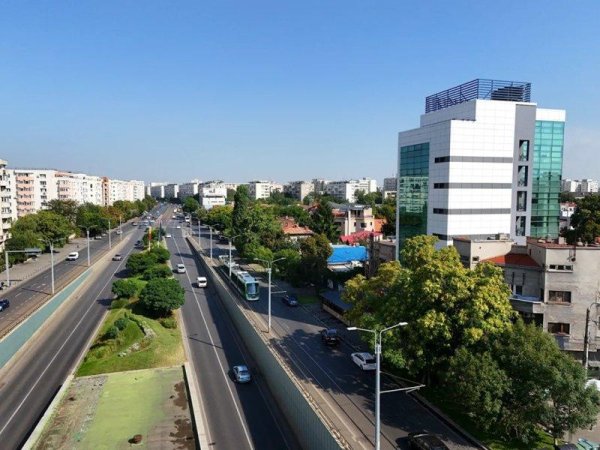
Busy boulevards, constant traffic noise and a lack of quiet spaces near home can affect more than everyday comfort in Bucharest. Repeated exposure to these conditions can disrupt sleep, contribute to stress responses and affect overall well-being. Some of the areas where authorities have identified noise-related problems are located surprisingly close to the capital's best-known parks.
There is, however, no official ranking of Bucharest's most stressful neighborhoods. Noise maps and municipal reports identify areas exposed to environmental pressures, not how stressed their residents actually feel. That distinction matters: mental health is shaped by many factors, including personal relationships, working conditions, financial security and housing quality.
Areas of Bucharest where authorities have identified noise problems
In August 2025, Bucharest's General Council adopted Decision No. 374/2025, establishing measures to reduce environmental noise. The annex to the decision identifies three potential pilot areas: Cișmigiu Park – Regina Elisabeta Boulevard, King Michael I Park (Herăstrău) – Regele Mihai I Boulevard, and Tineretului Park – Tineretului Boulevard.
These locations illustrate a common problem in densely populated cities: living near a park does not necessarily mean living somewhere quiet. An apartment may be just minutes from a green space while also overlooking a busy road. The building's orientation, distance from traffic, surrounding architecture and traffic intensity all influence the noise residents experience.
Another example is the Mihai Bravu Overpass area, where residents have complained about traffic noise. In November 2026, the issue again attracted the attention of local authorities, with noise barriers among the measures being considered. The situation is described in the report on residents' complaints about traffic noise near the Mihai Bravu Overpass.
Bucharest's strategic noise maps identify road traffic as a major source of environmental noise, particularly along important thoroughfares. However, these maps cannot establish that an entire neighborhood is inherently stressful. Conditions can differ significantly even between buildings on the same street.
What happens when noise becomes part of everyday life
You may eventually stop consciously noticing every car passing beneath your window. That does not necessarily mean the noise has stopped affecting you. Research in environmental psychology and public health shows that chronic exposure to transport noise can trigger physiological stress responses and interfere with sleep.
According to a 2026 analysis by the European Environment Agency, environmental noise is associated with mental health outcomes. Research has identified links with anxiety and depression, although the strength and consistency of the evidence vary between studies. Living near a busy boulevard does not automatically cause a mental health disorder.
The effects may also appear in more familiar ways: difficulty falling asleep, repeated awakenings, irritability or the feeling that home is no longer a place where you can properly rest. When these experiences become frequent, they may add to everyday stress, particularly for people working from home, children and those who need to sleep during the day.
The scale of transport-related noise exposure across European cities is also documented in the European Environment Agency's Environmental Noise in Europe 2025 report.
Noise is not the only concern. Heavy traffic can also contribute to air pollution, although exposure varies depending on the road, weather conditions and time of day. For more local context, see the guide to Bucharest's most polluted areas and how to protect your family.
Why green spaces can change how we feel about a neighborhood
A neighborhood is more than its apartment buildings, streets and public transport connections. It also matters how easily you can go for a walk, whether there are trees along your daily route, whether you can sit somewhere without having to spend money and whether you feel safe walking around.
In a 2025 report, the World Health Organization highlights the mental health benefits associated with access to green spaces, including a lower risk of depression and anxiety. Another WHO report focusing specifically on green spaces and mental health examines how these environments can support relaxation, social interaction and psychological well-being.
But genuine accessibility matters more than simply having a park nearby. If reaching it means crossing difficult intersections, navigating narrow sidewalks or walking alongside heavy traffic, the experience may be less relaxing. Similarly, different parts of a park bordering a busy boulevard may offer very different levels of peace and quiet.
Bucharest still has places where the city's pace seems to slow down. Some can be found in this selection of the 10 quietest streets in Bucharest, which offers another perspective on urban life beyond the capital's crowded boulevards.
How to tell whether your living environment contributes to everyday stress
Not every feeling of tiredness or irritability is related to where you live. Still, it may be worth noticing whether you sleep better elsewhere, whether noise frequently interrupts your activities or whether avoiding traffic constantly complicates your daily routine.
Public information can also help. Bucharest City Hall provides strategic noise maps and documents concerning acoustic measurements. These resources offer insight into exposure across different parts of the city, although they cannot replace measurements taken inside a particular home.
If you are considering moving, a short apartment viewing may not tell you enough. Visit during rush hour and again in the evening, listen to the traffic with the windows open and check whether pedestrian routes and green spaces are genuinely accessible. A neighborhood may seem peaceful at lunchtime but become considerably busier when people finish work.
From an environmental psychology perspective, a neighborhood that supports mental well-being is not necessarily the most secluded or the greenest. It is one where people have opportunities to balance activity with rest, move around safely and access places where they feel comfortable. In Bucharest, these conditions can vary considerably, even within a relatively small area.