What collections can be seen at the National Museum of Art of Romania and when admission is free
By Raluca Ogaru
- Articles
- 20 AUG 26
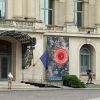
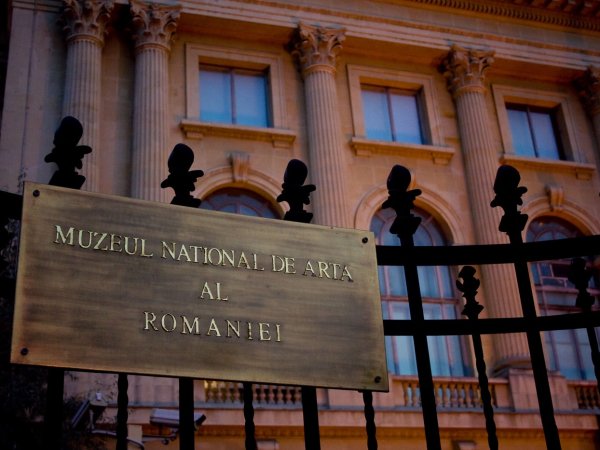
The former Royal Palace on Calea Victoriei houses Romania’s most important public collection of Romanian art, alongside European paintings, decorative objects, Oriental art and historical rooms connected to the monarchy. Depending on the route you choose, a visit to the National Museum of Art of Romania can bring you face to face with medieval icons, paintings by Nicolae Grigorescu and Ștefan Luchian, sculptures by Constantin Brâncuși and works by European artists such as El Greco, Lucas Cranach the Elder and Claude Monet.
MNAR also operates three satellite museums: the Museum of Art Collections, the K.H. Zambaccian Museum and the Theodor Pallady Museum. Each has its own visiting schedule, and their free-admission days do not always coincide. Some spaces may also be temporarily closed, so it is advisable to check the latest announcements before setting off.
The National Gallery traces the development of Romanian art
The National Gallery consists of the Romanian Medieval Art Gallery and the Romanian Modern Art Gallery. Together, they create a journey through several centuries of visual culture, from medieval religious art to the movements and artists that shaped Romanian modernism.
The Romanian Medieval Art Gallery covers the period between the 14th century and the first half of the 19th century. According to MNAR’s official presentation of its permanent galleries, around 900 icons, fresco fragments, embroideries, manuscripts, printed books, silver objects, jewellery, wood and stone sculptures and ceramic pieces are displayed here.
The exhibits originate from Moldavia, Wallachia and Transylvania. Notable pieces include the iconostasis of the Cotroceni Monastery church, created in 1682, mural paintings associated with Pârvu Mutu and objects recovered from the Cotroceni and Văcărești monasteries, which were demolished during the communist period.
The Romanian Modern Art Gallery follows the transformation of Romanian art from the 19th century to the modern decades of the 20th century. Its rooms represent movements including academic art, Romanticism, Impressionism, Symbolism and the avant-garde.
Nicolae Grigorescu, Ștefan Luchian and Constantin Brâncuși are represented through substantial selections of their work. Visitors can also see works by artists such as Theodor Aman, Ion Andreescu, Gheorghe Petrașcu, Theodor Pallady, Nicolae Tonitza, Francisc Șirato, Dimitrie Paciurea and Victor Brauner.
From El Greco and Monet to European decorative objects
The European Art Gallery was originally built around the collection of King Carol I and was subsequently expanded through donations, purchases and transfers from other collections. The works are displayed according to their respective artistic schools, creating a journey through Italian, Spanish, German, Flemish, Dutch and French painting.
The room dedicated to Spanish art is dominated by three paintings created during different periods of El Greco’s career. Other sections feature works associated with artists such as Lucas Cranach the Elder, Hans von Aachen and Claude Monet. The collection should not be regarded as a complete history of European art, but as a selection centred on the cultural heritage entrusted to the museum over time.
MNAR’s permanent circuit also includes the European Decorative Art Gallery. Its holdings exceed 10,000 pieces, from which approximately 400 objects were selected for display across six rooms. These include tapestries, furniture, ceramics, glassware, silverware, clocks and other objects produced between the 16th and 19th centuries in major European artistic centres.
The Oriental Art Gallery, inaugurated in 2024, contains almost 600 objects originating from countries including China, Japan, India, Iran, Turkey, Egypt, Syria, Azerbaijan and Uzbekistan. The displays include textiles, ceramics, metal objects and Japanese woodblock prints by artists such as Hokusai, Hiroshige and Utamaro.
Please note: when this article was documented, MNAR announced that the Decorative and Oriental Art Gallery had been closed starting on 5 August 2026. These collections exist and form part of the institution’s permanent holdings, but they cannot currently be visited until the museum publishes a reopening announcement.
The Throne Hall and the Royal Palace’s other historical rooms
A visit to MNAR is not limited to collections of paintings and sculptures. The building once served as Romania’s Royal Palace, and several of its historical interiors have been opened to the public. The route includes the Throne Hall, the Royal Dining Room and the Voivodes’ Staircase.
These rooms also help visitors understand the history of the building itself. The National Museum of Art of Romania was established in 1948 and was given the former Royal Palace, which had been severely damaged during the bombings of 1944. The museum opened to the public in 1950.
The Throne Hall is associated with the monarchy’s official ceremonies, while the Royal Dining Room and the Voivodes’ Staircase preserve architectural and decorative elements from the former royal residence.
These spaces can normally be visited during the museum’s regular opening hours, provided they are not affected by temporary closures or special events. As access conditions can change, it is worth checking the museum’s announcements before your visit.
What you can find in MNAR’s satellite museums
Located in the former Romanit Palace at 111 Calea Victoriei, the Museum of Art Collections displays more than 30 permanent collections. They bring together Romanian, European and Oriental painting, sculpture, graphic art and decorative art donated by artists and collectors.
The display preserves the identity of each individual collection. As a result, you can discover not only the artworks but also the preferences, financial resources and cultural interests of those who assembled them. The museum thus tells a broader story about Bucharest’s collectors and the city’s cultural environment during the 20th century.
The K.H. Zambaccian Museum displays the collection of art critic and collector Krikor H. Zambaccian. The house and collection were donated to the Romanian state in 1947.
Alongside important works of Romanian modern art, visitors can see paintings by Delacroix, Corot, Renoir, Sisley, Pissarro, Cézanne, Picasso and Matisse. The museum offers a more intimate experience than the vast galleries of the former Royal Palace, with the artworks displayed inside the collector’s former residence.
The Theodor Pallady Museum, located in Melik House, holds the collection of Serafina and Gheorghe Răut. It includes paintings by Theodor Pallady, more than 800 drawings and prints from his Parisian period, European paintings, sculpture, furniture, textiles, Oriental ceramics and other decorative objects.
The museum reopened in April 2026 after renovation and reorganisation work. However, MNAR subsequently published a new notice stating that the venue would be closed again starting on 5 August. The announcement does not specify how long the closure will last, so the museum should be considered temporarily unavailable until a new official notice is issued.
When you can visit MNAR free of charge
According to MNAR’s official visiting schedule, admission is free on the first Wednesday of every month at the main museum, the K.H. Zambaccian Museum and, under normal operating conditions, the Theodor Pallady Museum.
The Museum of Art Collections follows a different schedule: admission is free on the first Tuesday of every month. According to the current calendar and visiting programme, the next free-admission dates are Tuesday, 1 September 2026, at the Museum of Art Collections, and Wednesday, 2 September 2026, at the main museum and the Zambaccian Museum.
MNAR also announces free admission on 1 December, Romania’s National Day, and on 15 January, National Culture Day. Before planning a visit on any of these dates, check for possible schedule changes, as individual galleries, satellite museums or exhibitions may be temporarily unavailable.
Advance booking is not required for self-guided visits. Guided tours must be requested at secretariat@art.museum.ro at least seven days in advance.
Visiting hours
MNAR’s main building and the K.H. Zambaccian Museum are open from Wednesday to Friday between 10:00 and 18:00, and on Saturdays and Sundays between 11:00 and 19:00. They are closed on Mondays and Tuesdays.
The Museum of Art Collections can be visited on Mondays, Tuesdays and Fridays between 10:00 and 18:00, as well as on Saturdays and Sundays between 11:00 and 19:00. It is closed on Wednesdays and Thursdays. MNAR’s main building is located at 49–53 Calea Victoriei.
Because MNAR operates several buildings and exhibition circuits, you should not assume that every collection can be visited with the same ticket or according to the same schedule. Checking the museum’s website on the day of your visit can save you an unnecessary journey, particularly during periods involving renovation work, special events or exhibition changes.