Bucharest Job Market 2026 — Salaries, Trends & Key Sectors

- Articles
- 25 FEB 26
Bucharest is, without question, Romania's economic engine. The capital concentrates major multinational corporations, shared service centers, regional headquarters, and financial institutions — creating a labor ecosystem unlike anywhere else in the country. Official data published at the end of 2025 and in January 2026 confirms that salary growth and workforce absorption continue their upward trajectory, even amid a year marked by fiscal uncertainty.
Key Figures — October 2025 (Official INS Data)
Average net salary - RON 6,978 (+6.2% vs. Oct. 2024)
Average gross salary - RON 11,649 (+7.8% vs. Oct. 2024)
Employees in Bucharest - 1,113,924 (+12,362 vs. Oct. 2024)
Unemployment rate - 0.5% vs. 0.8% in Oct. 2024
Bucharest vs. the Rest of Romania
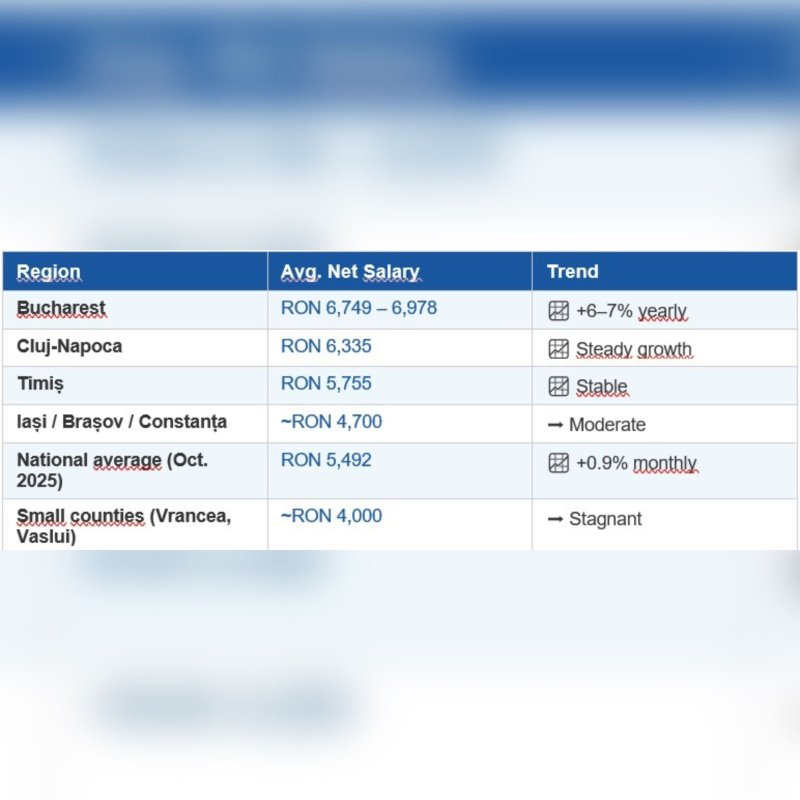
The gap between the capital and the national average has not narrowed — it has widened. The national average net salary was RON 5,492 in October 2025, approximately RON 1,486 lower than Bucharest. Even Cluj-Napoca, considered Romania's second economic hub, does not match the capital.
Highest-Paying Sectors in 2026
The hierarchy of well-paid fields has stabilized in recent years, but 2026 brings notable nuances. IT remains the absolute leader, though growth has moderated since 2020–2023 following the removal of tax incentives. The financial sector is gaining ground as the most stable option, while engineering — especially in energy and AI — is becoming increasingly sought-after.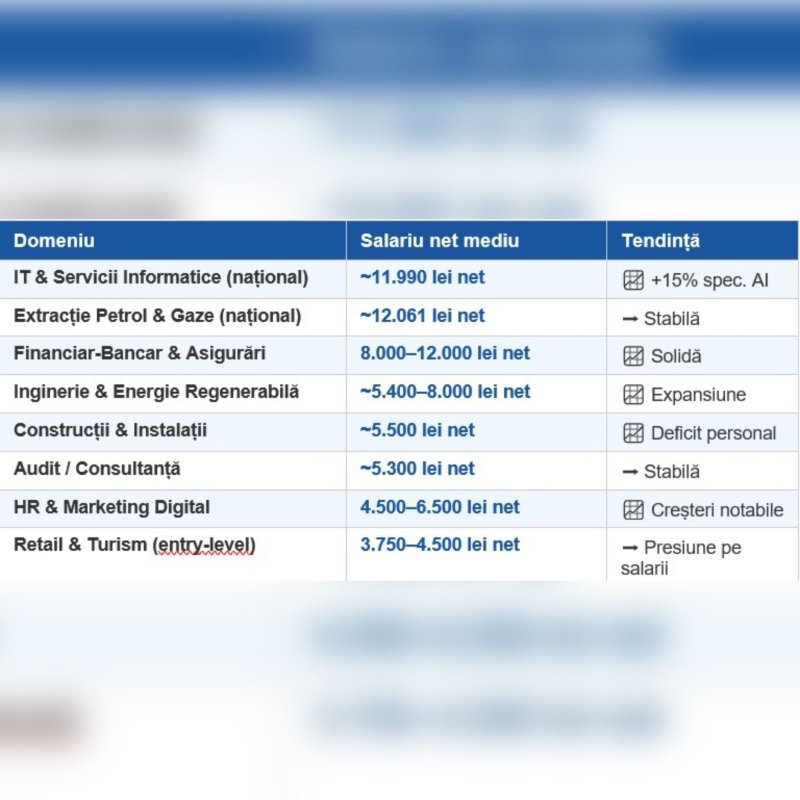
Top-Earning Roles in Bucharest
Salary peaks in the capital are concentrated in highly specialized technical fields. AI and cybersecurity have overtaken classic development roles at the top of the compensation ladder in 2025.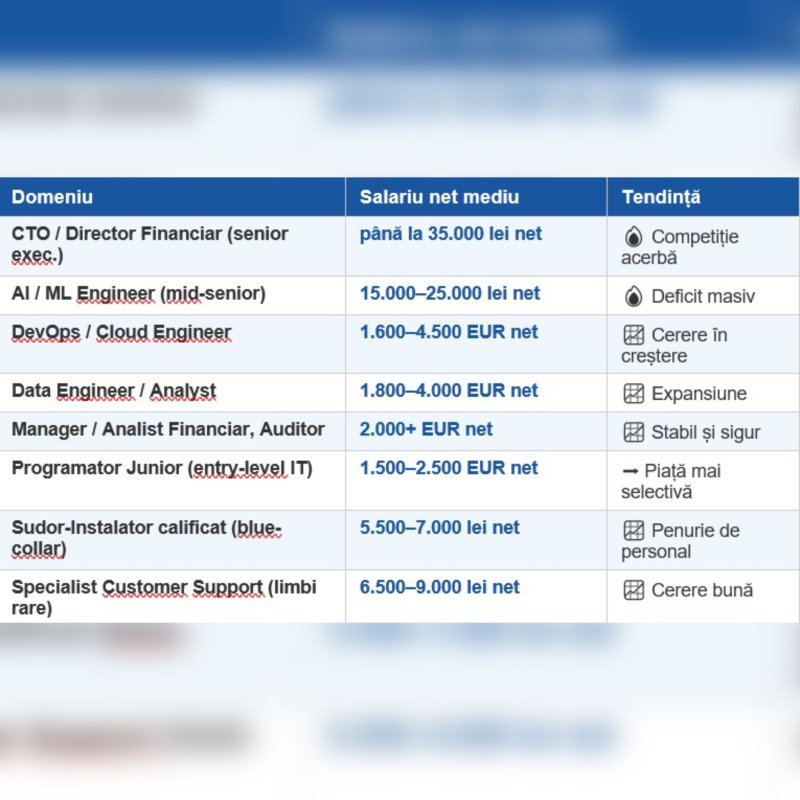
6 Key Trends for 2026
1. IT is transforming, not declining. Generalist programming is slowing, but technical specializations are exploding. Data analytics, artificial intelligence, cybersecurity, and cloud are the segments with the highest demand and remain impossible to fill. Companies are no longer hiring large volumes of developers — they seek deep expertise and pay accordingly.
2. Finance — the safest long-term bet. The financial and accounting sector is considered the most stable domain in the medium term. Companies constantly need professionals capable of managing reporting, taxation, internal audits, and budgets — regardless of economic conditions.
3. The blue-collar crisis is deepening. Bucharest is fighting a continuous battle for skilled workers in construction, installations, and logistics. The staff deficit is pushing wages up and forcing employers to import labor or invest heavily in on-the-job training.
4. Hybrid work — the new standard. Flexible and hybrid work is no longer a perk — it is a baseline requirement. Employers who don't offer flexibility lose qualified candidates to those who do. Generation Z, entering the labor market en masse in 2025–2026, negotiates this condition from the very first interview.
5. Salary expectations exceed reality by ~30–32%. A persistent gap exists between expected salaries and actual offers. This signals the need for pay transparency and more flexible benefit packages — extra vacation days, private health subscriptions, remote work options, and meal vouchers.
6. Digital skills are the new negotiating currency. Approximately 37% of workers' core skills in Romania will change by 2030. Demand for AI, big data, analytical thinking, and automation will grow exponentially — affecting even traditional roles in HR, marketing, and finance.
Conclusion: What Does This Mean for You in 2026?
Bucharest's job market is dynamic, polarized, and competitive. If you are an employee, the data shows that salary negotiating power is real — especially if you work in technical IT, finance, or energy engineering. If you are an employer, the pressure to attract and retain talent means more than a competitive salary: it means flexibility, clear benefits, and fast hiring processes.
The average net salary in the capital is approaching RON 7,000 — confirming that Bucharest remains, in 2026, the best place in Romania to build a career.