Bucharest's Sector 3: 3 reasons to love it, 3 reasons to hate it
- Articles
- 18 AUG 26
Sector 3 is Bucharest's most populous district. On paper, it has somewhere between 342,000 people, the older figure the city hall still keeps on its own website, and over 373,000, per more recent counts. Which one is accurate is hard to say. What doesn't change is the first-place spot in population, year after year. It stretches from around University Square, through the Old Town, out to the eastern edge of the city, into Titan and Dristor. Too big for a single identity, which is why the love and the hate for it usually come from different corners of the map.
Sector 3. Why to love it
Alexandru Ioan Cuza Park, formerly IOR
At 85 hectares, it's one of the largest parks in Bucharest. It was built between 1965 and 1970 around Titan Lake, and the lake has five islands with names that say a lot about Bucharest's sense of humor: Pensioners' Island, IOR Island, Dogs' Island, Roses' Island, Drowned Island. A running track wraps all the way around the water, and the park also has a peacock area, tucked among the basketball courts and the calisthenics zones built in recent years. For people living in Titan and Dristor, it's basically the backyard.
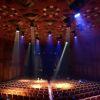
On Bulevardul Basarabia 256 stands a 400-by-180-meter hall, built in 1938 as part of the Malaxa works, designed by architect Horia Creangă. It was restored between 2017 and 2022 and became one of the few interwar industrial spaces in Bucharest that got preserved and handed back to the public instead of torn down. It hosts fairs, exhibitions, and concerts with thousands of people, and as of August 2026 it's also the new headquarters of the Sector 3 city hall.
The stretch of the city running from University Square down to Curtea Veche belongs administratively to Sector 3. Right there, among the streets around the former royal court, sits a historic core dating back to the 16th century. Plenty of Bucharest residents go there for a beer without realizing they've actually crossed into Sector 3.
Sector 3. Why it's not loved
The raised pedestrian crossings, endlessly
The project for raised pedestrian crossings and intersections has gone through four different versions. In February 2024, the local council approved 160 sites. A year later, the number was up to 1,700. At the end of January 2026, every earlier decision was scrapped and a new project appeared, this time with 735 crossings and intersections. The count went down, but the cost went up, to 85 million euros, VAT included. It changes faster than anyone can get used to it.
The zoning rule that spooks the center
In 2024, the city hall proposed a rule allowing one new square meter of construction in the center of Sector 3 for every three square meters demolished. The council rejected it twice, over fears of overbuilding an already dense area. Still, the density question kept coming back into the mayor's public statements afterward, a sign the debate over the center's zoning rules didn't end with those two rejections.
The plans for IOR Park, which threaten the very thing people love
The city hall proposed modernizing the park with musical fountains and composite-wood platforms, a project estimated at nearly 43 million euros. Several civic organizations accused the administration of really building "an open-air mall," and residents collected signatures against the plan. Negoiță pulled the draft decisions, but announced further public consultations for IOR and three other parks in the district. For a lot of residents, that uncertainty is the hardest part: the park they love is still, on paper, on the list of things that could change completely.
Also recommended Living in Bucharest's Sector 3: urban diversity and comfort