Why does Bucharest traffic grind to a halt when it rains? How an ordinary shower can bring the city to a standstill
- Articles
- 05 NOV 26
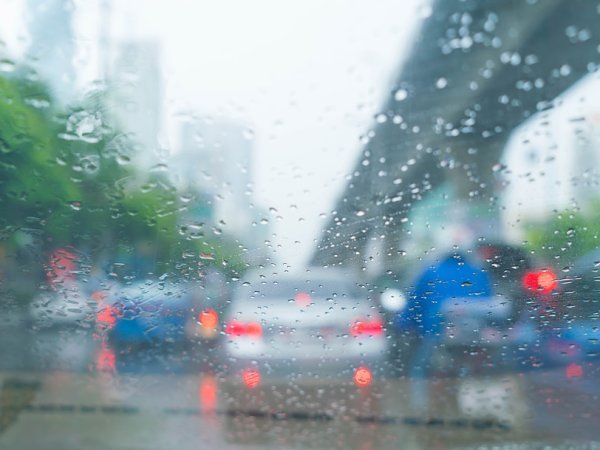
Bucharest does not need a severe storm or flooded streets for traffic to grind to a halt. Even an ordinary shower can slow vehicles down, increase the time needed to cross intersections and turn a relatively short queue of cars into a traffic jam stretching across several streets.
The explanation is more complicated than the familiar complaint that drivers simply do not know how to handle rain. Wet roads require greater following distances, visibility deteriorates and every sudden slowdown can affect the vehicles behind. In a road network that is already heavily congested, these seemingly small changes can have significant consequences.
Why fewer cars can pass through the same intersection when it rains
Every signal-controlled intersection has a limited capacity. During a green-light phase, a certain number of vehicles can pass through, depending on the signal timing, the number of lanes and how drivers behave.
Rain changes that balance. Vehicles may accelerate more slowly when the light turns green, drivers leave larger gaps and reduced visibility encourages greater caution. As a result, fewer cars may pass through the intersection during the same amount of time.
Research published by the Federal Highway Administration (FHWA) shows that precipitation can reduce both traffic speeds and road capacity. The impact varies according to rainfall intensity, road characteristics and existing traffic conditions.
Imagine a busy intersection where several cars fail to get through during one green-light cycle. They remain in the queue for the next cycle, while more vehicles arrive behind them. If this continues, the queue grows even though there has been no accident, road closure or obstruction.
The result is a traffic jam caused not by a single incident, but by a gradual reduction in how efficiently the intersection can process vehicles.
The domino effect: How one traffic jam spreads to nearby streets
In a city with closely spaced intersections, congestion does not necessarily remain where it started. When a queue becomes long enough, it can extend back to the previous junction and prevent vehicles travelling in other directions from moving forward.
Traffic engineers call this phenomenon queue spillback. It occurs when a line of vehicles extends beyond the road space available to accommodate it. In severe cases, congestion at one intersection can disrupt several connected roads.
This explains why drivers may spend several minutes in a stationary queue without seeing an accident, roadworks or a broken-down vehicle. The original cause may be an intersection much farther ahead, where traffic is no longer clearing quickly enough.
Rain can make the situation worse. Lower speeds and larger gaps between vehicles reduce road capacity precisely when the streets are already under pressure.
Bucharest.ro has previously explored the practical side of travelling in bad weather in its article “Your own car or public transport? What is the best way to get around Bucharest when it rains?”. But beyond the choice of transport, understanding how queues form helps explain why delays can occur even without a significant increase in the number of cars.
How repeated braking can create traffic jams with no obvious cause
Another phenomenon behind congestion is the formation of so-called stop-and-go waves, sometimes described as phantom traffic jams. These occur when a slowdown spreads from one vehicle to another, even though there is no permanent obstacle ahead.
One driver brakes, the next reacts, and the vehicle behind slows down as well. When traffic is dense, these successive reactions can create a wave of congestion moving backwards through the queue. Drivers farther behind may eventually come almost to a complete stop, even though the vehicle that triggered the original slowdown has continued on its way.
Rain is not the only cause of this phenomenon, but it can contribute to it. Reduced visibility, lower tyre grip and differences in how drivers adjust their speeds can disrupt the flow of traffic.
A Federal Highway Administration report on the effects of weather on traffic explains how adverse conditions affect road characteristics, driving speeds and traffic capacity, potentially increasing delays.
The result can be frustrating: after spending 20 minutes in a queue, drivers suddenly find themselves moving normally again, without ever discovering what caused the congestion.
How much can rain actually slow down traffic?
Researchers have measured the effects of precipitation on traffic conditions. According to FHWA findings, speeds on urban arterial roads can decrease by approximately 10–25% on wet pavement, depending on the circumstances.
Another study conducted in American metropolitan areas, including Baltimore, Seattle and Minneapolis–Saint Paul, found that light rain could reduce the capacity of certain roads by approximately 10–11%.
These figures are not measurements from Bucharest. The publicly available sources consulted do not provide a local estimate showing exactly how much rainfall alone increases average journey times in the Romanian capital, independently of accidents, roadworks or ordinary rush-hour congestion.
Nevertheless, the research highlights an essential point: the effect of rain depends not only on how heavily it falls, but also on how congested the road was before the rain began.
On an almost empty road, a modest reduction in speed may add only a few minutes to a journey. At an intersection already operating close to capacity, the same reduction can cause vehicles to accumulate through successive traffic-light cycles.
The difference is particularly relevant in Bucharest, where traffic congestion is already substantial on many major routes.
Source: FHWA – Empirical Studies on Traffic Flow in Inclement Weather.
Why November can make the problem worse in Bucharest
In November, rainfall can coincide with other conditions that make travelling more difficult: shorter days, reduced visibility in the evening and heavy traffic as people travel to work, school or home.
After sunset, headlights reflect off wet asphalt, while road markings, pedestrians and other road users may become harder to see. These conditions require greater attention and justify lower speeds and increased following distances.
In some areas, water accumulating near kerbs or across traffic lanes may force drivers to slow down further. If a section of road becomes temporarily impassable, the available road capacity decreases even more. However, ordinary rainfall should not automatically be equated with flooding.
Not every rainy day produces the same level of congestion. The time of day, route, rainfall intensity and any existing traffic incidents all influence the outcome.
The same shower may cause little disruption on a Sunday morning but contribute to substantial delays during the weekday evening rush hour.
Why driving faster is not the solution to rainy-day congestion
At a busy intersection, improving traffic flow does not simply mean increasing vehicle speeds. On wet roads, driving faster than conditions safely allow increases the risk of an accident, which can create an even more serious obstruction.
From a traffic-management perspective, coordinating traffic lights, keeping intersections clear and responding quickly to incidents are all relevant measures. FHWA research shows that adverse weather can also affect the effectiveness of traffic signal timing.
For individual drivers, predictable behaviour matters. Maintaining an appropriate following distance, adjusting speed and avoiding sudden manoeuvres can reduce the likelihood of disruptions.
Drivers should also avoid entering an intersection when there is no room to clear it, even if the traffic light is green. Blocking the junction can prevent vehicles from other directions from moving when their signals change.
Bucharest does not come to a standstill simply because rain makes driving impossible. The problem arises when an already busy road network has to operate with less available capacity.
A handful of vehicles left waiting at a traffic light, a queue extending into the next intersection and a series of repeated braking manoeuvres may be enough for delays to spread across several streets.
That is why, at the end of a long traffic jam, drivers sometimes find no accident or road closure. They find only an intersection where vehicles began moving more slowly when the rain started.