Bucharest has a museum for the blind inside the “Regina Elisabeta” Technological High School
By Bucharest Team
- Articles
- 29 JAN 26
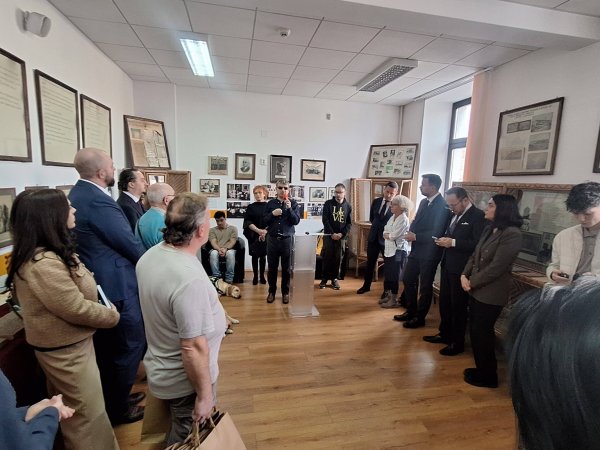
Starting in late January 2026, Bucharest is home to the first museum in Romania dedicated to the history, culture, and contributions of the blind community. The “Regina Elisabeta” Museum of the Community and Education of the Blind was inaugurated on Thursday inside the “Regina Elisabeta” Technological High School, marking an important milestone for inclusive education and equal access to culture.
The new museum space is not just a collection of exhibits, but an educational and civic project that brings to the forefront a lesser-known yet essential chapter of Romanian society. The initiative emphasizes dignity, belonging, and active participation, at a time when inclusion remains a central topic at the European level.
A project dedicated to the blind community, inaugurated in the presence of officials
The inauguration ceremony was attended by representatives of European institutions, local authorities, the educational sector, and civil society, alongside members of the blind community. Among the guests were Nicu Ștefănuță, Vice-President of the European Parliament, Katrin Langensiepen, Member of the European Parliament and disability rights activist, and Rareș Hopincă, Mayor of Bucharest’s Sector 2.
In his speech, Nicu Ștefănuță highlighted the importance of equal access to culture and education:
“Access to culture, education, and collective memory is a fundamental right. This museum shows that inclusion is not a symbolic gesture, but an investment in dignity, citizenship, and our shared future.”
In turn, the Mayor of Sector 2 spoke about the continuity of a historical legacy:
“The opening of the Regina Elisabeta Museum is a tribute to the leaders who built the foundations of education and inclusion for the blind community. We are continuing this legacy, looking to the future, and working together to build a society in which culture, education, and opportunities are accessible to all.”
A museum that highlights over a century of history and contributions
The “Regina Elisabeta” Museum celebrates more than 100 years of education, creativity, and social involvement of blind people in Romania. The space brings to light the stories of students, teachers, artists, and social innovators who, despite barriers, made essential contributions to the country’s cultural and human heritage.
Inspired by the vision of Queen Elisabeta of Romania, who as early as 1907 supported access to education and social recognition for blind people, the museum goes beyond the traditional role of an exhibition. It becomes a tool for changing perceptions and strengthening respect for diversity.
Katrin Langensiepen emphasized the European dimension of the project:
“This museum does not speak about disability as a limitation, but about potential, creativity, and contribution. It is an example of how education and culture can dismantle attitudinal barriers that still persist in Europe.”
A multisensory experience, open to all visitors
Designed in line with the principles of the UN Convention on the Rights of Persons with Disabilities, the museum offers a multisensory experience accessible both to blind visitors and to the general public. The exhibits combine historical and contemporary perspectives through tactile art, objects that can be explored by touch, audio narratives, and interactive installations.
This approach demonstrates that accessibility is not a concession, but a valuable cultural resource. When environments are designed for everyone, the entire community benefits from more open dialogue and a deeper understanding of diversity.
A living space for education and social dialogue
The “Regina Elisabeta” Museum of the Community and Education of the Blind is conceived as a dynamic space for learning, dialogue, and belonging, addressed to students, teachers, families, decision-makers, and the wider public. Its purpose is to encourage conversations about identity, equal rights, and inclusion, starting from the real experiences of the blind community.
We recommend:
Camelia Platt, CEO of Light into Europe and curator of the museum, explained the project’s significance:
“The Regina Elisabeta Museum is, first and foremost, the voice of the blind community—not as an object of observation, but as a community that speaks for itself. It is a space of education, pride, and shared humanity, where inclusion is both pedagogy and practice.”
The inauguration of the museum marks more than the opening of a new cultural space in the capital. It is a concrete step toward a society in which diversity is recognized, education is accessible, and inclusion becomes part of everyday life, not just an abstract concept.
Photo source: Facebook/ Asociația Nevăzătorilor din România