The Bucharest Neighborhoods That Have Changed the Most in the Last Three Years
- Articles
- 13 MAR 26
Bucharest changes in pieces, neighborhood by neighborhood, sometimes spectacularly, sometimes almost imperceptibly — until you realize that an area you knew from a visit three years ago looks completely different. New cafés where a kiosk used to stand, a park where there was wasteland, a residential complex where there was an empty field.
Trends in the real estate market confirm what residents feel firsthand: a significant portion of the new homes built in Bucharest in recent years have gone up in Districts 3, 4 and 6. Public and private investment has shifted away from the center toward the periphery, gradually redrawing the city's map. Here are the neighborhoods where the change is most visible.
Militari — The Neighborhood That Finally Got Its Park
Militari was for a long time the only large neighborhood in Bucharest without a park of its own. Titan has IOR, Tineretului has its namesake park, Drumul Taberei has its own — Militari had nothing equivalent. That changed in 2023, when Parcul Liniei was inaugurated, built on a former 8-hectare landfill. It has a 1.5-kilometer cycling track, playgrounds, outdoor gym equipment, ping pong and teqball tables, gazebos, Wi-Fi and electricity. It's the park the neighborhood had been waiting decades for.
Beyond the park, District 6 as a whole has undergone a real transformation in recent years. Hundreds of streets, pavements and walkways across the neighborhood's microzones have been rehabilitated. New kindergartens and after-school centers have been built. The Grozăvești-Polytechnic area has attracted office spaces and tech campuses, fueled by the presence of technical universities and proximity to the A1 motorway. Metro line M5 has better connected the west of the city to the center, turning Militari and its surroundings into an attractive area for young professionals — accessible in price, functional in infrastructure.
Berceni — The South That Stopped Being a Periphery
A decade ago, Berceni was associated in the minds of many Bucharesters with affordability and little else. That image has changed considerably. District 4 has become one of the most dynamic in the capital, with consistent investment in infrastructure, transport and commercial spaces.
The most visible transformation is along the main boulevards: supermarkets, pharmacies, gyms, cafés and private clinics have appeared where there were previously empty lots or old shops. New residential developments have introduced a different concept of urban living — buildings with ground-floor retail, playgrounds and green spaces, all integrated within the same perimeter.
Metro connectivity remains one of the area's real strengths. The lines running through Berceni toward the center make commuting manageable, and this has consistently attracted young families and buyers looking for better prices without sacrificing access to the city. Rents remain below the capital's average — an advantage that has held over time, though prices fluctuate and are worth checking on property platforms before any decision.
Grozăvești — Polytechnic: From Student Zone to Urban Hub
Little discussed in conversations about Bucharest's neighborhoods, the Grozăvești-Polytechnic area has undergone an identity shift in recent years. Metro line M5 gave it a new rhythm — the stations in the area transformed accessibility and attracted investment that might otherwise have gone north.
The proximity to technical universities and several tech office campuses has gradually created a young urban ecosystem with an energy of its own. The restaurants and cafés that followed have changed the face of streets that were once exclusively student territory. It's an area with rents still reasonable compared to the north, with quick access to the center and the west of the city — characteristics that have made it one to watch for real estate investors looking at medium-term potential.
Titan — The Balanced East, in Steady Maturation
Titan and the area around IOR Park have evolved more quietly than the west or south, but consistently. District 3 as a whole has attracted significant investment since 2020, and Titan benefits from the combination that makes it appealing to families: a large park, metro access, schools and kindergartens, mature commercial infrastructure.
ParkLake, the mall built directly on the edge of Titan Park, has brought a new dimension to the area — not just commercial, but social. The ability to step from the mall into the park within seconds has created a hybrid urban space rarely found in Bucharest. Independent cafés have also appeared around the park and metro stations, changing the atmosphere of streets that were once exclusively residential.
Rents in Titan remain competitive compared to the rest of the capital — making it one of the neighborhoods with the best quality-to-cost ratio, though here too prices are worth checking in real time before any decision.
Obor — The Neighborhood Reinventing Itself Without Losing Itself
Obor is a special case. It's a neighborhood with a strong, long-standing identity — the market, the noise, the diversity — and precisely because of that, any change is more visible and, sometimes, more charged.
In recent years, the area has attracted building renovations, new cafés and growing real estate interest, fueled in part by its exceptional transport connectivity. Obor is one of the best-connected nodes in the city — metro, tram, bus, all converge here. That makes it appealing to those who want to be close to the center without paying the prices of District 1.
The Obor market itself has remained a landmark of the real, unfiltered city — one of the places where Bucharest in 2026 coexists with the Bucharest of another era. That's precisely what makes it interesting and sets it apart from neighborhoods built from scratch.
What This Map Says About How the City Is Changing
Bucharest in 2026 is a city decentralizing. Development no longer gravitates exclusively around the center or the north — it spreads west, south and east, into neighborhoods that until a few years ago were seen as fallback options.
This redistribution brings with it a subtler shift: each neighborhood is beginning to have a clearer identity, a more specific offering, a rhythm of its own. Militari for young professionals who want space and quick motorway access. Berceni for families who prioritize quiet and price. Grozăvești for those in tech and academia. Titan for balance and family life by the park.
The city's map is being rewritten — and it's doing so in every direction at once.
Also recommended The Best Neighborhoods in Bucharest for Remote Work
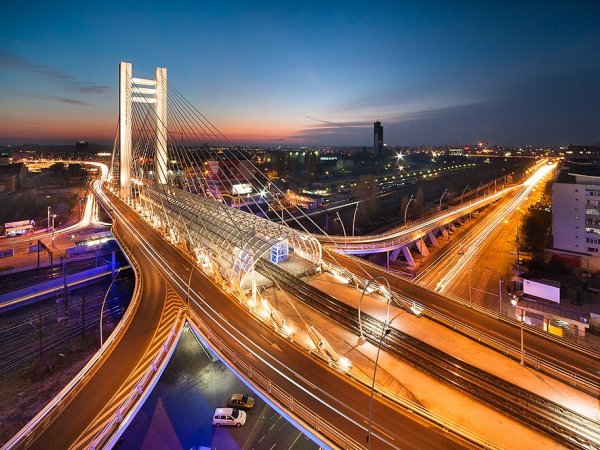
Photo: Mihai Petre / Wikipedia