10 Fascinating Things About the Armenian Quarter in Bucharest
By Eddie Țone
- Articles
- 16 APR 26
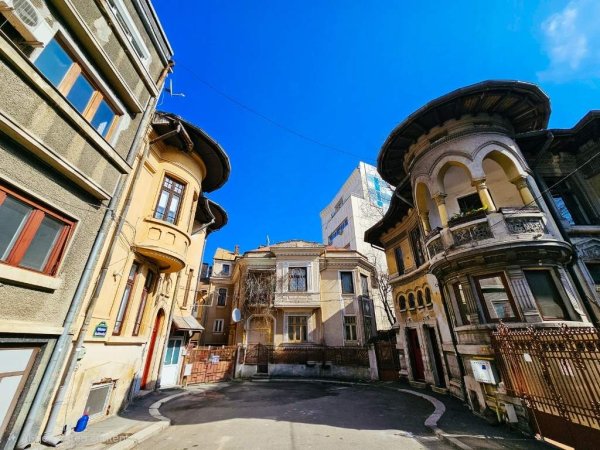
Bucharest reveals itself best when you stray from the main boulevards and choose to lose yourself on streets named after capitals and forgotten personalities. The Armenian Quarter represents such a fragment of the city—one that has managed to maintain aesthetic coherence and a timeless tranquility despite the brutal transformations the rest of the capital has endured. Situated between Carol I Boulevard and Calea Moșilor, this perimeter is an open-air museum of the Bucharest bourgeoisie, where the history of the Armenian community intertwines with eclectic architecture and a contemporary bohemian spirit.
If you traverse the area carefully, you’ll notice that every house seems to have its own posture, a dignity of detail missing from modern constructions. Here are the most fascinating aspects that make this neighborhood an essential landmark on Bucharest’s cultural map.
1. Melik House: The Survivor from 1760
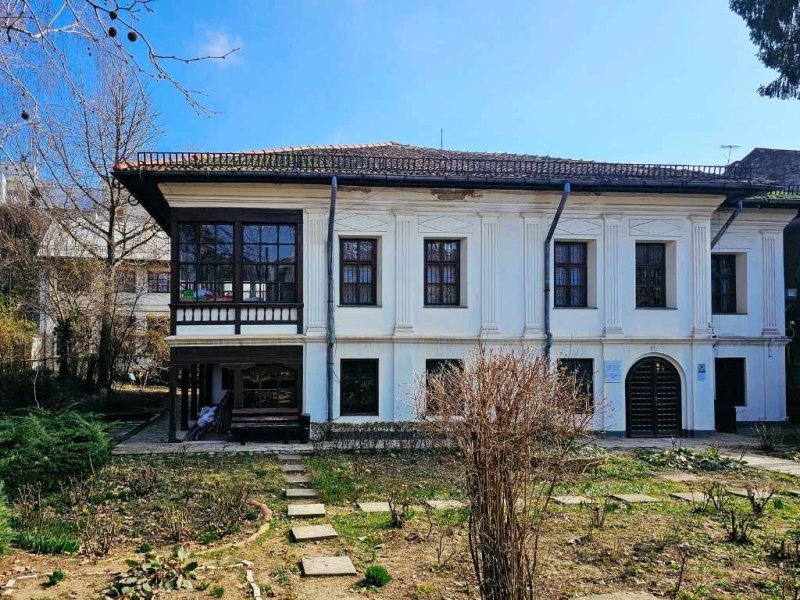
Located at 22 Spătarului Street, this is the oldest habitable house in Bucharest. The Melik House, today home to the Theodor Pallady Museum, is a rare relic of 18th-century traditional Romanian architecture, featuring a glass-enclosed veranda (cerdac) and a massive, vaulted cellar. Although it bears the name of the family of Armenian intellectuals who lived there for generations, the structure was originally built by a local boyar and later purchased by the Armenian Kevork Nazaretoglu.
Inside, you walk on floors that creaked under the steps of the 1848 revolutionaries, as Iacob Melik, the owner at the time, was an active supporter of the Wallachian Revolution. With its thick walls and stone foundation, the house survived the fires and earthquakes that leveled the rest of the city, standing today as a benchmark of architectural resilience.
2. Architectural Jewels: From the "Hat House" to Moorish Exoticism
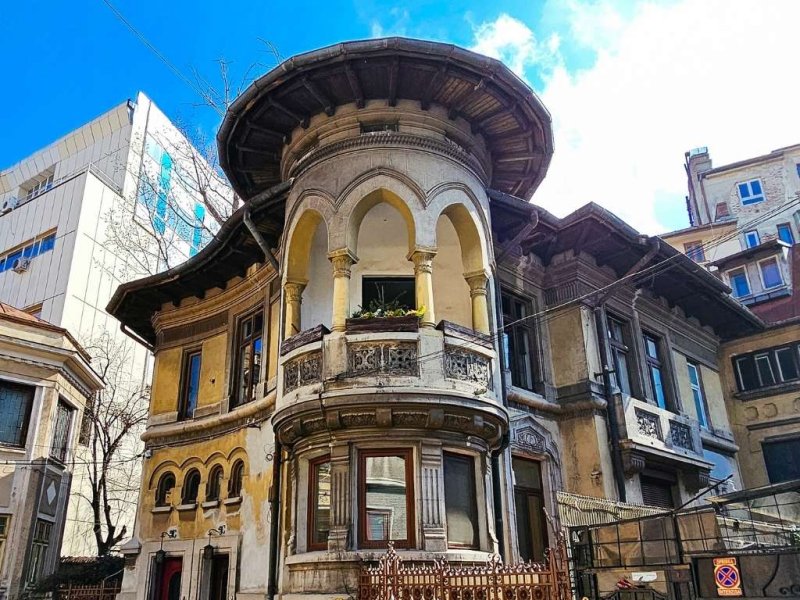
Leaving the main axis of Armenească Street to venture down side streets turns the landscape into a catalog of architectural eccentricities. Here, houses were not built from templates but to reflect the personalities of their owners.
- The Hat House: Located on Corbeni Street, this interwar villa is famous for its sharp, oversized roof that strikingly resembles a witch’s hat or a giant helmet. It is an example of modernism with expressionist influences that defies the rectangular rigor of today's apartment blocks.
- The Moorish House: On Popa Rusu Street, your eyes will be caught by a facade that seems teleported from Andalusia or North Africa. With horseshoe-arched windows and Oriental-inspired decorations, this building recalls a period when Bucharest architects experimented with the Neo-Moorish style, giving the city a cosmopolitan and mysterious air.
- The Spătarului - Popa Rusu - Corbeni Triangle: This small labyrinth of streets is the essence of the neighborhood. On Spătarului, Neo-Romanian villas with turrets sit next to chic 19th-century buildings. On Popa Rusu, time seems to slow down among ivy-covered courtyards, while Corbeni Street maintains a discreet elegance, serving as a refuge for many artists who have chosen to restore these spaces with immense respect for details like window ironwork or the moldings above the doors.
3. The Armenian Cathedral and the Spiritual Axis
The gravitational center of the area is undoubtedly the Armenian Cathedral of "Saints Archangels Michael and Gabriel." Built at the beginning of the 20th century according to the plans of architect Dimitrie Maimarolu, it is a symbolic replica of the Etchmiadzin Cathedral in Armenia. The style is a fusion of Byzantine and specific Caucasian elements, notable for its use of stone and monumental proportions.
The cathedral courtyard functions as a small cultural enclave. Here you can find the bust of General Andranik, an Armenian national hero, and the Dudian Library, which houses manuscripts hundreds of years old. This complex gives the neighborhood a distinct identity, serving as a bridge between Bucharest and Yerevan.
4. The Armenian School and Elite Education
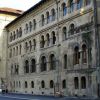
Near the cathedral stands the imposing former Armenian School, a building that recalls the importance this community placed on education. The Armenian community was historically comprised of prosperous merchants, jewelers, and intellectuals who understood that social mobility was closely linked to culture.
Although the building now serves various administrative purposes, its exterior architecture preserves the rigor of educational institutions from a bygone era. The tall windows and massive entrance portal speak of a time when the school was considered a temple of knowledge, located at the very heart of the community.
5. Art Deco and Discreet Modernism
While the general image of the neighborhood is one of the 19th century, interwar modernist gems are hidden among the Baroque or Neoclassical villas. On streets like Franzelarilor or Armenească, you can identify "imobile de raport" (rental apartment buildings) built in the Art Deco style, featuring clear geometric lines, round porthole windows, and balconies reminiscent of luxury ocean liner aesthetics.
This stylistic diversity proves that the area was continuously inhabited by a dynamic middle class open to European architectural trends. The transition from the floral ornaments of the Neo-Romanian style to functionalist minimalism happens naturally from one house to the next, without breaking the street's visual harmony.
6. The Story of Coffee Specialist Gheorghe Florescu
No journey into the spirit of this place is complete without mentioning coffee. Armenian delicacies and sand-brewed coffee are part of the neighborhood’s DNA. A legendary figure of the area is Gheorghe Florescu, author of Confessions of a Coffee Specialist, who apprenticed under the Armenian master Avedis Carabelaian.
His coffee shop (Delicatese Florescu), located near the neighborhood's edge, keeps the tradition of artisanal roasting alive. The aroma of freshly ground coffee floating through the streets is an olfactory memento of the times when small family businesses defined the rhythm of urban life.
7. The Armenian Street Festival
Every summer, the neighborhood transforms into a vibrant stage during the Armenian Street Festival. The event succeeds in taking history out of museums and bringing it to the streets through traditional dances, calligraphy workshops, and, above all, gastronomy. It is the perfect opportunity to taste the "ear" soup (hurut) or the famous șuberec.
Beyond the festivities, this event revitalizes public space. The streets become pedestrian-only, inner courtyards open up, and visitors have the chance to see the neighborhood without the noise of cars, rediscovering the "Little Paris" atmosphere that is so often talked about but so rarely felt.
8. Hidden Gardens and Inner Courtyards
Unlike the neighborhoods with massive villas in the northern part of the city, the Armenian Quarter is characterized by long, narrow courtyards hidden behind wrought-iron gates. If you are curious enough to peek through the fences, you will discover lush gardens, vines climbing up facades, and small oases of greenery where time seems to have stood still.
In recent years, many of these spaces have been transformed into terraces or cultural hubs. Restaurants like Simbio or Taverna Georgia occupy historical buildings and use these gardens to offer an authentic relaxation experience—a form of "gentle gentrification" that preserves the old structure while giving it contemporary utility.
9. Guild-Named Streets and the Story of "Ten Tables"
The area and its surroundings are marked by a toponymy that betrays old occupations. Franzelarilor Street (Bakers) or Cavafii Vechi Street (Old Shoemakers, in the neighboring Jewish Quarter) recall the guilds that populated the edges of the Armenian district. A local curiosity is Zece Mese Street (Ten Tables), named after a famous old summer garden that had exactly ten tables for its customers.
These names cover layers of urban memory. During a simple stroll, you can still see old inscriptions on commercial building fronts evoking past professions, offering clues about how the neighborhood once functioned as an autonomous economic organism.
10. The Discreet Elegance of Armenească Street
The neighborhood's main artery, Armenească Street, offers a perspective on the social diversity of the past. Here, sumptuous urban palaces coexist with small merchant houses and the community’s administrative buildings. The details of the gate ironwork and the moldings above the windows offer a free lesson in art history.
On Armenească, you can best observe how architecture adapted to the needs of its inhabitants without destroying the visual balance of the street. The neighborhood does not impress through garish opulence, but through the harmony of details and the quality of materials used in construction a century ago.
The Armenian Quarter remains one of the most precious pieces of the Bucharest urban puzzle. Visiting it doesn't require a tour guide, but rather a mindset receptive to beauty and a pair of comfortable shoes. Whether you are looking for an excellent coffee, a history lesson, or simply a moment of peace in the middle of the metropolis, this area has the capacity to offer exactly what you need without ever exhausting its resources of mystery and elegance.
You may also like: Armenian Quarter - Hidden histories among the old walls, in the center of the Capital