Great Romanian dynasties: Șuțu, the Phanariot rulers, the doctor of Mihai Eminescu and the first Romanian economist
- Articles
- 16 MAR 26
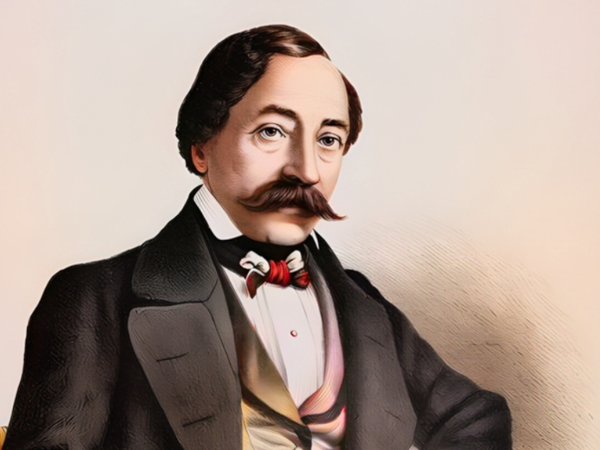
During the Phanariot era, the Șuțu family gave three rulers, and history records that those were turbulent, harsh, and unrepeatable times. However, the status of these foreigners shifted at the crossroads of epochs, when Nicolae Șuțu, the son of the last Phanariot ruler of Wallachia, worked with dignity, diligence, and purpose for the Principalities. He aspired to modernization, justice, and unification. Nicolae Șuțu was a Phanariot who shattered all the prejudices surrounding Phanariots.
Early life and education of Nicolae Suțu
Nicolae Șuțu was of Phanariot descent, born on the Bosporus in the town of Arnăutchioi at the end of 1798. His family, the Greek Soutzo family, originated from Epirus. He had a childhood similar to other noble Phanariot youths: he spent his free time fishing and playing, while his education was overseen by his father, who taught him Turkish, other Eastern languages, Persian, Arabic, and Greek.
Years later, upon reaching adulthood, he admitted that all that knowledge had completely disappeared: “After four years of assiduous work, I managed to master it sufficiently to speak it fluently and even compose sample letters; but soon after leaving Constantinople, I changed my focus and had no opportunity to cultivate notions that had no time to settle, and in the end, I forgot it entirely,” he recalled in his memoirs.
Nevertheless, his childhood was marked by the injustices and violent acts that Turks inflicted on Greek Phanariots. He grew up with a sentiment of antipathy toward the Ottomans, which later, when he arrived in the Romanian Principalities, transformed into undeniable pro-Romanian sympathies.
Interests in economics and arrival in the Romanian Principalities
Although he remained attached to Greek literature, Șuțu’s main interest was economics. He was captivated by Jean-Baptiste Say’s Political Economy, directing all his energy toward mastering this discipline. He arrived on Romanian soil when his father, Alexandru Șuțu, came from Constantinople to ascend the throne.
This appointment was the fulfillment of all his lifelong expectations, as was typical for a respectable Phanariot. He took his estates and the entire family—including parents, wife, and children—and embarked toward the land of promise.
The journey followed the Black Sea coast, aboard a ship with four pairs of oars. It was long and arduous, as the sea was rough, rarely favoring Phanariots, and numerous secret stops were necessary due to the threat of bandits along the shore.
Young members of the Suțu family were deeply marked by this experience: “We sheltered in tents on deserted beaches, where the deepest silence reigned; at night, no fire was made, for fear of revealing our hiding place; we slept clothed on the sand, ready to flee at the first sign,” Nicolae Suțu recounted in his memoirs.
Their stay was brief, as his father’s deposition returned the family to Constantinople until 1818, when they returned to Wallachia. In 1820, a year before his father’s death, Nicolae married Ecaterina Cantacuzino-Pașcanu, a political and economically advantageous arranged marriage.
After his father’s sudden death and the political upheavals of 1821, the Suțu family took refuge in Brașov, and Nicolae no longer expected to become a ruler. For the next four years, he devoted himself to studying French literature, economics, and law, before relocating in 1825 to Moldavia, living with his wife’s relatives in Suceava, Cernăuți, and finally Iași.
Political rise and contributions to reform
Suțu’s political and social ascent began when the Russians gained predominance in the Principalities. In 1830, he was co-opted into the commission drafting the Organic Regulations, a law that acted as a first fundamental statute in the Romanian space, imposed by Russian authorities to modernize the Principalities and stabilize the socio-political climate in anticipation of possible annexation. This was a lesson in pragmatism.
Nicolae Suțu was appreciated by both Pavel Kiseleff and General Mircovici, active in Iași. His first public office was that of postelnic. He advanced rapidly, and by 1835 he became a government member and personal secretary to the new regulatory ruler, Mihail Sturdza.
During Sturdza’s fifteen-year reign, Suțu was privy to all secret information, both domestic and foreign, advising the ruler on matters from justice to education. He initiated reforms such as the establishment of the School of Arts and Crafts in the 1840s, oriented education toward technical disciplines, and drafted the Regulation of Public Instruction.
He also applied his economic knowledge in several volumes analyzing the industry and economy of Moldavia, with the first published in 1838. His first work of economic literature is considered Notions statistiques sur la Moldavie (Statistical Notions on Moldavia). Suțu also wrote memoirs, posthumously published in 1899 in French, offering a detailed portrait of Romanian society in the latter half of the 19th century.
Vision for gradual reform and political philosophy
Nicolae Șuțu aligned with nationalists favoring gradual, responsible reform rather than revolutionary impulses. He considered those who did not understand this system as demagogues, including liberals such as I.C. Brătianu and D.A. Sturdza. He also criticized the public for their indifference and apathy toward civic affairs, observing that people confined themselves to personal concerns, rarely forming opinions even when their interests were affected.
The end of his political career came around the double election of Alexandru Ioan Cuza. In 1858, he was elected deputy of Putna in Moldavia’s elective assembly, but health issues prevented him from attending the session in Iași where Cuza was chosen.
Instead, he sent a telegram supporting Cuza. After the Little Union in 1860, he was elected a member of the Central Commission in Focșani, initiating measures such as establishing the Court of Accounts, unifying the monetary system, developing industry, and building railways. By 1862, he retired from public life, settling on an estate in Moldavia.
He had advocated for the appointment of a foreign prince to the throne—a vision realized when Carol I entered Bucharest on May 10, 1866. Nicolae Suțu died in January 1871, concerned only with his writings. Mihail Kogălniceanu announced his death in Parliament, praising his life and requesting a pension for his family.
The Șuțu family and Phanariot rulers
The Suțu saga begins with Jean Draco-Sutzu, who moved to Constantinople at the end of the 17th century. Over time, descendants dropped the Draco part of the name. Some etymologists suggest the name Suțu derives from soutziades, a term for hydraulic engineers who supplied water to the Seraglio and the city—though this theory is not universally accepted.
Several Suțus became rulers of the Principalities. Mihai “Draco” Suțu ruled Wallachia three times (1783–1786, 1791–1793, 1801–1802) and Moldavia once (1793–1795). Mihail (Grigore) Suțu ruled Moldavia from 1819–1821 and later served as Greece’s minister in Paris and Saint Petersburg.
Alexandru Șuțu held important offices, including Dragoman of the Porte, and was the last Phanariot ruler of Wallachia. Despite the instability and intrigues of the era, Alexandru Suțu tried to establish diplomatic stability with neighboring powers.
Cultural contributions: Rudolf Șuțu
Rudolf Suțu, born in Iași on July 27, 1880, great-grandson of Alexandru Șuțu, studied Letters at the Moldavian University under A.D. Xenopol. A journalist and publicist, he directed the newspaper Evenimentul and edited Dușmanul during World War I.
He became the first director of the Municipal Library housed in Golia Monastery and was awarded the French Palmes Académiques. His works include translations, original writings such as De toate, Despre librarii şi librăriile vechi din Iaşi, O viaţă, and his major work, Iașii de odinioară, a detailed monograph of his hometown.
Alexandru A. Șuțu and modern psychiatry
Alexandru A. Suțu, after studying medicine in Athens and Paris, established the Chair of Psychiatry in Romania, becoming the first university professor of psychiatry.
He directed Mărcuța Sanatorium, cared for Mihai Eminescu, contributed to modern psychiatric legislation, and authored pioneering works such as Catatonic Symptoms: Mechanism and Clinical Value, Imbecility from a Criminal Perspective, and studies on syphilis and psychoses.
Mihail C. Șuțu, numismatist and statesman
Mihail C. Suțu became Romania’s foremost numismatist, recognized internationally, including by the Berlin Academy of Sciences. He was founding president of the Romanian Numismatic Society in 1903, a member of the Royal Numismatic Society in Britain, and a full member of the Romanian Academy from 1909.
His research included Greek and Roman coins, and he contributed to modernizing postal services and serving as governor of the National Bank of Romania (1899–1904).
The Șuțu Palace and legacy
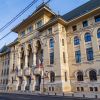
Costache Grigore Suțu built a grand palace in central Bucharest in 1835, designed by architects Konrad Schwink and Johann Veit, featuring Gothic elements and lavish decorations. The palace hosted opulent balls and gatherings attended by the city elite and royalty. Over time, parts of the palace were rented to institutions, and since 1956, it houses the Museum of Bucharest.
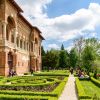
On the right bank of the Buzău River lies the commune of Șuțești, preserving the memory of the 19th-century Suțu estate. The family developed the area demographically and economically, founding churches, schools, and mills. Local legends recall lively balls, hidden cellars, and secret tunnels linking the manor to a church—tales that continue to color the community’s imagination today.
We also recommend: Great Romanian dynasties: The rebirth of the Știrbei family, the White Prince, the right hand of King Ferdinand and the princess of Romanian aviation