Great Romanian dynasties: The rebirth of the Știrbei family, the White Prince, the right hand of King Ferdinand and the princess of Romanian aviation
- Articles
- 16 FEB 26
The history of the great boyar families in Wallachia is, often, a history of survival through adaptation. The Știrbei family is no exception. At the turn between the 18th and 19th centuries, when the old Oltenian lineage seemed destined to disappear, an inspired adoption was to change the course of destiny. From this rebirth arose figures who decisively influenced politics, the economy and even the sky of Romania: rulers, strategists from the shadows, courageous women and visionaries.
The rebirth of a name: from adoption to reign
Toward the end of the 18th century, the name Știrbei was fading away with the aging of the vornic Barbu C. Știrbey, the last direct descendant of a family documented as early as the 15th century. Without heirs, with an inheritance “narrowed and endangered,” as Nicolae Iorga was to note, the solution came through adoption. The young Barbu Bibescu, the son of Ecaterina Văcărescu and Dumitrachi Bibescu, was adopted and received the name and the responsibility of continuing the tradition.
This decision was not one of compromise. In that era, such adoptions were frequent in the great families, but Barbu C. Știrbey relied on education and on the formation of character. He intuited that the historical name could be saved through the cultivation of spirit and competence. And he was right. Barbu Bibescu, who became Barbu Dimitrie Știrbey (1799–1869), was to be, in fact, the founder of the new branch of the dynasty.
His public career began during the Russian administration led by Pavel Kiseleff. He was close to him and held important positions until the time of the reign of Gheorghe Bibescu. In 1849, after the suppression of the 1848 Revolution, he was elected ruler of Wallachia, in a tense geopolitical context. The country was caught between the influence of the Russian Empire and Ottoman suzerainty, and the ruler had to navigate skillfully between the two powers.
His reign (1849–1856) was marked by important reforms. He paid special attention to education, establishing the Princely Boarding School for Girls (the future Central School for Girls), as well as the School of Arts and Crafts, the School of Agriculture, the School of Botany and the School of Surgery. It was also during his time that the Bellu Cemetery was opened, later becoming the necropolis of great Romanian personalities. The culminating moment of his reign was, however, the liberation from slavery of all the Gypsies in Wallachia, on February 20, 1856 – an act of great courage and modernity.
Alexandru Știrbey and the consolidation of a modern fortune
Among the seven children of the ruler, Alexandru Știrbey (1837–1895) stood out through his education and his energy. Trained in Paris, licensed in sciences and an officer in the French army, he returned to Romania in 1859, at his father’s insistence. He entered politics alongside the Conservative Party, holding positions as deputy and minister – of Public Works, of the Interior and of Finance.
Beyond his political career, Alexandru was a true entrepreneur. At Buftea, on the inherited estate, he developed an imposing residence and a vast agricultural complex. He founded a cannery in 1870, expanded the orchards, vineyards and gardens, at a time when Bucharest was still a modest city from an economic point of view. Through his vision, the family fortune not only was preserved, but was amplified.
The palace at Buftea, built in neo-Gothic style, with four levels, became the center of an intense social life. Here sumptuous receptions were organized, attended by members of the royal family and political elites. One of the most spectacular gatherings took place in 1909, when King Carol I, Queen Elisabeth, Princes Ferdinand and Maria and other distinguished guests were received with a splendor that impressed the press of the time.
The children of Alexandru Știrbey – eight in number – were educated at home, with elite teachers, among whom was also Ioan Slavici. Their education combined patriotism with the idea of national unity, in an era in which Transylvania was still under Austro-Hungarian domination. The premature death of their mother, in 1885, and then of their father, ten years later, marked them profoundly.
Eliza Știrbey and the connections with high politics
Eliza Știrbey (1870–1957), the eldest daughter of Alexandru, became a central figure in Romanian political life through her marriages. At 20 years old, she married the conservative Alexandru Marghiloman. Later, she divorced and remarried the liberal Ionel Brătianu, one of the architects of Greater Romania. Through these alliances, the Știrbey family found itself at the center of the major decisions of the Romanian state.
Eliza’s life was not without trials. She took over the responsibility for her younger siblings and went through decades of dramatic political transformations. She lived until 1957, witnessing the establishment and consolidation of the communist regime.
Barbu A. Știrbey, “the White Prince” and the backstage of the Great Union
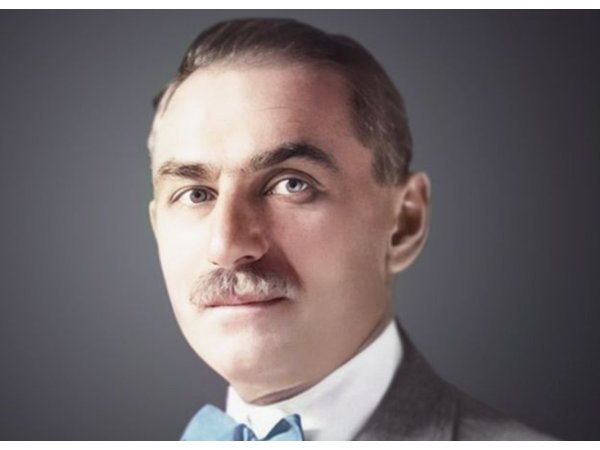
Barbu Alexandru Știrbey (1872–1946), the grandson of the ruler, was one of the most influential figures in the backstage of power during the reign of King Ferdinand. Elegant, discreet, extremely intelligent, he was nicknamed “the White Prince.” He became administrator of the Crown Domains in 1913 and, after the death of Carol I, he was the man of maximum trust of the royal couple.
In the years of neutrality (1914–1916), the diplomats of the great powers requested audiences from him almost daily. Although he did not hold an official political office, his influence was enormous. He supported Romania’s entry into the war on the side of the Entente and contributed to the formulation of the declaration through which Ferdinand promised agrarian reform to the Romanian soldiers.
After 1918, he remained a key character, but with the return of Carol II, he was marginalized and self-exiled to Switzerland. In 1944, he was sent to Cairo for negotiations regarding the armistice. He intuited the Soviet danger and warned the Romanian political leaders. His sudden death, in 1946, fueled suspicions, but officially it was attributed to liver cancer.
Queen Maria wrote about him with gratitude, considering him one of the discreet architects of Greater Romania. Their close relationship generated rumors and legends, but nothing was proven.
Marina Știrbey, the princess of Romanian aviation
Marina Știrbey (1912–2001), the daughter of George Știrbey, carried forward the family’s spirit of initiative, but in an entirely new field: aviation. Born in Vienna, passionate about flying from a young age, she managed to obtain her pilot’s license in 1935, after numerous refusals motivated by the prejudices of the time.
She won competitions, flew as far as Stockholm and Helsinki and, inspired by the Finnish model, founded in 1940 the Sanitary Squadron – known as the White Squadron – a unit formed exclusively of women pilots. During the Second World War, these aviators evacuated the wounded from the Eastern Front, in extremely difficult conditions.
After the establishment of communism, her family was persecuted, their goods confiscated, and her husband arrested. Marina fled to the West and settled in France. She returned to Romania after 1989 and died in 2001, leaving behind the image of a courageous, visionary and devoted woman.
The Știrbey palaces, symbols of an era
The Știrbey Palace on Calea Victoriei, inherited and expanded by successive generations, was a landmark of aristocratic Bucharest. The renovations carried out by French and German architects gave it a refined neoclassical air. Nationalized in 1948, it was transformed into a museum, and after 2000 it entered a long series of controversies related to restoration and real estate development.
At Buftea, the estate also entered history through the signing of the separate peace of 1918. At Dărmănești, the palace built by George Știrbey later became a sanatorium and a school camp, and after 2005 it was taken over by private investors who promised its restoration.
A legacy between legend and reality
The Știrbey dynasty crossed two centuries of Romanian history, adapting to political and social changes. From the saving adoption of Barbu Bibescu, to the reforms of the ruler, to the discreet influence of the “White Prince” and to the courage of Marina Știrbey, this family contributed to the construction of modern Romania.
Their stories combine politics, education, economy and adventure. They were people of their time, but also ahead of it. Behind the palaces, the balls and the political intrigues, one constant remains: the belief that name and responsibility can overcome time. And the Știrbey family demonstrated that rebirth is not only an episode, but a vocation.
We also recommend: Great Romanian dynasties: the Bibescu family, the Oltenian boyars, controversial ruler, the first aviator and the princess who captivated Marcel Proust