Do you ride an e-bike or e-scooter? You should know they are banned in Bucharest parks. What other vehicles are prohibited
By Raluca Ogaru
- NEWS
- 13 AUG 26
Electric scooters, electric bicycles and other motorised vehicles may not be used on the paths or within the grounds of Bucharest’s public parks and gardens. The ban was introduced through a decision adopted by the General Council of the Municipality of Bucharest on 30 October 2025.
Individuals who break the rule risk a fine of between RON 200 and RON 500. The restriction applies regardless of whether the vehicle is privately owned or rented through an app.
What Bucharest City Hall announced
Bucharest City Hall reminded residents of the ban in a post published on its official Facebook page. The message, translated from Romanian, reads:
Electric scooters have been BANNED in the parks we manage since October 2025.
The Bucharest Local Police regularly carries out information campaigns in Cișmigiu, Herăstrău, Tineretului, Carol and Circului parks.
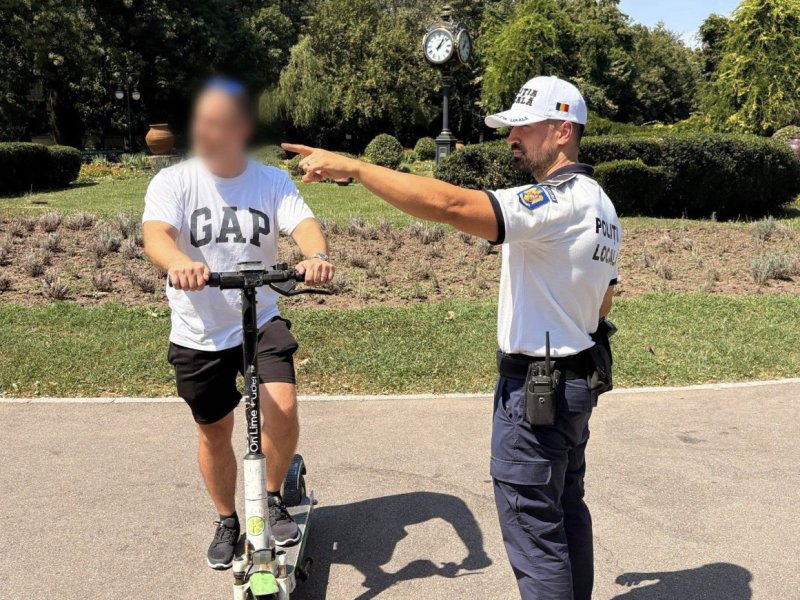
Police officers talk to people and explain that they are not allowed to ride any type of motorised vehicle, including electric ones, inside a #park.
The ban applies to:
electric scooters;
electric bicycles;
hoverboards;
mopeds;
self-balancing devices.
Fines can reach RON 500.
Law enforcement officers have issued 175 fines totalling more than RON 30,000.
Safety matters!
#ElectricScooters
#Parks
The five parks mentioned in the post — Cișmigiu, King Michael I Park, still widely known as Herăstrău, Tineretului, Carol I and Circului — are locations where the Local Police has conducted information and enforcement campaigns. However, the list should not be interpreted as a complete record of all the public spaces covered by the rule.
What the regulation says and how high the fines are
The legal basis is General Council Decision No. 458/2025, which amended the rules for protecting green spaces within the Municipality of Bucharest. The document prohibits the use of any type of motorised vehicle, including electric vehicles, on the paths and within the grounds of the city’s public parks and gardens.
The regulation refers to the public parks and gardens of Bucharest, not only to the five parks listed in the City Hall’s Facebook post. For individuals, breaking the ban is an administrative offence punishable by a fine ranging from RON 200 to RON 500. Legal entities face fines of between RON 1,000 and RON 3,000.
According to the figures published by Bucharest City Hall on Facebook, local police officers have issued 175 fines worth a total of more than RON 30,000. The authorities say their actions are not limited to penalties: officers also speak to riders and explain the rules before or during enforcement operations.
Which vehicles are banned in parks
The decision expressly mentions electric scooters, electric bicycles, hoverboards, self-balancing mobility devices and mopeds. The list is not exhaustive. The phrase “other similar vehicles” allows the rule to cover motorised devices that are not specifically named in the document.
The key criterion is whether the vehicle is fitted with a motor, regardless of whether it is electric or powered by an internal-combustion engine. An e-bike is therefore covered by the ban even if it has a low-powered motor that only provides assistance while the rider is pedalling.
The restriction applies to riding these vehicles on park paths and elsewhere within park grounds. If you arrive at a park entrance on an e-scooter or e-bike, the safest option is to stop riding and follow the signs, information boards and instructions provided by local police officers or the park administration.
Conventional bicycles may only use designated cycle lanes
A conventional bicycle without a motor does not have the same legal status as an electric bicycle. The regulation provides an exception for non-motorised vehicles, which may be used on designated cycle lanes located inside public parks and gardens.
This permission does not automatically extend to every pedestrian path. Cyclists must use specially designated routes and adjust their speed so that they do not endanger pedestrians. A cycle lane located inside a park does not grant access to electric bicycles or electric scooters because the local exception only covers non-motorised vehicles.
The distinction is particularly relevant in the case of pedal-assist e-bikes, which can look almost identical to conventional bicycles. Within Bucharest’s parks, the presence of an electric motor changes the vehicle’s legal status.
What exceptions are included in the regulation
The ban does not apply to manual or electric wheelchairs, assisted-mobility vehicles or other devices needed by people with disabilities. These devices should not be confused with electric mobility devices used for recreation.
Vehicles operated by the Bucharest Local Police and the local police departments of the city’s six sectors are also exempt. The same applies to vehicles belonging to green-space administrations or organisations providing public park maintenance services. The presence of such a vehicle inside a park does not mean that the general ban has been lifted.
Where you may legally ride an electric scooter
Outside parks, the use of electric scooters is regulated by the Romanian Traffic Code. When a road has a cycle lane, an electric scooter must be ridden on that lane. If no cycle lane is available, the scooter may only be used on roads where the maximum permitted speed for motor vehicles is 50 km/h.
The minimum age for riding an electric scooter or bicycle on public roads is 14. Riders under the age of 16 must wear a protective helmet when travelling on the carriageway. Carrying a passenger on an electric scooter is prohibited.
General traffic regulations do not override the ban covering public parks and gardens. Taking what may appear to be a shorter route through a park can result in a fine of up to RON 500, even when the vehicle is being ridden slowly. To avoid a penalty and prevent conflicts with pedestrians, riders should plan a route around the park or continue on foot while observing the signs posted at park entrances.
READ ALSO:
How a well-managed city center looks in Europe — and what Bucharest could learn from it