What You Should Know Before You Walk Into a Pawnshop in Bucharest
- Articles
- 15 JUL 26
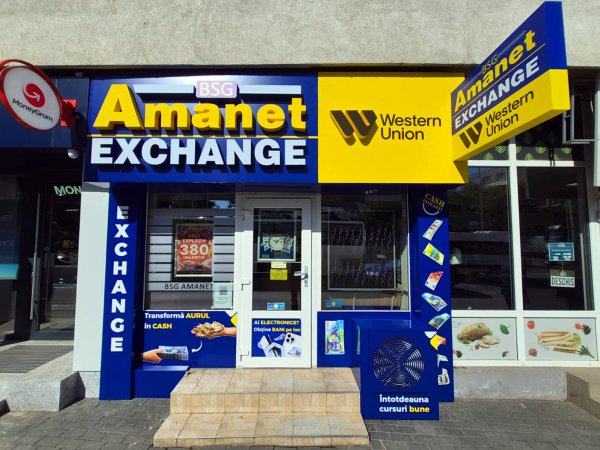
Rahova, Ferentari, Obor, Colentina are the Bucharest neighborhoods where pawnshop counters have been a fixture for decades, though lately you'll also find them on central boulevards, next to pharmacies and currency exchange offices. The market has grown steadily, driven by high bank interest rates and inflation, reaching an estimated 1.8 billion lei nationwide. What actually happens once you walk in with something valuable?
1. What you can pawn, and what you can't
The law allows movable goods to be pledged: jewelry, phones, laptops, appliances, sometimes cars. You cannot pawn a house, an apartment, or land; real estate simply doesn't fall under this type of contract, no matter what someone at a shady counter promises you. The most common item remains gold, wedding bands, chains, bracelets, because its value is easy to calculate and there's a fast resale market for it.
2. Your ID, the first thing they'll ask for
No valid ID card, no contract. The pawnshop has to verify your identity and, in many cases, confirm that the item you're bringing actually belongs to you. That matters especially for higher-value items, where there's a real risk of dealing in stolen goods.
3. The appraisal: this is where your loan amount gets decided
An appraiser determines the item's real value. For gold, everything starts from the piece's karat: 14K means 58.3% pure gold (585 per thousand), 18K means 75% (750 per thousand), with the National Bank's reference quote for 24K gold as the benchmark. For electronics or other goods, the appraisal factors in condition, age, and demand on the secondhand market.
Important to keep in mind: you never get the full estimated value. The pawnshop offers a percentage of it. The difference is the firm's safety margin, in case you never come back to redeem the item. That percentage varies from one pawnshop to another, depending on internal policy and the type of item, so checking two or three offers before signing actually matters.
4. The contract: read it carefully
The pawn contract is legally regulated under Law no. 93/2009 on non-bank financial institutions, which classifies pawnshops as NBFIs. One nuance few people know: according to the National Bank, pawnshops are only listed in a records registry at the central bank, not prudentially supervised the way banks or other types of NBFIs are. Day-to-day oversight falls mainly to the National Authority for Consumer Protection (ANPC).
The contract must clearly state: the amount borrowed, the total cost (interest, fees, any other charges), the repayment term, and the penalty interest rate in case of late payment. ANPC explicitly recommends checking these elements before signing, because that's exactly where recent inspections found the most violations: excessive interest rates, fees calculated on the original borrowed amount instead of the remaining balance, or file-analysis fees charged twice. In 2025 alone, ANPC issued roughly 1.47 million lei in fines against NBFIs and pawnshops for such practices.
5. The term and the daily interest
Standard terms run from a few weeks to a few months. Interest often works as a daily or monthly commission applied to the borrowed amount, rather than as a classic bank interest rate. That's one more reason to calculate the total cost upfront, not just the percentage posted in the window.
6. If you want to extend your contract
If you don't have the money by the deadline, most pawnshops allow you to extend the contract for an additional fee, fixed or proportional to the borrowed amount, depending on the firm's policy. It's a better option than losing the item outright, but the cost stacks on top of what you've already paid, so it's worth comparing against the alternative of simply saving up for full redemption.
7. What happens if you never come back
Once the term and any grace period expire, the item becomes the pawnshop's property and can be put up for retail sale, right in the shop window. From that point on, you lose any claim to it. That's exactly why the contract, with all its deadlines, is worth reading before you sign, not after.
8. If you have a problem with a pawnshop
Contracts signed before November 11, 2024 may qualify for a cap on interest, APR, or total credit cost, under Law no. 243/2024, if you submit a written request to the NBFI. For any other complaint, unclear clauses, unjustified fees, the complaint goes to ANPC, the authority that actively oversees this sector, unlike the National Bank.
One last thing to know
The market has changed significantly compared to a decade ago: as of January 1, 2026, the minimum capital thresholds for firms wanting to open a pawnshop increased under Law 239/2025, and licensing now goes through a stricter process. In practice, the counter on the corner of your neighborhood is no longer the informal business it used to be. It's a financial institution with reporting obligations, even if the bulletproof glass and the appraiser with the loupe haven't changed a bit.
Also recommended Pawnbroking, a 550-Year Story: How an Act of Charity Became the Shop on the Corner