EUROPAfest at 33: How a Competition for Young Musicians Started Bringing Jazz from 14 Countries to Bucharest

- Articles
- 06 JUL 26
In 1993, a group of young musicians gathered in Bucharest for a classical music competition called the Jeunesses Musicales International Festival. It had none of the energy of a summer festival — it was an academic affair, all juries and recitals, built for a narrow audience of specialists and music teachers.
In 2002, the organizers changed the formula: they added jazz, blues, and pop, renamed the event EUROPAfest, and the festival grew quickly from there. By 2005, press releases were already citing a "record" turnout — 300 musicians from 50 countries, over six days of concerts. Seven years later, in 2012, the festival still drew more than 300 artists, this time from 45 countries. By 2017, the number had dropped slightly, to 42 countries, though the format stayed the same: four genres under one roof, artists from every continent.
One person has driven this growth from the start: Luigi Gageos, who has led the organizing company jmEvents since 1993 and serves as EUROPAfest's general manager. Few Romanian festivals can claim the same person at the helm for three decades — especially in a year when other major events are struggling. Kapital Festival, also scheduled for the first weekend of July 2026 at Arena Națională, was pushed back to 2027; organizers cited high ticket taxes, the economic downturn, and legislation that changed too late for them to plan around it.
This year's edition, running from July 3 to 12, is the thirty-third, and it looks different from the record years of the 2000s. Organizers chose to put jazz at the center, and the list of participating countries has narrowed to fourteen: France, Italy, Ireland, Canada, Israel, the United States, Poland, Australia, Hungary, Bulgaria, Azerbaijan, Peru, South Korea, and Romania. It's a tighter format than the sprawl of a decade ago, but consistent with the direction the festival chose for 2026: fewer countries, one dominant genre, themed evenings.
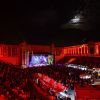
The opening night took place on July 3 at Sala Luceafărul, on Ion Ghica Street — a change from recent editions, which typically opened in the Auditorium Hall of the Royal Palace, now home to the National Museum of Art of Romania. The concert, called Royal Jazz Night, brought together a striking range of acts for one evening: Cohen Almonte Duo, a guitar project rooted in New York jazz that drifts into Peruvian rhythms; MeJazz, a band from Azerbaijan founded by pianist and composer Muhammad Allahverdiyev; Ritu, a South Korean quartet built on Latin American traditions, from bossa nova to Cuban sounds; and JuMa, from Poland, playing a style closer to swing and free jazz. The night closed with a jam session between musicians from Italy, Canada, the US, and Israel — a festival ritual, not a one-off for this edition.
EUROPAfest has run under the High Patronage of Her Majesty Margareta and Prince Radu since 2005, and last year it received the "Custodian of the Romanian Crown" Medal at a ceremony held at Peleș Castle, in Sinaia. Organizers describe the festival as the first event in Romania to receive royal patronage — a title that appears consistently in their press materials, without independent confirmation from the Royal House itself.
The program runs through July 12 with evenings titled Jazz at the Theatre, Jazz 4 You, Best of Jazz, and the EUROPAfest Gala, all held at Sala Luceafărul. This year also marks the twentieth anniversary of the Bucharest International Jazz Competition, the festival's competitive strand.
Tickets for the remaining evenings are available on iaBilet.ro.