Famous houses in Bucharest: Casa Mița Biciclista, gifted by King Ferdinand I to the most famous courtesan of the last century
- Articles
- 22 APR 26
Bucharest hides numerous fascinating stories behind its historic buildings, and one of the most spectacular is, without a doubt, that of Mița Biciclista House. Located near Piața Amzei, this impressive residence is not only an architectural jewel, but also the witness of a life full of mystery, elegance, and controversy. Closely linked to the destiny of Maria Mihăescu, known as Mița Biciclista, the house reflects the spirit of an era in which Bucharest was nicknamed “Little Paris.” The story of this woman and her home reveals a world of luxury, but also of decline, in the context of the major historical transformations of the 20th century.
The rise of an emblematic figure of interwar Bucharest
Maria Mihăescu was born in 1885, in a modest family from a rural environment, but ambition and the desire to overcome her condition led her to build an extraordinary destiny. From a young age, she demonstrated strong will and a rare ability to adapt, which quickly propelled her into social circles inaccessible to most women of that time.
A decisive moment in her life was the acceptance of an unexpected proposal that led her into a relationship with Leopold II of Belgium. This connection opened doors to an international world, and her journey continued in Paris, where she became known for her extravagant style and nonconformist spirit.
In the French capital, she participated in an unusual competition on the famous Champs-Élysées boulevard, where she demonstrated her originality and courage. The episode contributed to strengthening her image as an independent and spectacular woman, capable of attracting attention wherever she appeared.
Famous relationships and the royal gift that changed her destiny
Maria Mihăescu’s fame grew rapidly, and stories about her beauty and charm reached some of the most important personalities of the time. It is said that Manuel II of Portugal wanted to marry her, while artists and intellectuals such as Nicolae Grigorescu and Octavian Goga were fascinated by her presence.
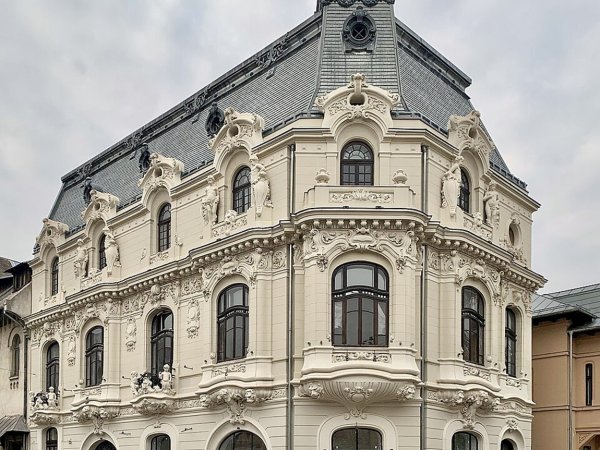
However, the most important relationship was the one with Ferdinand I of Romania. The connection between the two culminated in a symbolic gesture: the offering of an impressive house in the Piața Amzei area. This residence, built in a neobaroque style with Art Nouveau influences, quickly became a symbol of her status and refinement.
At only 23 years old, Mița Biciclista became the owner of one of the most elegant houses in Bucharest, definitively entering the city’s elite.
The origin of the nickname and the rebellious spirit of an era
Returned to Bucharest, Maria Mihăescu continued to defy social conventions. She became famous for the fact that she moved around the city by bicycle, at a time when such a gesture was considered scandalous for a woman.
Moreover, it is said that she was the first woman in Bucharest to wear trousers in public while cycling, a truly revolutionary act in the 1920s. This nonconformist attitude brought her the nickname “Mița Biciclista,” attributed by the journalist George Ranetti.
Although seemingly superficial, this nickname became a symbol of female independence and freedom of expression, in a society still dominated by rigid norms.
The luxurious life inside Casa Mița Biciclista
The house in Piața Amzei was not just a residence, but a true center of Bucharest’s high society life. Lavish parties, artistic gatherings, and events attended by political and cultural elites took place here.
Mița lived in extravagant luxury: she had servants, carriages, a coupe car, and frequented the famous Athenee Palace, one of the most exclusive places of the time. Her lifestyle was complemented by gestures considered scandalous for the era, such as bold appearances and unconventional habits.
The house perfectly reflected this lifestyle. With 26 rooms and a surface of approximately 1,400 square meters, the building impressed through elegance and refined architectural details. Built in 1908 according to the plans of the architect Nicolae Mihaiescu, the residence was a representative example of the opulence of the early 20th century.
The decline alongside historical changes
The destiny of Mița Biciclista was strongly influenced by major historical events. In 1940, she married General Alexandru Dimitrescu, but the war period and economic difficulties radically changed her financial situation.
In order to survive, she was forced to rent out most of the house, retreating to the attic. This change marked the beginning of the decline for a woman who had once lived in luxury and opulence.
The establishment of the communist regime worsened the situation. The property was nationalized, and the last stable source of income disappeared. Mița Biciclista died in poverty, at the age of 83, in a strong contrast to the spectacular life she had lived in her youth.
The architecture and charm of a historic building
Mița Biciclista House remains even today an important architectural landmark of Bucharest. Its Art Nouveau façade, combined with neobaroque elements, makes it a unique building in the urban landscape.
The interior is just as impressive. The main wooden staircase, richly decorated, and the spacious salons reflect the elegance of the era. The rooms are arranged like a luxury residential space, with areas dedicated to relaxation, reading, or social gatherings.
This complex structure and the decorative details contribute to the special charm of the building, making it a symbol of past refinement.
From abandonment to cultural rebirth
After nationalization, the house went through a long period of degradation and abandonment. Later, it was returned to the heirs, and subsequently it came into the ownership of investors who initiated restoration works.
An important moment took place in 2022, when the building was reopened to the public, after approximately 80 years. The restoration brought back its former brilliance and transformed the house into a space dedicated to the urban creative community.
Today, Mița Biciclista House hosts a variety of events: exhibitions, conferences, debates, workshops, and parties. During the day it functions as a social space, and on weekends it becomes a lively place, where cultural and artistic events take place.
A symbol of Bucharest’s past and present
The transformation of Mița Biciclista House into a cultural center represents a bridge between past and present. The building is no longer just a relic of a bygone era, but a living space where history meets contemporary creativity.
Today, this historic monument, one of the most valuable in the capital’s heritage, attracts both locals and foreign tourists. Every room, every architectural detail tells a story about a period when Bucharest was a city of elegance and contrasts.
Mița Biciclista House thus remains not only a symbol of an exceptional woman, but also a testimony of the social and cultural transformations that Romania has gone through over the last century. It is a place where the past continues to inspire the present, and the legend of Mița Biciclista remains alive in the memory of the city.
We also recommend: The Rebel Mița Biciclista, the most famous courtesan of the 20th century. She wore men’s clothes, spoke foreign languages, and brought three kings to their knees