The stars of interwar Bucharest: Actress Marietta Rareș, from Bulandra and Odeon to the big screens, in “Moara cu Noroc”
- Articles
- 27 MAR 26
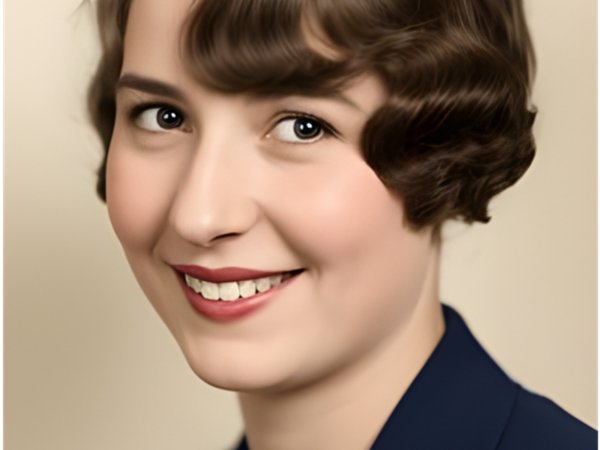
At the beginning of the 20th century, Bucharest, the capital of Romania, was a city in full cultural transformation, where theater represented one of the main forms of entertainment and artistic expression. In this vibrant context, a young actress appeared who would become one of the discreet yet valuable figures of the Romanian stage: Marietta Rareș.
The debut of a career in a vibrant Bucharest
Born on March 30, 1897, under the name Marietta Ionescu, she stepped into the world of theater at only 17 years old, at a time when the stage was dominated by strong personalities and diverse acting styles. Her debut in 1914, in a comedy signed by Sacha Guitry, took place within the company led by Marioara Voiculescu and Tony Bulandra, an artistic environment that offered her the chance to develop quickly.
A year later, in 1915, she performed in the play “Red Roses” by Zaharia Bârsan, consolidating her position in the theatrical world. Her natural talent was doubled by rigorous training: in 1918 she graduated from the Conservatory of Music and Dramatic Art in Bucharest, one of the most important institutions of its kind in the country.
These early years represented the foundation of a career that would span several decades, marked by diversity and artistic adaptability.
Affirmation on stage: Bulandra, comedy, and major roles
The periods 1919–1925 and 1932–1938 were defining for the evolution of Marietta Rareș, being associated with her activity in the Bulandra troupe, one of the most prestigious of the time. Here, the actress demonstrated remarkable versatility, easily transitioning from ingénue roles to sophisticated, coquettish, or even provocative characters.
Among her memorable roles are Ketty in “Old Heidelberg” by Wilhelm Meyer-Förster, the soubrette in “The Miser,” and Maria Antonovna in “The Government Inspector” by Nikolai Gogol. In the latter play, she performed alongside Velimir Maximilian, in a cast appreciated by both audience and critics.
Her activity was not limited to the Bulandra theater. Between 1925 and 1927 she performed on the stage of the Little Theatre in Bucharest, and between 1927 and 1930 she was present at the Fantasio Theatre in Constanța. During these periods, she mainly approached farces and boulevard comedies, genres extremely popular at the time.
She collaborated with renowned actors such as Ion Iancovescu and Gheorghe Timică, managing to stand out through naturalness and expressiveness. These experiences contributed to shaping a personal style, characterized by a balance between refinement and spontaneity.
Artistic encounters and professional maturity
After a short collaboration with the troupe led by Maria Ventura, between 1931 and 1932, Marietta Rareș returned to Bulandra, where she continued to perform until 1938. This period coincided with her artistic maturity, when the roles she played gained more depth.
In the following years, between 1939 and 1941, she was employed at the National Theatre in Bucharest, one of the most prestigious stages in the country. Here she had the opportunity to collaborate with important actors such as Ion Finteșteanu and Natașa Alexandra, in a varied and demanding repertoire.
The period 1944–1947 brought a new stage in her career, with her integration into the troupe of Teatrul Nostru, led by Dina Cocea. Here, Marietta Rareș performed roles in plays signed by classical authors such as William Shakespeare and Eugene O’Neill, demonstrating an ability to adapt to complex dramatic styles.
This period consolidated her status as a complete actress, capable of approaching both comedy and drama with the same intensity and professionalism.
From Odeon to memorable character roles
In the years 1947–1948, Marietta Rareș was present on the stage of the Odeon Theatre, where she performed alongside important names such as Clody Berthola, Dan Nasta, and Liviu Ciulei.
She excelled in character roles, standing out in productions such as “The Last Ones” by Maxim Gorky and “I Remember Mama” by John Van Drutten. Her performances were appreciated for subtlety and depth, even when the roles were not leading ones.
After the reorganization of theaters in 1948, which led to disciplinary transfers, the actress continued to perform at the Municipal Theatre in Bucharest. Here she played secondary, but extremely expressive roles, such as those in “The Seagull” by Anton Pavlovich Chekhov.
Although she was no longer in the spotlight, Marietta Rareș proved that the true value of an actor does not depend on the size of the role, but on the ability to bring it to life.
“Moara cu noroc” and the encounter with cinematography
In addition to her impressive theatrical career, Marietta Rareș also had an important contribution to Romanian cinematography. The role that consecrated her on the big screen was that of Ghiță’s mother in the film “At the Mill of Good Fortune” (1956), directed by Victor Iliu.
This production, inspired by the novella of Ioan Slavici, is considered one of the masterpieces of Romanian cinema. Marietta Rareș’s performance was appreciated for authenticity and emotion, contributing to the success of the film.
Although she did not have an extensive film career, her appearance in this film remained memorable, proving that her talent could transcend the limits of the stage.
The final years and the recognition of value
Marietta Rareș retired from activity in 1959, at the age of 62, after a long and diverse career. Before 1965, she received the title of emeritus artist, an official recognition of her contribution to theatrical art.
After decades of activity, the supreme recognition came in 1994, when she was awarded the UNITER Prize for her entire career. Unfortunately, this honor came shortly before her passing.
The actress passed away on February 4, 1994, in Bucharest, leaving behind a valuable artistic legacy, discreet yet profound.
The legacy of an actress from the golden age
Marietta Rareș remains one of the representative figures of Romanian theater from the interwar and postwar period. Although she was not always in the center of attention, her contribution to the development of acting art is undeniable.
Her career reflects the evolution of Romanian theater throughout the 20th century, from the elegant performances of the interwar period to the transformations imposed by the communist regime. Through talent, discipline, and versatility, she managed to cross these changes and remain relevant.
Today, her name is associated with a golden age of Bucharest culture, in which stage and film were spaces of refinement and authentic expression. Marietta Rareș was not just an actress, but also a witness and an essential contributor to the history of Romanian theater.
We also recommend: The stars of interwar Bucharest: Elvira Godeanu - the child abandoned by her father, Zoe Trahanache, the duchess of Romanian theatre