The stars of interwar Bucharest: Elvira Godeanu - the child abandoned by her father, Zoe Trahanache, the duchess of Romanian theatre
- Articles
- 23 MAR 26
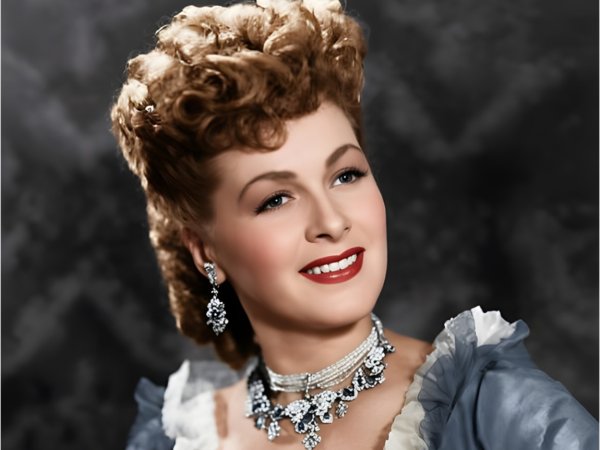
Few destinies in Romanian theatre have mixed so powerfully the brilliance of the stage, biographical drama, and the force of an authentic vocation as that of Elvira Godeanu. For the public, she remained one of the major figures of the Romanian stage, a memorable, elegant presence, with a beauty that ignited the imagination of the era and with a talent that brought her, rightly, the nickname “The great lady of Romanian theatre.” Beyond this almost mythical image, however, her life carried the traces of an old, deep wound, formed from the very first day of her existence: her father’s abandonment.
One of Romania’s greatest actresses
Elvira Godeanu was born on May 13, 1904, in Bucharest, into a family story that was to mark her entire childhood and youth. Her father, Constantin Glodeanu, wanted a boy and ran away the moment he found out that his wife, Josefina, had given birth to a girl. Instead of the natural joy that accompanies the coming into the world of a child, the beginning of Elvira’s life was surrounded by rejection, pain, and an immense family disappointment. Her mother, devastated by her husband’s departure, refused to breastfeed her daughter, overwhelmed by suffering and by the shock of betrayal.
This inaugural scene, almost unbelievable through its cruelty, explains to a large extent the dramatic tone of her later biography. The father returned only episodically into their lives, until he disappeared forever, leaving behind a destroyed woman and a child who was to grow up under the sign of absence.
In an interview given years later, Elvira Godeanu confessed that her mother had tried to hang herself in the attic of the house, being saved at the last moment by the actress’s grandfather. The shock of this experience pushed Josefina into an existence marked by melancholy, withdrawal, and almost ascetic fidelity toward the image of the man who had abandoned her.
A childhood under the sign of absence
For Elvira Godeanu, the lack of a father was not only a biographical episode, but a form of trauma that shaped her sensitivity. She was to recount that, in childhood, she kissed her father’s photograph, caressed it, and waited for him endlessly. She was told that he would come, that he would return, but the promise was never fulfilled. In a heartbreaking way, the actress admitted that she had never seen her father “in flesh and blood,” and when she understood, in adulthood, how mercilessly he had behaved toward her and her mother, she tore up his photograph and came to hate him.
This confession says a great deal about the child who became one of Romania’s greatest actresses. Elvira Godeanu felt, in her own words, “in a way, an orphan child,” hounded by a lack that was never filled. Behind the future woman admired by the public, behind the beauty praised by her contemporaries, and behind the strong personality on stage, there always stood the little girl who lived with the vain hope of the return of an absent father.
She spent her childhood and adolescence in Târgu-Jiu, a place that was to remain strongly linked to her memory. Later, she moved together with her mother to Caracal, where Josefina worked at a boarding house. These moves, made under the pressure of circumstances and of the need to start again, speak of an existence that was not comfortable at all. There was no sheltered or privileged childhood for Elvira, but one built from emotional fragility, from her mother’s effort to resist, and from the attempt to move forward despite a suffering that never truly healed.
The road toward the stage and the meeting with vocation
In 1921, Elvira Godeanu returns to Bucharest and takes the decisive step for her artistic destiny: she enrolls at the Conservatory of Music and Dramatic Art, in the dramatic art section, in the class of the great Constantin Nottara. The choice was not a random one. In it one already feels not only talent, but also a will to carve out her own road, to transform personal sensitivity into artistic expression.
She debuted immediately after finishing her studies, at only 21 years old, at the Tantzi Cutava-Mișu Fotino Company. Her first stage appearances quickly confirmed her gift. Her debut took place in a revival of “The Tailcoat,” by Gabor Dregely, but her affirmation came soon, with the second performance of the 1926-1927 season. On March 5, 1927, Mișu Fotino staged “The heartless enchantress,” Vasile Voiculescu’s adaptation after “Princess Turandot” by Carlo Gozzi, and the young actress entered a zone of visibility from which she was never again to leave.
The success did not remain isolated. Elvira Godeanu was first employed at the Lucia Sturdza Bulandra Theatre, an institution of great prestige, and from 1929 she reached the National Theatre in Bucharest. There she was hired by Liviu Rebreanu, then the director of the theatre, a fact that says much about the trust granted to her talent. From this point on, her career entered a stage of maturation and consolidation, and Elvira Godeanu’s name became increasingly important in the theatrical life of the capital.
The rise of a great actress on the stage of the National Theatre
Once she arrived at the National Theatre in Bucharest, Elvira Godeanu began to build an impressive gallery of roles, both from the Romanian repertoire and from the universal one. Her versatility was one of her great qualities. She could play drama and comedy, characters of great intensity and lighter scores, composition roles and appearances dominated by personal charm.
Among her stage creations were roles in “Which of them,” Anton Bibescu’s comedy, “The woman and the puppet,” by Pierre Frondaie, “Florentina’s atonement,” by Alexandru Kirițescu, and “Elizabeth. Queen of England,” by Ferdinand Bruckner, in the latter two playing alongside Maria Filotti. She also performed in “Troilus and Cressida,” by Shakespeare, in “...Escu,” by T. Mușatescu, whose premiere took place on December 11, 1932, in “The lady of the camellias,” as well as in other important productions that highlighted her artistic amplitude.
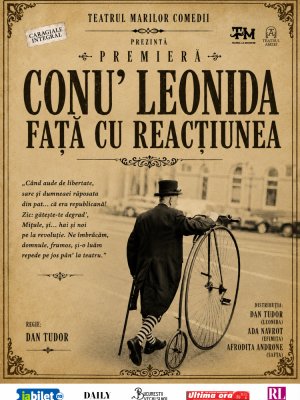
The public remembered especially her roles in Caragiale. Elvira Godeanu stood out in “A stormy night,” where she offered a memorable interpretation of Zița, but also in “A lost letter,” a text that she was to bind definitively to her name also through the famous role of Zoe Trahanache. She also played Lotte in the dramatization after “The sorrows of young Werther” by Goethe and performed in shows such as “The death of an artist” by Horia Lovinescu, “The visit of the old lady” by Friedrich Dürrenmatt, or “Sunset” by Barbu Ștefănescu-Delavrancea.
The list of great actors alongside whom she appeared on stage also speaks of her central place in Romanian theatre: Alexandru Giugaru, Radu Beligan, George Calboreanu, Grigore Vasiliu-Birlic, Maria Filotti, Aura Buzescu, Cella Dima, Marioara Voiculescu, Sonia Cluceru, Silvia Dumitrescu-Timică, and many others. Elvira Godeanu was not only a remarkable female presence, but one of the great figures of a Romanian theatre of the age that was at a very high artistic level.
Beauty, myth, and the gossip of a fascinating era
Extremely beautiful, Elvira Godeanu stirred passions, fascination, and inevitable gossip. In the interwar world, an actress’s beauty never remained only an aesthetic attribute. It became story, projection, exaggeration, legend. Writer Ion Cepoi observed that such beauty gave birth to famous love stories, to scenarios of secret affairs, and to projections that seemed taken from interwar novels.
Around her there was thus built the image of a fatal woman, of a “one hundred percent vamp,” a title that circulated intensely and fed the imagination of the public. Yet this label was, to a large extent, the result of a collective tendency to transform its idols into almost unreal figures. Alexandru Kirițescu, in a text dedicated to Elvira Godeanu published in 1946 in “Rampa,” dismantled precisely this perception and insisted that nothing was further from the truth. In reality, he said, the actress was a simple, graceful, and cordial woman, endowed with a sense of humor that was natural and deeply Romanian.
This discrepancy between Elvira Godeanu’s public image and her real nature is one of the keys to understanding her personality. The public preferred the myth, the rumor, the spectacular story. She, by contrast, seemed to carry with naturalness and with a certain smile all these exaggerations. Precisely this elegant distance from the sensational made her even more fascinating. In an age in which theatre, the press, and social life fed one another, Elvira Godeanu became one of the female figures upon whom the public imagination worked unceasingly.
The Gheorghiu-Dej legend and the burden of a slander
One of the most scandalous stories attributed to her was the supposed relationship with Gheorghe Gheorghiu-Dej. The rumors went so far that people even spoke about a great passion of the communist leader for the actress and about a possible marriage proposal. The story circulated intensely and weighed on Elvira Godeanu for a long time.
Years later, the actress clearly explained that it was a slander. According to her testimony, the legend had been constructed in cold blood by Ana Pauker, in order to compromise her rival, Gheorghiu-Dej, in the eyes of the party and of Stalin. Elvira Godeanu said that those close to her knew that the rumor was false and that some of those around her had even received indications to spread the idea that Dej visited her, that he sent her jewelry and expensive things.
Everything would have started from a New Year’s Eve party organized by the communists, a celebration at which they were trying to make propaganda among artists. The actress remembered the atmosphere there, the way she was elegantly dressed, with a wide-brimmed hat and a superb fur coat, and the meeting with Ana Pauker, who looked at her insistently and asked to be introduced to her.
After that episode, the rumors began to circulate. Soon, the situation took on a dramatic dimension. Elvira Godeanu received threatening or pleading letters from people who believed that she could intervene with her supposed lover in order to save relatives who were in prisons or to solve desperate situations.
The most absurd part, as she herself confessed, was that she had never seen Gheorghe Gheorghiu-Dej in her life. This story says much not only about the political atmosphere of the time, but also about the vulnerability of celebrity. A famous actress could very easily become material for manipulation, rumor, and interested constructions.
Zoe Trahanache, film, and entry into legend
If on stage Elvira Godeanu created memorable roles, film also fixed her image forever in the memory of the public. She acted in “Major Mura” from 1928, directed by Ion Timuș, in “The burden,” also from 1928, directed by Jean Mihail, and in “Ciuleandra,” mentioned in the biographical data as a 1930 film, directed by Liviu Ciulei. Beyond these appearances, one of the roles with the greatest resonance was the one in the film “A lost letter,” made in 1953, directed by Victor Iliu and Sică Alexandrescu.
Here she played Zoe Trahanache, one of the best-known and most complex characters in Caragiale’s universe. The association between Elvira Godeanu and Zoe Trahanache is extremely strong, because the actress had exactly the mixture of charm, stage intelligence, and presence that could give weight to such a role. Through this interpretation, she consolidated her status as a great actress capable of giving life not only to beautiful or worldly characters, but to essential figures from the Romanian dramatic heritage.
In fact, Zoe Trahanache and Zița are landmarks that explain very well Elvira Godeanu’s place in Romanian theatre. She knew how to capitalize on humor, irony, femininity, and nuance, without falling into caricature. Precisely this capacity to balance personal charm with the rigors of the acting art made her a first-rank figure.
Late love, the final years, and the legacy that remained
On a personal level, stability came later. On May 31, 1954, Elvira Godeanu married Emil Prager, the renowned construction engineer of the interwar period. He was the man who loved her, supported her, and remained by her side for half a century. After an emotional existence overshadowed by her father’s abandonment and by the numerous legends that accompanied her name, this marriage seems to have represented for the actress a space of balance and loyalty.
Elvira Godeanu died on September 3, 1991. She was buried in Bellu Cemetery in Bucharest, the place where so many great personalities of Romanian culture rest. In 2015, she was reburied in the Catholic Cemetery in Târgu Jiu, a city essentially linked to the years of her childhood and adolescence. The symbolic return to this space closed, in a way, the circle of a life that always carried with it the traces of its beginnings.
Her memory was also honored institutionally. In 1993, in Târgu-Jiu, the Dramatic Theatre “Elvira Godeanu” was founded, and in 2002 the “Elvira Godeanu” Foundation appeared. Also here, the National Theatre Festival “Elvira Godeanu Days” takes place every year, which had reached its 15th edition in 2016. On May 25, 2013, on the Alley of Celebrities in the municipality of Târgu-Jiu, three stars dedicated to Elvira Godeanu, Tudor Arghezi, and Sergiu Nicolaescu were unveiled.
Elvira Godeanu’s destiny remains impressive precisely through the contrast between the fragility of her beginnings and the force of her consecration. The child abandoned by her father became one of the great ladies of the Romanian stage. The little girl who grew up under the burden of an absence came to fill the stage with her presence. And the woman about whom so many things were said, some true, others invented, remained in essence what Romanian theatre still recognizes today: a first-class artist, an emblematic figure, and an authentic star of interwar Bucharest.
We also recommend: The stars of interwar Bucharest: Actress Lilly Carandino experienced glory on stage and torment in communist prisons