The stars of interwar Bucharest: Actress Lilly Carandino experienced glory on stage and torment in communist prisons
- Articles
- 09 FEB 26
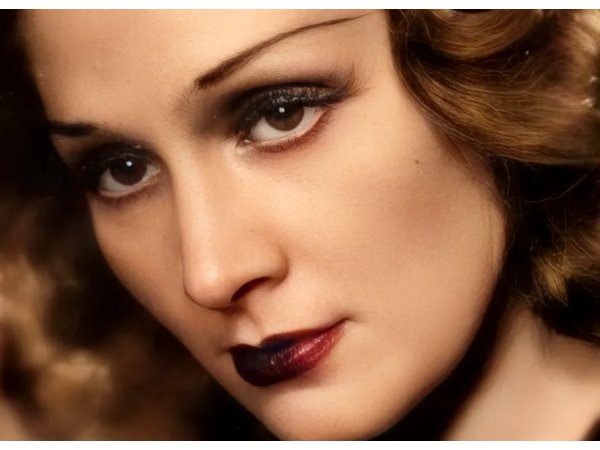
Interwar Bucharest was a city of powerful contrasts, of elegance and cultural effervescence, but also of political turmoil that would permanently change the destinies of many people. In this vibrant setting shone Lilly Carandino, one of the most fascinating actresses of the National Theatre, a woman whose life oscillated dramatically between the applause of the stage and the humiliation of communist prison cells. Considered by her contemporaries “the Greta Garbo of Romania”, Lilly Carandino was not only an exceptional artist, but also a victim of a regime that destroyed the country’s cultural elites.
Childhood and the formation of a future great actress
Lilly Gușeilă was born in February 1909, in Brăila, into a family of intellectuals, both of her parents being teachers. The environment in which she grew up encouraged education, artistic sensitivity, and discipline, elements that were to play an essential role in her later development. From an early age, Lilly showed a strong attraction to theatre, a passion that quickly went beyond the level of a simple hobby.
Determined to follow her dream, the young woman left for Bucharest, where she was admitted to the Conservatory of Dramatic Art. Her studies provided her with a solid foundation, and her talent already stood out through expressiveness, scenic intelligence, and a special presence. In 1928, at only 19 years old, she graduated from the Conservatory, ready to step onto the great stages of the capital.
A brilliant debut and the first years of glory
The year 1928 marked her official debut on the stage of the National Theatre in Bucharest, in the play “Lorenzaccio” by Alfred de Musset. Her appearance did not go unnoticed, Lilly Carandino quickly establishing herself as an actress with enormous potential. Unlike many of her contemporaries, she received important roles from the very beginning, a sign of the trust that directors and theatre managers placed in her talent.
Shortly after her debut, she obtained a scholarship that allowed her to leave for Paris, where she attended dramatic art courses between 1928 and 1931. This experience proved decisive for her artistic formation, contact with Western theatre refining her style and deepening her understanding of acting as an art.
Paris, love, and marriage to Nicolae Carandino
During her time in Paris, Lilly re-encountered Nicolae Carandino, a journalist and theatre critic, a former pupil of her father. The reunion quickly turned into a love story, the two being united by shared passions for culture, theatre, and democratic values. Their marriage took place in the French capital, at a moment when both were shaping promising careers.
This relationship was to profoundly mark her destiny, not only on a personal level, but also politically. Nicolae Carandino was an important figure of the National Peasant Party and director of the newspaper “Dreptatea”, a fact that would draw dangerous attention upon the family from the communist authorities.
Return to the Bucharest stage and artistic consecration
After returning to the country, Lilly Carandino performed on several important stages in Bucharest, including the Regina Maria, Maican, Odeon, Victoria, and Bulandra theatres. From 1935, she became an actress of the National Theatre, the place where she would reach true artistic maturity.
In 1941, she received the Prize for Creation awarded to young actors, for her interpretation of the role of Margarete in “Faust”. The distinction confirmed her status as a star of the Romanian stage. Contemporaries admired her not only for her talent, but also for her striking resemblance to Greta Garbo and for the mysterious aura she emanated.
Actor Fory Etterle described Lilly Carandino’s appearance as having “a strange, fascinating pallor”, emphasizing the contrast between her inner strength and the delicacy of her scenic expression. This rare combination transformed her into a magnetic presence, impossible to ignore.
The political context and the approach of tragedy
Beyond artistic success, Romania was entering a period of dramatic transformations. After the Second World War, the establishment of the communist regime triggered a wave of arrests, purges, and political persecution. Intellectuals, journalists, and artists associated with democratic values became targets of the new power.
Lilly Carandino did not have a political vocation, but she was the wife of a prominent leader of the National Peasant Party. This association was enough to turn her into a “suspect”. The events that followed would brutally tear her away from the world of theatre and throw her into a nightmare.
The Tămădău affair and the arrest of 1947
In May 1947, the leader of the National Peasant Party, Iuliu Maniu, put forward the idea of sending a group of party leaders abroad, with the aim of forming a Romanian government in exile. Among those envisaged were Ion Mihalache, Nicolae Penescu, Ilie Lazăr, and Nicolae Carandino. The plan involved a clandestine departure with small aircraft from the Tămădău airfield, near Bucharest.
The communist authorities, informed by the aviator Romulus Lustig, turned this attempt into a carefully prepared trap. The operation was coordinated by the Ministry of Internal Affairs, with Soviet support, and the aircraft were deliberately supplied with insufficient fuel.
On the morning of 14 July 1947, the group was arrested without a warrant, just before boarding. Lilly Carandino was alongside her husband, even though she sensed the disaster. Nicolae Carandino would later describe, in his memoirs, the troubling lucidity and intuition of his wife, who realized that everything was a set-up.
Prison and the dignity of a great artist
Sentenced to six months of correctional imprisonment, Lilly Carandino was incarcerated at the Central Women’s Penitentiary in Ilfov. Here, the former star of the National Theatre stage endured humiliations and deprivation that are hard to imagine. Nevertheless, she did not lose her dignity or her identity as an artist.
Testimonies of the time describe her reciting poetry on the cold prison bunks, impressing not only fellow inmates, but also the female guards. Lia Lazăr-Gherasim recorded the emotion with which Lilly Carandino recited “From the Dniester to the Tisa”, in an act of cultural and moral resistance.
Released in 1948, the actress was not truly free. The regime forbade her to practice her profession for almost two decades, practically erasing her from the cultural life of the country.
The final years on stage and imposed silence
Only after 1964 was Lilly Carandino allowed to return to theatre. She performed until 1969 on the stage of the State Theatre in Ploiești, far from the brilliance and notoriety of earlier times. Her return was discreet, marked by the imposed silence over her past and by the deliberate marginalization of the great interwar figures.
Although she never again reached her pre-war fame, Lilly Carandino remained a symbol of a sacrificed generation. Her life reflected the drama of Romanian intellectuals caught between ideals and the brutality of history.
Death and the legacy of a forgotten legend
Lilly Carandino passed away in 1995, in Bucharest, in a Romania that was only beginning to recover its memory. Although her name is not as well known today as that of other great actresses, her story remains emblematic of the destiny of the interwar cultural elite.
Glory on stage and torment in communist prisons define an extreme life path that deserves to be known and understood. Lilly Carandino was not only an exceptional actress, but also a witness to an era in which talent, beauty, and intelligence could become reasons for condemnation.
We also recommend: The stars of interwar Bucharest: The superb actress Tanți Cocea stole the hearts of Liviu Ciulei and Mircea Șeptilici