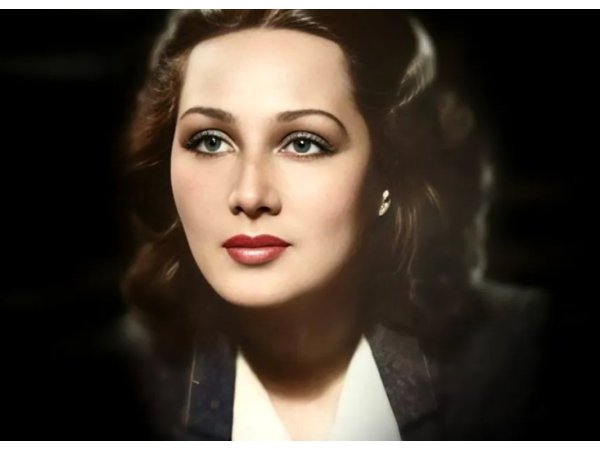
The stars of interwar Bucharest: The superb actress Tanți Cocea stole the hearts of Liviu Ciulei and Mircea Șeptilici
- Articles
- 05 FEB 26
Interwar Bucharest was a city of contrasts, of cultural effervescence and great artistic passions. In this vibrant context, Tanți Cocea established herself as one of the most fascinating female presences on the Romanian stage. Her striking beauty, doubled by genuine talent, quickly turned her into a symbol of elegance and artistic refinement. Her name was spoken with admiration both in theatre halls and in the fashionable circles of the capital.
An emblematic figure of artistic interwar Bucharest
Tanți Cocea was not only an acclaimed actress, but also a personality who embodied the spirit of an era. Her stage appearances were events in themselves, and audiences came not only for the performances, but to see her. In a world where theatre represented one of the main forms of cultural expression, Tanți Cocea became a landmark, a star that illuminated the Romanian artistic scene.
Roots in an elite intellectual family
Born on 7 December 1909, in Bucharest, Constanța Cocea, later known by her stage name Tanți Cocea, came into the world in a family with a strong intellectual imprint. Her father, Nicolae D. Cocea, was a prominent figure in Romanian public life, known as a lawyer, journalist and writer, as well as a critical spirit actively involved in the political and cultural debates of the time. The Cocea family home was a true intellectual salon, frequently visited by important artists, writers and thinkers.
Her mother, Maria Grigorescu, played an essential role in shaping her daughter’s artistic sensitivity. She encouraged Tanți to explore the world of art, to cultivate her talent and to view the stage not only as a place of glory, but as a space of cultural responsibility. In this stimulating environment, Tanți Cocea grew up surrounded by ideas, lively discussions and solid intellectual models.
A childhood marked by culture and art
The atmosphere in which Tanți Cocea spent her childhood was decisive for her artistic path. Discussions about literature, theatre and politics were part of everyday life, and early contact with prominent personalities offered her a mature perspective on the artistic world. It was not just about talent, but about a complex education that emphasized general culture, expressiveness and intellectual discipline.
An important role in this story is also played by her younger sister, Dina Cocea, who would herself become a great actress of the Romanian stage. The two sisters grew up in a discreet but stimulating competition, each inspiring the other to surpass her limits. Although they had different styles, both contributed significantly to the prestige of the Cocea name in Romanian theatre.
You can also read: From Bucharest to Paris, actress Alice Cocea caused a sensation among men. Three gentlemen met their end longing for Aristizza Romanescu’s student
Stage debut and professional affirmation
Tanți Cocea’s artistic career began in the 1930s, a period of great effervescence for Romanian theatre. Bucharest stages were dominated by artistic experiments, visionary directors and an audience eager for novelty. Her debut was received with enthusiasm, critics immediately noting the naturalness of her acting and the expressive strength she brought to each role.
Her stage presence was magnetic. Tanți Cocea managed to convey deep emotions without excessive gestures, relying on subtlety and inner intensity. Over time, she collaborated with important theatres in Bucharest, consolidating her reputation as a versatile actress, capable of interpreting both dramatic roles and brighter or more ironic characters.
The encounter with Romanian cinematography
Although theatre was her great artistic love, Tanți Cocea did not avoid the world of film either. Romanian cinematography was still in a phase of development, but the actress saw in this art a new means of expression. Her appearances on the big screen were rarer, but memorable, each role being treated with the same seriousness and depth as those on stage.
The camera highlighted her delicate features and the expressiveness of her gaze, and the public discovered another side of her artistic personality. Even if she did not have a very rich filmography, Tanți Cocea proved that she could easily move from the intensity of theatre to the refinement of cinematic acting.
Famous loves and artistic passions
Tanți Cocea’s personal life was as intense and discussed as her career. Her beauty and independent spirit attracted numerous admirers, and her relationships with prominent personalities fueled public fascination.
An important chapter is represented by her connection with actor Mircea Șeptilici, a colleague at the National Theatre, a relationship born out of their shared passion for the stage and art.
Her best-known relationship, however, remains the one with Liviu Ciulei, one of the emblematic figures of Romanian theatre and cinema. Born in 1923, Liviu Ciulei was already noted for his directorial vision and his ambition to transform Romanian theatre. Their meeting, in Bucharest’s artistic circles, was the beginning of an intense story, both on a personal and professional level.
Marriage to Liviu Ciulei and artistic collaboration
The relationship between Tanți Cocea and Liviu Ciulei evolved rapidly, the two eventually marrying. The age difference was not an obstacle at first, and their artistic collaboration proved extremely productive. Tanți Cocea acted in several productions directed by Ciulei, bringing to the stage complex characters that reflected her maturity and artistic experience.
This synergy between actress and director generated performances appreciated by critics and the public. Ciulei found in Tanți Cocea an interpreter capable of bringing his visions to life, and she, in turn, felt challenged and stimulated by the director’s demands. However, differences in perspective regarding career and professional path led, over time, to tensions and, ultimately, to their separation.
A new personal path alongside Panait Sârbu
After the intense relationships from the artistic world, Tanți Cocea chose a different direction in her personal life. She married Professor Doctor Panait Sârbu, a leading personality of Romanian medicine. The surgeon was known as the founder of the Romanian school of obstetrics and gynecology and head of the Giulești Maternity Hospital in Bucharest, being a highly respected authority in his field.
This marriage offered the actress a different balance, a stability that complemented her artistic life. Although they came from distinct domains, the two shared respect for professional excellence and dedication. Their relationship was discreet, far from the media tumult of previous years.
Official recognition and important distinctions
Tanți Cocea’s talent and contribution did not go unnoticed. Throughout her career, the actress received numerous distinctions that confirmed her status as a first-rank artist. In 1953, she was awarded the Order of Labor, Second Class, an important recognition in a period when the state emphasized cultural values with social impact.
Later, in 1967, she was decorated with the Order of Cultural Merit, Second Class, a distinction that underlined her major influence on Romanian theatre and cinematography. These honors reflect not only her artistic performances, but also her constant commitment to the stage and to the public.
Artistic legacy and influence on future generations
Tanți Cocea passed away on 24 March 1990, in Bucharest, leaving behind a solid artistic legacy. Her roles, refined interpretations and the high standards she imposed in the profession continue to be points of reference for actors and directors. Even after her passing, the name Tanți Cocea remains associated with the idea of elegance, professionalism and total dedication to art.
Her influence is found not only in theatrical or cinematic archives, but also in the collective memory of the public. She was an actress who knew how to combine beauty with depth, passion with discipline, and success with modesty. Through everything she achieved, Tanți Cocea remains one of the great stars of interwar Bucharest and an essential figure of Romanian culture.
We also recommend: Constantin Mille’s granddaughter conquered the dictator Gheorghe Gheorghiu Dej. The movie-like story of actress Dina Cocea