From Bucharest to Paris, actress Alice Cocea caused a sensation among men. Three gentlemen met their end longing for Aristizza Romanescu’s student
- Articles
- 02 FEB 26
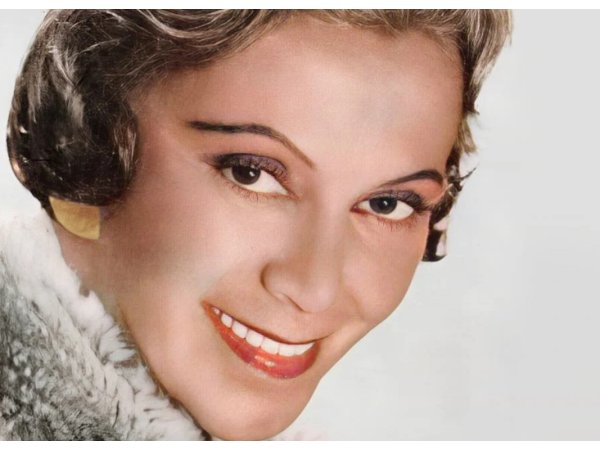
Alice Cocea was the Romanian woman considered fatal, given that three men met their end out of jealousy. This diva was extremely controversial and, more often than not, appeared on the front pages of scandal newspapers in France. From a young age, Alice was drawn to the stage, taking lessons from Aristizza Romanescu, after which she left for France, just before the First World War. The Parisian public was immediately captivated by the child roles she played.
Alice Cocea, the Romanian femme fatale who left tragedy in her wake
Later on, she attended the Conservatory in Bucharest, but completed her dramatic studies in Paris, in 1917. Thanks to her talent, her career followed an upward path, eventually reaching the big screen in “The Delay”, a production by Jacques de Baroncelli.
However, she wished to continue her career in theatre, and according to her biography, in the 1930s she became a prominent social figure who constantly made the front pages of scandal newspapers in interwar Paris.
During the Second World War, she became the director of the Théâtre des Ambassadeurs. After retiring from the theatre stage, she devoted her time to painting, but also appeared in several films in the 1960s, playing smaller roles.
Alice was the sister of lawyer and writer N. D. Cocea and the aunt of actress Dina Cocea. In the 1920s, newspapers wrote extensively about her love affairs, including her relationship with a married diplomat.
She quickly became a star of both the stage and Parisian cinemas, playing major roles in films such as “Mon gosse de père” (1930), “Atout-cœur” (1931), “Delphine” (1931), “Marions-nous” (1931), “Nicole et sa vertu” (1931) or “Le greluchon délicat” (1934), according to enciclopediaromaniei.ro.
The great roles and the fall after the war
She performed alongside Harry Baur and Pierre Fresnay and created the role of the young woman in “Les Parents terribles” by Jean Cocteau, a play staged at the Théâtre des Mathurins. After the end of the Second World War, she was accused of collaborationism and was banned from appearing on the Parisian stage.
“A Tanagra statuette… she was adored and at the same time detested. She was raised to the highest peaks and then thrown into the deepest abyss of oblivion. But she resurfaced again, victorious once more, until the years and illness finally brought her down,” stated Dina Cocea, the diva’s niece.
Alice Cocea died on July 2, 1970, and was included on the list of the most famous “femme fatales” in a ranking published by Le Crapouillot.
The first tragic love: an unreturned passion
Her first “victim” was during her adolescence, when she was already active in a theatre troupe. One of the students fell hopelessly in love with her, but Alice did not reciprocate his feelings. Rumours say that the young man tried several times to get close to her, but she left his advances unanswered. One evening, the young man paid her driver to take his place.
That evening, Alice Cocea was accompanied by Alexandru Davila, who also seemed to have fallen under the actress’s spell. The student could not confess what he felt, returned the car to the driver and waited in front of her windows until morning.
The next day, he was found frozen, and two days later he died of pneumonia.
The second victim and rumours of suicide
The actress’s second victim was Lieutenant G., who, like the student, fell in love with Alice. Despite making countless efforts to attract her attention, the lieutenant died in a horseback riding accident.
The press of the time presented his death as a suicide caused by his passion for the beautiful Romanian woman.
Marriage, nobility, and scandal in Paris
While in Paris, Alice became a countess after marrying Stanislas de La Rochefoucauld in 1926. It did not take long before the two divorced, amid great scandal.
“A sensational rumour had long swept through Parisian salons: Count Stanislas de la Rochefoucauld, whose ‘original’ habits had often fueled the scandal columns of Paris, announced his marriage to a small operetta artist of unknown origin, with a somewhat bizarre name (for the French). The rumour proved true. The small artist, Alice Cocea, became Countess de la Rochefoucauld.
Having entered the forefront of Parisian life with such fanfare, the talent aided by luck of Alice Cocea gradually imposed itself on the French public, and nothing reflects better the artistic personality created by our young compatriot than the title under which major Parisian newspapers announced, three years later, the spouses’ divorce: Mrs. Alice Cocea, Countess de la Rochefoucauld, divorces,” wrote Realitatea ilustrată on August 25, 1932.
The final tragedy: Victor Point
While in France, she lived a passionate affair with Lieutenant Victor Point, precisely when she was in the process of divorcing. The lieutenant wished to unite his destiny with hers, but ended up with a pistol to his temple, taking his own life out of jealousy.
He is said to have followed the actress when she left on a cruise. In the yacht cabin, he discovered letters from Robert Lefébure, another man in love with her.
Upon discovering that she was unfaithful, the lieutenant fired two bullets into his own head. This scandal earned her the label of “vamp woman” and the blame for Victor Point’s suicide.
“The suicide of Lieutenant Victor Point is not a simple, banal fact. A strong man, a determined master of his senses, as he recently proved during the brilliant expedition undertaken in Central Asia, the man who knew how to serenely face mortal dangers lurking at every step, arousing the admiration of those around him, suddenly becomes a poor toy, a man of straw, devoid of will, in the hands of the beautiful yet refined woman,” noted Ilustraţiunea română on September 7, 1932.
The lieutenant’s suicide led his comrades to threaten her that they would shoot her on stage if she ever appeared there again.
We also recommend: Constantin Mille’s granddaughter conquered the dictator Gheorghe Gheorghiu Dej. The movie-like story of actress Dina Cocea