The legend of 5 Silfidelor Street. The steps of Saint Ilie-Gorgani, the dressmaker Lisette and Bucharest’s miraculous noon
By Raluca Ogaru
- Articles
- 30 JUN 26
5 Silfidelor Street is one of those places in Bucharest that seem, at first glance, too discreet for a legend. It is located close to Cișmigiu, in a central area where many people pass without looking up towards the steps of Saint Ilie-Gorgani Church. And yet, right here, on this old rise of land, between the real city and the imagined city, one of Bucharest’s most beautiful recent urban legends has settled.
The story was brought into literary circulation by writer Doina Ruști, in the text “Bucharest: legendary places. 5 Silfidelor Street”, published in 2024. The author includes it in her series of urban legends, about which she specifies on her own website that they are original literary fictions, written in the form of urban myths and starting from details of Bucharest’s small history. Therefore, the legend of Lisette should not be read as an archival document, but as a literary story built around a real place, with a very strong historical atmosphere.
The real place: the mound, the church and the steps rising from the city
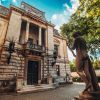
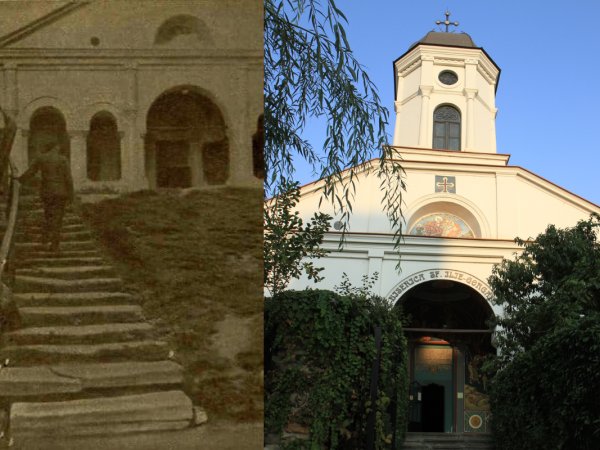
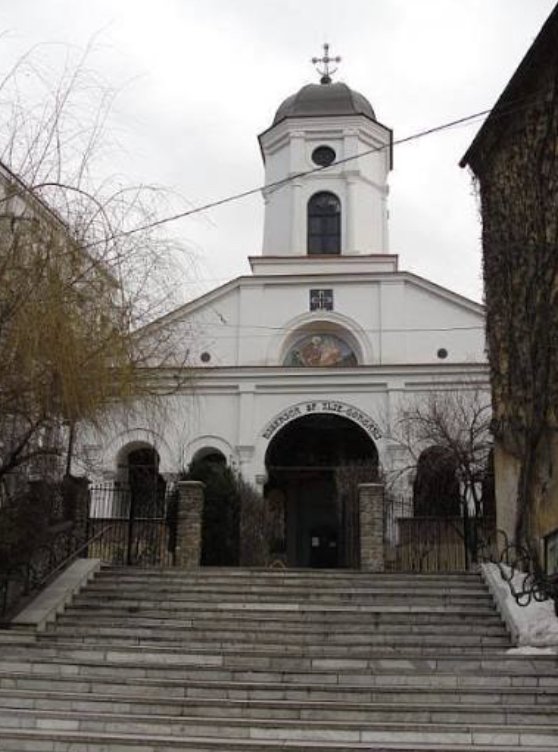
Saint Ilie-Gorgani Church is an old landmark in central Bucharest. Located at 5 Silfidelor Street, close to Cișmigiu Park and Podul Izvor, the church can be seen among the apartment blocks as a building raised on a mound, with monumental steps that emphasise its presence. Agerpres describes the place of worship as a parish church in the centre of the capital, built on a mound of earth, with an entrance guarded by marble steps.
The name “Gorgani” refers to the old relief of the area. Before Bucharest became the city we know today, this place was linked to mounds, slopes and marshy areas. The Bucharest Municipality Museum notes, in a material about the capital’s stepped streets, that documents from the time of Matei Basarab mention the mound of old Bucharest and wooden steps, while Alexandru Odobescu evoked the church foundations sunk into an old mound, which gave the surrounding area its name.
The current church has a well-documented history. According to the inscription, the place of worship was built from the ground up during the reign of Ioan Caragea Vodă, while the interior was gilded during the time of Alexandru Nicolae Suțu, in 1819. The church also preserves an icon of the Holy Prophet Elijah dated to the 17th century, awarded at the Byzantine and Romanian Art Exhibition in Bern, in 1938-1939.
The steps are essential to the charm of the place. They are not merely an access route to the church, but also a small urban theatre, a bridge between the crowded boulevards and a discreet height, where Bucharest seems to withdraw for a few moments from the noise. In an article dedicated to the old stairways of the capital, B365 notes that the monumental marble steps climbing Silfidelor Street towards the church were built in the interwar period, with the support of mayor Alexandru Donescu.
The legend of Lisette, the dressmaker who sought inspiration on the church steps
In Doina Ruști’s literary version, 5 Silfidelor Street becomes the place of a revelation. The story speaks of Lisette, a luxury dressmaker from early 20th-century Bucharest, famous for her one-of-a-kind dresses. She was not merely a craftswoman, but an artist of silks, frills, collars and evening gowns. In the elegant world of the capital, a dress made by her was no longer just a garment, but a sign of status.
The legend says that Lisette’s success exploded after she created a golden dress, made of satin and borangic silk, for the daughter of a banker. The dress is said to have transformed the young woman who wore it into an almost unreal apparition, touched by the charm of the sylphs. From that moment, a fever of orders began: elegant women, ambitious ladies, society figures and imitators all supposedly tried at any cost to obtain a creation signed by Lisette.
But the dressmaker had a strange rule. She did not accept every order. Before saying “yes” or “no”, she would go to Gorgani and sit on the church steps at noon. There, in the stillness of the staircase, she waited for that moment of inspiration that some would call grace and others revelation. After a few minutes, she would return home and know who deserved a dress and who did not.
This is where the legend gains tension. Lisette’s refusal was not explained, and it was precisely this silence that turned desire into obsession. In the story, the women she turned down suffer, steal, hate and, in the end, one of them kills the dressmaker. It is not a confirmed archival account, but the ending of an urban legend in which beauty, vanity and envy meet on a church staircase.
Why the legend works on Silfidelor Street
The power of the story comes from the match between place and atmosphere. Silfidelor Street already has a name that sounds literary, almost unreal. “Silfidele”, the sylphs, suggest airy, delicate beings, inspiration, grace and elusive apparitions. Even if the street name has more prosaic urban explanations, it immediately creates a good setting for a legend.
Saint Ilie-Gorgani Church adds another layer. In popular imagination, Saint Elijah is a saint of fire, thunder, the sky and justice. The church raised on a mound, the steep staircase, noon as a moment of vertical light and the story of a dressmaker who chooses who may wear beauty all create, together, a small but memorable mythology.
The legend of Lisette is not about fashion in the strict sense. It is about the desire to be chosen. The dress becomes a magical object, and the dressmaker becomes a kind of judge of grace. Whoever receives the dress gains radiance. Whoever is refused feels that they have been denied not only a garment, but an identity.
That is why the story works so well as an urban legend. It has a precise place, a mysterious character, a repeated ritual, a desired object, an inexplicable refusal and a violent ending. Above all, it has the ambiguity necessary to any legend: what matters is not whether it happened exactly this way, but the fact that the place seems capable of giving birth to such a story.
5 Silfidelor Street, a route for unseen Bucharest
For readers who want to look for the legend in the city, the route is simple. You can start from the Cișmigiu area or from Podul Izvor, then climb towards Silfidelor Street and Saint Ilie-Gorgani Church. It is not a long walk, but it is one of those short routes that suddenly changes your perspective on central Bucharest.
In just a few minutes, the city moves from the bustle of the boulevards into a more vertical, quieter space. The steps force you to slow down. The church, raised on the mound, makes your gaze rise. And if you arrive there at noon, the legend of Lisette begins to fit naturally with the light of the place.
You do not need to look for spectacular signs. There is no plaque dedicated to the dressmaker, no official route of the sylphs and no historical proof of the crime in the story. The charm lies precisely in this discretion. Legendary Bucharest does not always reveal itself through grand monuments, but through steps, street names, old courtyards and stories that seem to attach themselves to a corner of the city.
5 Silfidelor Street can easily be included in a wider walk through central Bucharest: Cișmigiu, the Izvor area, Domnița Anastasia Street, Calea Victoriei, Saint Elijah-Gorgani Church and the small streets around it. It is a route for those who are not looking only for tourist attractions, but for places with atmosphere.
An urban legend about beauty, refusal and the city
The legend of Lisette actually says something very current. It is not only about a dressmaker and her dresses, but about the way people seek validation, status and access to a beauty that seems reserved for others. The refusal becomes unbearable not because the dress is missing, but because someone has decided that it does not belong to you.
In this reading, 5 Silfidelor Street becomes a place of verdict. On the church steps, the dressmaker receives not only inspiration, but also the power to choose. The legend turns noon into a moment of aesthetic judgment, and Bucharest into a city where elegance can become dangerous.
NOTE:
Archive image, source: The steps of “St. Ilie Gorgani” Church, 1934; Source: “Realitatea Ilustrată”