Bucharest's Sector 2: Curiosities from Yesterday and Today
- Articles
- 14 AUG 26
Sector 2 stretches from Piața Romană out toward the Colentina lakes, taking in both the interwar villas of Ioanid-Icoanei and neighborhoods that have only just received official names on City Hall's maps. A few stories from here have a clear yesterday and an equally concrete today.
1. The Tower That Watched the City, Now the Tower That Survives Earthquakes
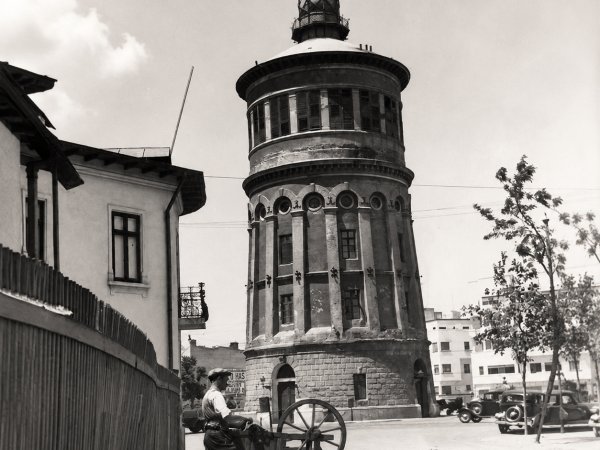
Yesterday: Foișorul de Foc, the circular red-brick building on Bulevardul Ferdinand I, was built between 1890 and 1892 to plans by architect George Mandrea. Its job: a watchtower for firefighters, who climbed its 42 meters to scan the city for smoke. It worked that way until 1935, when taller buildings and the telephone made it obsolete. It was also designed as a water reservoir, but the local water company, Uzina de Apă Grozăvești, never had pumps powerful enough to fill it, so that function never really existed.
Today: Since 1963 it's housed the National Firefighters' Museum, and after a restoration completed in 2024, it now sits on seismic isolators that let it shift by up to 0.5 meters during an earthquake. The museum's administration states that, following the restoration, it's the fourth-safest building in Bucharest in a quake — a claim from the institution itself, not independently confirmed by an outside seismic authority. The museum is open Monday to Friday, 8:00 to 16:00, with free entry on a few special dates each year, including September 13 (Firefighters' Day) and May 18 (Museum Day).

2. Colentina's Name: A Legend That Doesn't Quite Hold Up, and a Byzantine Coin
Yesterday: A story passed down for generations claims the name Colentina comes from "colea-n tină" ("there, in the mud"), supposedly the answer a spătar gave Matei Basarab when asked where he'd routed the Ottomans through a swampy stretch of land. It's a charming piece of folk etymology, but it's hard to square with the timeline: the name Colentina was already in use for the area well before Matei Basarab's reign (1632-1654), which makes the battle story an unlikely origin.
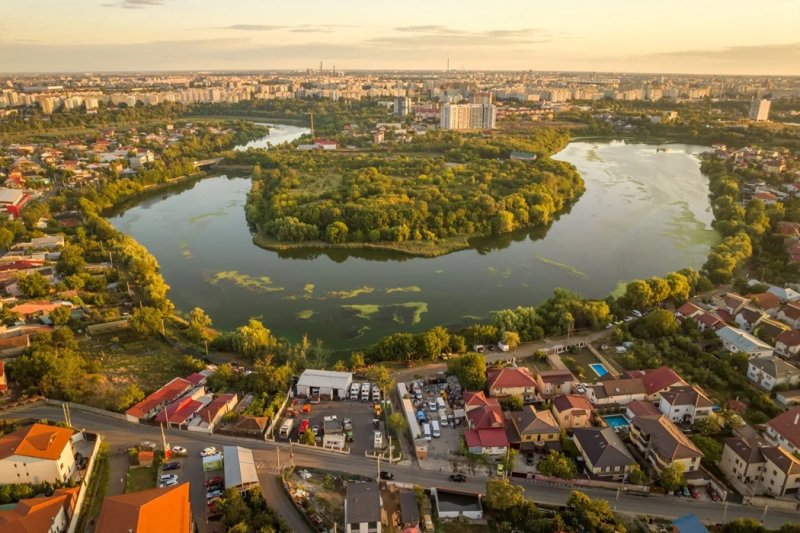
Today: What's actually documented through archaeology is older and less romantic. Archaeologists found traces of settlements from the 6th-7th centuries in the area, and in one of them, a Byzantine bronze coin from the reign of Emperor Justinian, dated to 539. Today's Colentina neighborhood grew up around the lakes formed along the river, now used as a recreational area with hotels and walking paths along the water.
3. Streets That May Still Carry the Trace of Old Guilds
Yesterday: In the Calea Moșilor area of Sector 2, there's a cluster of streets named after old trades: Olari (potters), Făinari (flour sellers), Mătăsari (silk merchants), Cărăușilor (cart haulers). The widely repeated interpretation is that the names reflect the craft guilds and merchants once based there. I couldn't find a heritage source, however, such as a museum or urban history institute, that documents exactly when or why these names were given, so the interpretation stays plausible but not historiographically confirmed.
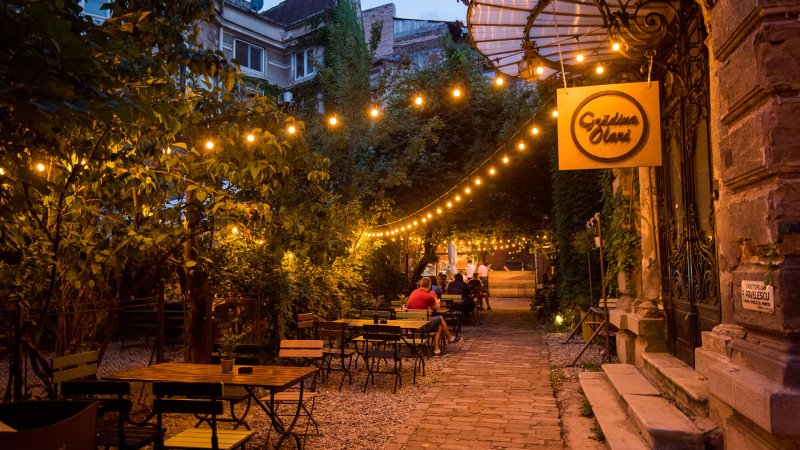
Today: The trades are long gone, but the streets remain. Strada Olari, for instance, is a quiet residential street with the Orthodox church "Olari," a school, a few small cafés, and a hidden garden restaurant, Grădina Olari. Nothing of the old guild trade survives, but the street names still carry its trace.
4. A Park With Two Names, and a Historian Unhappy About the Change
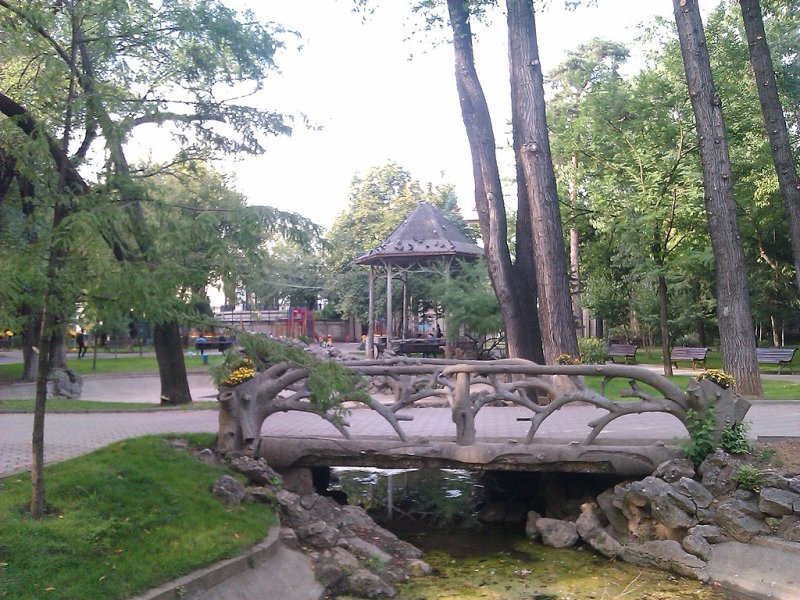
Yesterday: The park next to Grădina Icoanei carried for a long time the name of bookseller George Ioanid, who bought the swampy land in 1856 from Pană Băbeanul for 2,100 gold coins and turned it into a garden, then, from 1870, into a park modeled on English squares and Paris's Parc Monceau. It stayed Parcul Ioanid for over a century.
Today: In November 2003, to mark the unveiling of a bust by sculptor Ion Irimescu, the Sector 2 City Hall changed the official name to Parcul Ion Voicu, honoring the violinist who had lived right next to the park. Not everyone was on board with the change: the Bucharest Municipal Museum called it, in a piece published on the museum's own website, a renaming "without reason and entirely inappropriate." The official name and the one people actually use seem to have gone their separate ways — most recent articles and guides still call it "Parcul Ioanid," even though there's no official survey confirming how widespread that habit is.