The Beauties of Belle Époque Bucharest and How It Transformed into a European Capital
- Articles
- 18 MAY 26
At the end of the 19th century and in the first decades of the 20th century, Bucharest underwent one of the most spectacular periods in its history. The city, which until then still preserved many Eastern and Balkan features, began to modernize at an accelerated pace and to adopt Western urban models. This is the moment when the capital of Romania earned the nickname “Little Paris,” a name that reflected not only the elegance of its architecture but also the cultural and social aspirations of a society in full transformation. The Belle Époque period, roughly spanning from the 1870s to the outbreak of the First World War, coincided for Bucharest with a stage of economic prosperity, political consolidation, and artistic effervescence. After Romania gained independence and the proclamation of the Kingdom, the city benefited from major investments in infrastructure, architecture, and cultural institutions. The result was the emergence of a modern capital comparable to the great European cities of the time.
Bucharest Between Eastern Tradition and Western Influence
Wide boulevards, sumptuous palaces, elegant hotels, theaters, public gardens, and refined cafés radically changed the image of the city. During this period, some of the most emblematic buildings of Bucharest were constructed, and social and cultural life reached a level of sophistication that attracted the admiration of foreign travelers.
Before the Belle Époque, Bucharest was a city of contrasts. On one hand, there were inns, narrow streets, and boyar houses with Ottoman influences; on the other hand, the local elites increasingly looked toward Paris, Vienna, and Berlin as models of civilization.
The reign of Carol I of Romania played a decisive role in this transformation. The monarch supported the modernization of administration, the construction of railways, the introduction of modern urban standards, and the development of state institutions. During his reign, Bucharest became the political and economic center of a rapidly emerging European state.
At the same time, architects trained in France, Austria, and Germany began designing buildings inspired by Western academic and eclectic styles. The city thus acquired a cosmopolitan appearance without completely losing its local identity.
Elegant Boulevards and Monumental Buildings
One of the most visible transformations of Belle Époque Bucharest was urban reorganization. Streets were widened, squares and boulevards were developed, and public lighting and utilities were expanded.
Calea Victoriei became the capital’s emblematic artery. Luxury hotels, bank headquarters, fashion stores, and aristocratic residences were concentrated here. Walking along this street became a true social ritual, and being seen on Calea Victoriei was a symbol of social status.
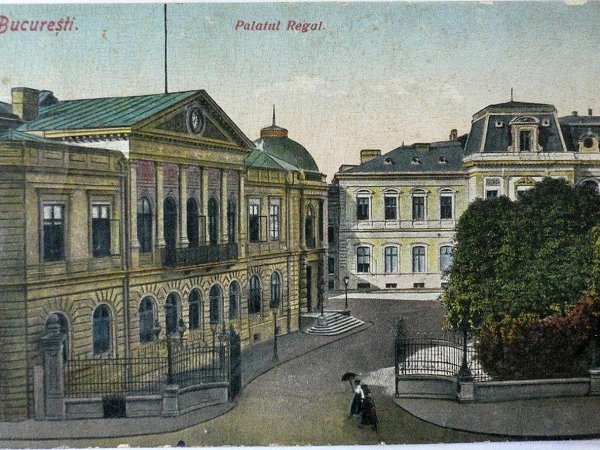
During the same period, impressive buildings were erected such as Romanian Athenaeum, CEC Palace, Cantacuzino Palace, Post Office Palace (today the National Museum of Romanian History), and Royal Palace of Bucharest. These edifices gave the city a monumental air and demonstrated Romania’s ambition to integrate into the European elite.
Cultural and Social Life of “Little Paris”
Belle Époque was not only about spectacular architecture but also about extremely active cultural life. Bucharest had become an artistic center where music, literature, and theater played a central role.
At the Romanian Athenaeum, prestigious concerts and cultural events took place, while National Theatre Bucharest attracted audiences with high-level performances. In elegant cafés, writers, politicians, and journalists met to discuss ideas that influenced public life.
City gardens and parks, such as Cișmigiu Gardens, became favorite places for promenades. Ladies wore dresses inspired by Parisian fashion, while gentlemen displayed their elegance in impeccable suits. The overall atmosphere was one of optimism and refinement.
Luxury Hotels, Restaurants, and Cafés
During the Belle Époque period, Bucharest developed a hospitality and gastronomic infrastructure comparable to that of major European capitals. Hotels on Calea Victoriei offered high-class services, and restaurants became true centers of social life.
Casa Capșa became the most famous symbol of Bucharest refinement. Its confectionery and restaurant were frequented by writers, politicians, and aristocrats, and Capșa’s reputation extended beyond the country’s borders. Alongside Capșa, numerous other elegant establishments offered menus inspired by French and Austro-Hungarian cuisine, contributing to the consolidation of the city’s image as a cosmopolitan metropolis.
Modernization of Infrastructure and Public Services
The transformation of Bucharest into a European capital also required significant infrastructure investments. During this period, water and sewage networks were expanded, electric lighting was introduced, and public transport developed.
Electric trams changed urban mobility, and new boulevards facilitated circulation. Modern public buildings, schools, hospitals, and administrative institutions raised the standard of living and contributed to the efficient organization of the city. These improvements had a direct impact on daily life and brought Bucharest closer to the Western standards of the era.
Eclectic Architecture and French Influence
The dominant style of the period was eclectic, combining neoclassical, baroque, and academic elements. Richly decorated façades, domes, columns, and ornamental sculptures gave buildings a special elegance.
French influence was evident not only in architecture but also in education, fashion, and language. French became a symbol of social status, and many young people studied in Paris before returning home.
This cultural orientation contributed decisively to transforming Bucharest into a city deeply connected to European trends.
The Hidden Contrasts of the Belle Époque
Behind the brilliance and luxury, there were also strong social contrasts. Not all residents of the capital benefited from elite comfort and prosperity. On the outskirts, poor neighborhoods persisted, with unpaved streets and modest living conditions.
Bucharest during the Belle Époque was therefore a city of contrasts, where modernity and tradition coexisted permanently. Nevertheless, the dominant image remains that of a capital in spectacular ascent, driven by confidence and ambition.
The Legacy of a Golden Age
The Belle Époque left Bucharest some of its most beautiful buildings and most valuable cultural institutions. Even though many monuments were affected by wars, earthquakes, and demolitions, the heritage of this period continues to define the city’s identity.
Walking today along Calea Victoriei or admiring the Romanian Athenaeum and the CEC Palace, one can understand why Bucharest was compared to Paris. The elegance and refinement of that era are still visible in the city center.
The beauty of Belle Époque Bucharest lies not only in its architecture but also in the spirit of a generation that believed in progress, culture, and Romania’s belonging to Europe. This period permanently transformed the city and gave it the status of a modern European capital.
We also recommend: Daily life during the La Belle Époque period: habits and urban routines Bucharest residents had at the end of the 19th century