Stars of Interwar Bucharest: The life and career of great operetta singer Emil Popescu
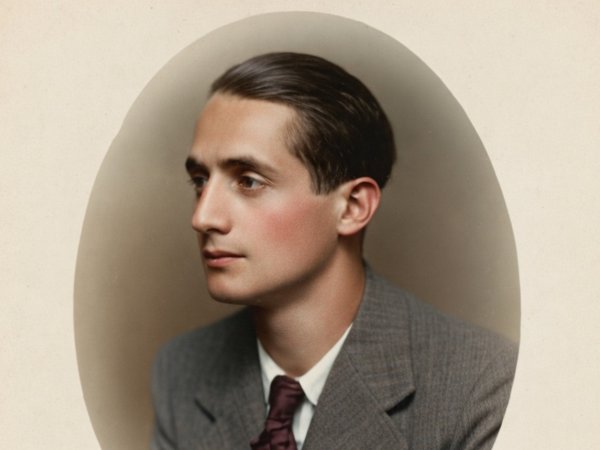
In the history of Romanian musical theatre, there are artists who remain in the public memory through leading roles and famous names, but also performers whose true importance becomes apparent when viewed within the broader evolution of an institution. Emil Popescu was one of them. An actor with the Bucharest Operetta Theatre, a performer with a pronounced comic talent and a memorable stage presence, he belonged to the generation that brought brilliance to Romanian operetta in the decades following the Second World War. Born on July 13, 1913, Emil Popescu belonged to a generation that grew up in a Bucharest where theatre, music, revue and operetta occupied an important place in the city's cultural life. His career would span several decades and would be closely associated with the Operetta Theatre stage. Memoirs and accounts by his daughter, actress Emilia Popescu, portray him as a highly appreciated artist at this institution. Although he is sometimes referred to as an "operetta singer," sources that discuss his career describe him primarily as an actor with the Operetta Theatre. This distinction is important because his main artistic strength appears to have been precisely his ability to combine acting, singing, movement and humor in a genre in which the performer had to be both an actor and a musician.
A career built around the Operetta Theatre
Emil Popescu's career covered a large part of the modern history of Bucharest's Operetta Theatre. His professional life was connected with the period when the institution became one of the capital's most popular musical stages, bringing together vocal soloists, actors, dancers, a chorus and an orchestra.
Accounts of his career place him among what can be regarded as the institution's "golden generation." In an interview published by Teatrul azi, Emilia Popescu confirmed that her father had been an important actor at the Operetta Theatre and recalled, among the productions in which he appeared, The Bird Seller. The same source also mentions Emil Popescu's collaboration with Horia Șerbănescu, illustrating his connection with musical theatre and revue as well.
A contemporary press review provides a more specific picture of the way he was perceived as an actor. In 1960, in a review of a Bucharest Operetta Theatre production, Emil Popescu was praised for his "excellent characterization" and his humor in the role of Zajîgalkin, an opportunistic lover. This observation is significant because it shows that audiences and critics particularly valued his ability to create comic characters, not merely the musical dimension of his performances.
A comic actor in a world of music
Operetta requires a difficult combination of skills. A performer must be able to handle a musical score while also creating a convincing character, maintaining comic timing and communicating a story through gestures, facial expressions and dialogue. Emil Popescu appears to have excelled precisely in this area where music and comedy intersected.
In another review of a production by the Operetta Theatre, published in 1963, Emil Popescu's "comic talent" was explicitly praised in his role as Loriot. Although such reviews do not provide a complete biography, they are important for reconstructing how he was received by contemporary audiences. They demonstrate that the actor was associated by the cultural press of the period with character roles and with parts requiring strong comic expressiveness.
This specialization also explains why Emil Popescu's name remained connected with Romanian operetta even though he is not as well known today as some of the genre's leading soloists. In a musical production, secondary and comic roles are essential to the overall balance. They create contrasts, maintain the rhythm of the action and provide the moments of relaxation that allow an operetta to work as a complete theatrical experience.
Emil Popescu and Horia Șerbănescu
One of Emil Popescu's most important artistic collaborations was with Horia Șerbănescu. AGERPRES notes that Horia Șerbănescu's first artistic partnership was formed with Emil Popescu, before Șerbănescu went on to develop other important collaborations in the world of revue theatre.
Their collaboration is also confirmed by Emilia Popescu's testimony, published in Teatrul azi. Horia Șerbănescu recalled the roles he performed together with Emil Popescu in The French Professor, by Tudor Mușatescu, describing the two actors as extremely funny in their roles as mischievous students. For the family memory, the episode is significant because it provides a glimpse into part of Emil Popescu's stage career through his daughter's recollections.
Their partnership also illustrates how fluid the boundaries were between operetta, musical comedy and revue theatre. Performers trained in musical productions could easily move from one stage to another, while comic talent was an advantage in virtually every type of performance. For Emil Popescu, this versatility meant that his career was not confined to a single artistic genre.
The Popescu family, a true family of artists
Emil Popescu's life was also closely connected with the artistic world through his family. He was married to Malu Iosif, a ballerina and choreographer, and the two formed a couple within the performing arts community. Their daughter, Emilia Popescu, would go on to become one of the best-known Romanian actresses of theatre, film and television of her generation.
Emilia Popescu has spoken in numerous interviews about the artistic environment in which she grew up. She has recalled that her father was an actor at the Operetta Theatre while her mother was a ballerina who later became a choreographer. In one interview, the actress explained that she had essentially grown up inside the theatre and that the artistic atmosphere of her family decisively influenced the path she would eventually follow.
For Emilia Popescu, theatre was not a distant world but the natural environment of her childhood. Sets, costumes, rehearsals and performances were part of her universe from an early age. She recalled that her father was worried when he learned that his daughter wanted to attend the Theatre Institute, even though the family's artistic tradition made her choice hardly surprising.
From the operetta stage to radio and entertainment shows
Emil Popescu's comic talent was not limited to performances at the Operetta Theatre. His collaboration with Horia Șerbănescu and his participation in musical comedy productions also brought him closer to revue theatre and entertainment.
One example mentioned in accounts of his career is the musical comedy Cu lăutarii după mine, presented at the Savoy Theatre, where Maria Tănase also appeared. His participation in such a production demonstrates that Emil Popescu was part of a broader artistic circuit in which operetta, revue, popular music and comedy frequently intersected.
His voice and ability to create comic characters were also used in other forms of entertainment. His name is associated in discographic archives with various theatre recordings and humorous sketches, while accounts of his career connect him with a period when radio and records were essential means through which performers could reach an audience far beyond the theatre itself.
An artist of the generation that made operetta popular
The period in which Emil Popescu performed was one in which operetta held an important place in Bucharest's popular culture. The institution brought famous works from the international and Romanian repertoires before the public, while artists such as Ion Dacian, George Hazgan and many other performers contributed to the prestige of Bucharest's musical theatre.
Emil Popescu worked alongside such figures and belonged to the generation that helped make operetta accessible to a broad audience. His daughter's recollections place him in this artistic world during the period when the institution was consolidating its reputation, while his name appears in documents and contemporary reviews connected with productions of the time.
His roles were not always those occupying the center of the poster, but the contribution of a character actor should not be measured solely by the number of leading roles he played. In operetta, comic characters give entire scenes their color and create the lively atmosphere without which the production cannot fully succeed. From this perspective, Emil Popescu played an important role in the artistic mechanism of the institution.
The legacy he left through his daughter, Emilia Popescu
Perhaps the most visible continuation of Emil Popescu's legacy is the career of his daughter. Emilia Popescu became an actress in theatre, film and television, and her artistic development began in a family in which the stage was part of everyday life. She graduated from the Institute of Theatre and Cinematographic Art in 1988, studying under professors Olga Tudorache and Florin Zamfirescu, and subsequently built an important career at the Bulandra Theatre and later at the Comedy Theatre.
The influence of her father on her artistic development should not be understood solely in terms of a professional "inheritance." Emilia Popescu has repeatedly described the environment in which she grew up and the way theatre became a natural part of her existence. In this sense, Emil Popescu passed on not only his name but also familiarity with the stage, the discipline of performance and respect for the acting profession.
There are some inconsistencies in online sources regarding the exact date of Emil Popescu's death. It is nevertheless certain that he died before his daughter's full artistic rise and that he remained an important figure in her personal memory. Biographical sources about Emilia Popescu mention that her father was a respected actor at the Operetta Theatre and that his death occurred while she was building her own family.
Emil Popescu, an artist worth rediscovering
Emil Popescu belonged to a generation of artists for whom the stage was a way of life. He was an actor at the Operetta Theatre, a comic performer, a collaborator of important artists such as Horia Șerbănescu, and part of a family in which theatre and dance were passed from one generation to the next.
His career is particularly interesting because it cannot be reduced to a single type of role. He performed in operetta, took part in musical comedy productions and was appreciated for his ability to create memorable characters. Contemporary reviews confirm his comic talent, while the memories of colleagues and his daughter complete the portrait of an artist who was part of Bucharest's theatrical life for several decades.
Today, Emil Popescu's name is less familiar to the general public than that of his daughter, Emilia Popescu, but the history of Bucharest's musical theatre preserves him among the artists who contributed to the success of an important cultural institution. For audiences of his time, he was the actor whose comic talent, voice and stage presence could turn even a supporting role into a memorable moment.
Behind the success of later generations were also artists such as Emil Popescu. He belonged to an era when operetta meant spectacle, music, humor and a direct encounter with the audience. Through his career at the Operetta Theatre and through the artistic family he left behind, his name remains connected with one of the important periods in the history of Romanian musical theatre.
We also recommend: The stars of interwar Bucharest: Elvira Godeanu - the child abandoned by her father, Zoe Trahanache, the duchess of Romanian theatre