Spiridon Iorceanu, the first Romanian engineer to become a road and bridge builder in Paris, has a street named after him in Bucharest
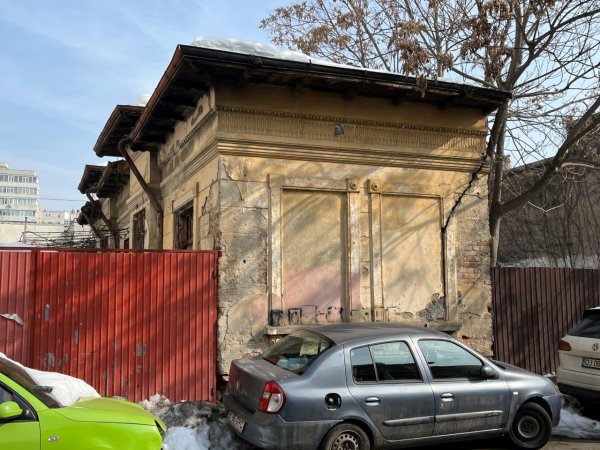
In the history of Romania's modernization during the second half of the 19th century, the name of Spiridon Iorceanu holds a special place. A civil engineer, professor, author of technical manuals, and one of the people who contributed to organizing the Romanian engineering profession, Iorceanu belonged to the generation of specialists who sought to transform the infrastructure of the Romanian Principalities into a modern system based on professional training and technical standards. His name also appears as Spiridon Yorceanu, a variant found in numerous historical documents and specialist publications. Institutional sources dedicated to the history of Romanian engineering give 1835 as his year of birth and 1903 as the year of his death, although some older materials mention different dates. For accuracy, this article uses the 1835–1903 chronology, supported by the street nomenclature of the Municipality of Bucharest and specialist publications. Today, his memory is also preserved through a street in Bucharest's Sector 2. Spiridon Iorceanu Street is located in the area behind Șoseaua Ștefan cel Mare and connects Radu de la Afumați Street with Borzești Street. The official nomenclature of Bucharest identifies him as a "civil engineer, professor."
His studies in Paris and the beginnings of a pioneering career
Spiridon Iorceanu was born in Bucharest at a time when Romania was still at the beginning of its institutional and technical modernization. In the decades following the 1848 Revolution and the Union of the Principalities, the development of roads, bridges, railways, and public works became one of the major challenges facing the Romanian state. The country needed well-trained specialists to carry out these projects, and education abroad was one of the most important solutions.
Iorceanu was among the young Romanians who benefited from this approach. He studied in France and graduated from the Paris School of Bridges and Road Construction. According to the General Association of Engineers of Romania, he obtained a diploma as a road construction engineer in 1860 and is considered the first Romanian engineer to receive this qualification at the prestigious French institution.
The distinction is important because the expression "bridge builder" may give the impression that Iorceanu was the first Romanian engineer to specialize exclusively in bridge construction. Historical sources describe him more precisely as the first Romanian engineer to obtain a diploma in road construction in Paris, a field that also included issues related to bridges and infrastructure works. His 1869 manual, in fact, dealt with both roads and bridges.
Iorceanu's return to Romania coincided with a period when the Romanian administration was trying to establish its own technical structures. The country needed not only projects and construction works but also a professional body capable of establishing standards, inspecting works, and training new generations of specialists.
From an engineer in public administration to inspector general
After returning to Romania, Spiridon Iorceanu entered public administration and gradually advanced through the main ranks of the engineering profession. He held technical positions within the administration of roads and public works, eventually reaching the rank of inspector general engineer, one of the highest positions in the technical corps of the time.
His activity was not limited to carrying out individual projects. Iorceanu was also involved in organizing the state's technical institutions. One of his important contributions was the drafting of regulations governing the functioning of the technical corps, at a time when the Romanian administration was attempting to establish clearer responsibilities and professional standards for its specialists.
At the same time, the engineer played an important role in the activity of the Technical Council for Public Works. Specialist publications identify him as president of the Technical Council between 1879 and 1890, placing him at the center of the process through which important infrastructure projects were examined and evaluated.
This position was particularly significant because, during the final decades of the 19th century, Romania was experiencing a period of intensive public works development. Roads, railways, bridges, ports, and hydraulic engineering projects were being built, while the administration needed specialized bodies capable of assessing technical solutions.
Iorceanu also became involved in evaluating projects for major engineering works of the period. He served as chairman of the international jury that examined the projects submitted for the construction of the bridges over the Danube, a project that ultimately led to the construction of the famous bridge at Cernavodă.
The first Romanian manual dedicated to roads
One of Spiridon Iorceanu's most important contributions was not a particular construction project but a work intended to educate and professionalize the people working in the infrastructure sector.
In 1869, he published "Manualul construcțiunii și întreținerii drumurilor", or Manual of Road Construction and Maintenance, considered by specialist sources to be the first Romanian manual on roads. The Romanian Academy Library preserves this work in its bibliographic collections. Published in Bucharest by the Tipografia Lucrătorilor Asociați, the volume contained 563 pages and was accompanied by an atlas with 18 plates.
The importance of the manual can only be fully understood in the context of the period. Romania did not yet have a fully developed system of higher technical education, while engineering literature in Romanian was still in its early stages. A specialized manual made it possible to transfer modern methods and principles to engineers and technical officials working throughout the country.
The book did not deal exclusively with roads. Historical sources indicate that it also contained information about the construction of small bridges, as well as laws and regulations concerning the field.
The volume written by Iorceanu can therefore also be regarded as an instrument for professionalizing Romanian infrastructure. Instead of relying solely on practical experience or imported models, specialists now had access to a technical work in Romanian adapted to the needs of the administration and local professionals.
Professor and organizer of technical education
Spiridon Iorceanu understood that the development of infrastructure could not be separated from the training of people capable of designing and building it. For this reason, his activity also extended into technical education.
He contributed to the organization of a school for training road and bridge construction officials and taught there as a professor. Sources dealing with the history of Romanian technical education indicate that Iorceanu and engineer Dimitrie Frunză contributed to the development of the project for this school, at a time when the authorities were attempting to create a coherent system for training technical personnel.
This concern was essential for Romania during the second half of the 19th century. The state was expanding its infrastructure, but the number of Romanian specialists was still limited. Training technical officials and, later, engineers was therefore a prerequisite for the independent development of the administration and for reducing dependence on foreign experts.
In this context, Iorceanu can be regarded as one of the people who contributed to the emergence of a genuine Romanian engineering culture. He was not merely a technical civil servant but also a professor and author concerned with transmitting knowledge to future generations.
One of the founders of the Polytechnic Society
Another important stage in his career was connected with the establishment of the Polytechnic Society. Founded in 1881, the organization became one of the main professional bodies representing Romanian engineers, contributing to the recognition of the profession and to the exchange of technical ideas.
Spiridon Iorceanu was among the founding members of the Polytechnic Society. In 1887, he was elected president, a position that demonstrated the prestige he enjoyed among his fellow specialists. The official list of presidents published by the General Association of Engineers of Romania identifies Iorceanu as president in 1887.
His election was not accidental. By that time, Iorceanu already had extensive experience in the administration of public works, held the rank of inspector general engineer, and enjoyed a strong reputation among members of the technical profession. Historical sources describe him as a respected specialist who made an important contribution to organizing the engineering profession.
The Polytechnic Society would become an important forum for Romanian engineers and for discussing the country's technical challenges. From this perspective, Iorceanu's involvement in leading the organization represents further evidence of his role in consolidating the engineering profession.
The Sector 2 street that preserves his name
More than a century after his death, Spiridon Iorceanu remains present in the geography of Bucharest. Spiridon Iorceanu Street is located in Sector 2 and, according to the official nomenclature of the Municipality of Bucharest, is dedicated to the engineer and professor. Municipal documents explicitly record the name of the street and note that it was previously known as Iorceanu Street and Birjarii Noi Street.
The street is located in the area between Radu de la Afumați Street and Borzești Street. Its existence offers another example of the way in which Bucharest's urban memory preserves the names of specialists who contributed to Romania's modernization, even though their work is not as widely known to the general public as that of architects, writers, or politicians.
The name is particularly appropriate because Iorceanu had a direct connection with infrastructure development and with the training of the specialists who would go on to build modern Romania. He was not simply an engineer who held important administrative positions but one of the people who contributed to the institutionalization of the profession.
The legacy of an engineer from the generation of modernization
Spiridon Iorceanu died on April 11, 1903, after a career spanning almost half a century and devoted to administration, education, and technical development. Engineering publications include him among the important figures in Romanian engineering at the end of the 19th century.
His legacy can be found in several areas: the education he received in Paris, his work in the administration of public works, his contribution to organizing the technical corps, his teaching activity, his first Romanian manual on roads, and his involvement in the Polytechnic Society.
At a time when Romania was building its institutions and infrastructure almost from the ground up, specialists such as Iorceanu played a fundamental role. He belonged to the generation that transformed engineering from a relatively limited profession into an essential field for the development of the modern state.
Today, people walking along Spiridon Iorceanu Street in Sector 2 encounter a name that may be unfamiliar to many. Behind it, however, lies the story of one of the pioneers of Romanian engineering: a Bucharest-born specialist educated in Paris, regarded by specialist sources as the first Romanian to obtain a road construction diploma there, a professor, the author of the first Romanian manual on roads, and president of the Polytechnic Society.
If the street preserves his name today, his true legacy is broader: his contribution to training a generation of engineers and to building the technical system without which late-19th-century modern Romania could not have developed.
We also recommend: Famous boulevard names: Ștefan cel Mare, the greatest ruler of Moldova, an excellent strategist, a consummate victor