How Bucharest Residents Had Fun During the Belle Époque
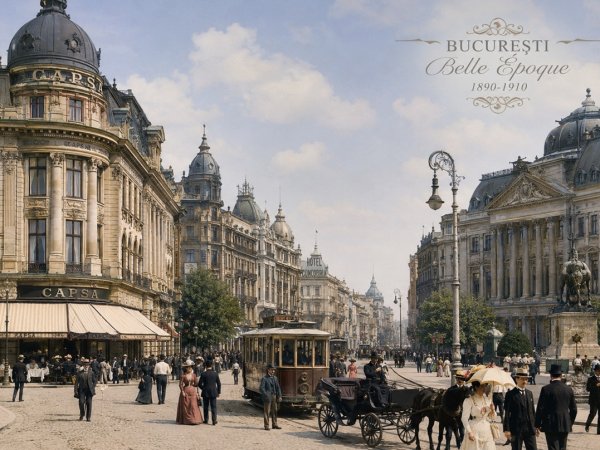
Long before cinemas, radio, clubs, and television radically changed the way people spent their free time, Bucharest residents had plenty of ways to entertain themselves. During the second half of the 19th century, the capital was undergoing a rapid process of modernization, and the city’s transformation also changed the everyday lives of its inhabitants. The Belle Époque, generally associated with the final decades of the 19th century and the beginning of the 20th century, brought to Bucharest an interesting combination of old traditions and modern forms of entertainment. Strolls, picnics, family gatherings, traditional games, hunting, and excursions outside the city coexisted with theaters, summer gardens, balls, restaurants, cafés, and variety shows. An especially interesting account of this world was left by George P. Nemetescu in his 1943 volume, Bucharest, a Danube Port: With a Preliminary Description of the Origin and History of This City, from 1200 to the Present Day. The author pointed out that information about the leisure activities of Bucharest residents before 1873 was scarce and was based largely on memories passed down by older generations. By contrast, for the period he had personally experienced, Nemetescu was able to provide a much more concrete picture.
From picnics to Filaret, Pantelimon, and Cotroceni
Around 1873, leisure activities in Bucharest were still far removed from the spectacular range of entertainment that the capital would offer several decades later. According to Nemetescu, between 1873 and 1880, the main forms of recreation included family conversations and gatherings, traditional dances and games, hunting, and short excursions around the city. The modern holiday, spent in the mountains, at the seaside, or at a spa resort, had not yet become a widespread habit among the residents of the capital.
For a Bucharest family of that period, a day of recreation could mean leaving home in the morning with food, bottles of wine, and blankets, followed by an entire day spent outdoors. Filaret, Pantelimon, and Cotroceni were among the preferred destinations. At Filaret, people would stop in the area below the hill, near the Cantacuzino spring or fountain, while others would head toward the area around the Metropolitan Hill.
These outings illustrate how different the relationship between the city and nature was at the time. Bucharest still had numerous green areas close to its outskirts, and traveling to one of these locations could itself be considered a form of entertainment. The Museum of the Municipality of Bucharest also highlights the role played by Filaret, Băneasa, and other green areas in providing recreation for the city’s inhabitants.
Elisabeta Boulevard and the new culture of strolling
The modernization of Bucharest gradually changed the way residents spent their free time. One important example was Regina Elisabeta Boulevard, initially laid out as far as Kogălniceanu Square between 1870 and 1872. The boulevard was originally designed as a space for strolling and provided a modern route toward Cișmigiu and other gardens farther away, including Belvedere and Procopoaiei.
Strolling was more than simply walking. It had become a form of social interaction and a way for city residents to display their clothes, meet acquaintances, and observe the changes taking place in Bucharest society. During this period, streets and boulevards were gradually becoming leisure spaces in their own right.
At the same time, summer gardens were transforming the outskirts of the capital into genuine entertainment venues. Zdrafcu’s Garden, located in the area of what is now the Monument to the Sanitary Heroes, was one such destination. Around 1870, the venue already had a large dance hall that also hosted theatrical performances.
Summer gardens, where the celebrations lasted until dawn
During the final decades of the 19th century, summer gardens became some of the capital’s most important entertainment venues. They combined food, drinks, music, and performances in a format accessible to a much broader audience than aristocratic salons.
Between 1890 and 1895, according to Nemetescu’s account, Bucharest residents had begun going in the evenings to gardens located on the outskirts of the city. There they could enjoy grilled meat and drinks, while lăutari musicians provided the entertainment. Among the places mentioned by the author were Zdrafcu’s Garden, “La Leul și Cârnatul,” and other similar establishments. Later accounts also confirm the popular character of these venues and their reputation for Romanian dishes, good wine, and lăutari music.
Zdrafcu’s Garden was sufficiently removed from the densely inhabited areas for the music to continue late into the night without greatly disturbing nearby residents. According to later recollections, the venue was known for its grilled steaks, selected wines, and festive atmosphere, which could continue until the early hours of the morning.
Wine cellars, mici, and new wine
Autumn brought another form of entertainment specific to Bucharest at the time: temporary wine houses known as mustării. These establishments appeared in different parts of the city, including near street corners, providing an informal setting where Bucharest residents could eat, drink, and listen to music.
The menu was simple but appealing: mici, pastrami, grilled meats, and other dishes that could be enjoyed with grape must or new wine. At such venues, lăutari musicians could be heard late into the evening, while the celebrations continued for hours.
Nemetescu’s account is particularly relevant because he describes these forms of entertainment as relatively affordable. In his view, small amounts of money were enough to organize a lively evening, making summer gardens and wine houses accessible to a broad section of the population. Entertainment was therefore not exclusively the privilege of the aristocracy or wealthy bourgeoisie.
Music and dancing were part of everyday life
Before radio entered Bucharest homes and long before the film industry became one of the main forms of entertainment, music was primarily a collective experience. Lăutari musicians were one of the essential components of celebrations, particularly in summer gardens and popular establishments.
Nemetescu mentions several dances and songs that enlivened such evenings, including “Sârba maicelor,” “Sârba popilor,” “Margareta,” and “Pițigoiul.” The atmosphere was created not only through music but also through the participation of the audience, who danced and turned the venue into a place for social interaction.
At the same time, wealthy families enjoyed another world of entertainment. Balls were among the major attractions of Bucharest society during the 19th and early 20th centuries. The Museum of the Municipality of Bucharest mentions seasonal balls, masked balls, and events accompanied by music or theatrical performances. In elegant homes, salons were prepared for receptions, soirées, and even theatrical performances, while the waltz, mazurka, and other dances formed part of the repertoire of fashionable evenings.
Theater and performances transformed entertainment in Bucharest
As the city modernized, entertainment became increasingly organized. Theaters, summer gardens, and variety shows began to offer audiences alternatives to traditional gatherings.
The Museum of the Municipality of Bucharest shows that Bucharest already had an impressive variety of venues dedicated to entertainment: summer gardens, ballrooms, restaurants, cafés, brasseries, and other establishments. Some offered performances, others featured music and dancing, while many were simply places where people could spend hours in the company of friends.
Zdrafcu’s Garden, for example, already offered dancing and theater around 1870. This demonstrates that the transition from informal gatherings to organized entertainment took place gradually, as Bucharest became a more modern and cosmopolitan city.
Cafés, restaurants, and social life
The Belle Époque also brought the development of an urban culture in which cafés, restaurants, and brasseries became important places for social interaction. A performance was not always necessary for an evening to be considered successful. A meal, a conversation, music, and the right company could themselves constitute a form of entertainment.
Wealthier social classes also had private soirées, receptions, and balls organized in their homes. Large Bucharest residences had salons specifically designed for receiving guests, while furniture, lighting, decorations, and clothing contributed to the social spectacle of the evening. The Museum of the Municipality of Bucharest emphasizes precisely this transformation of the home into a space that also served leisure and entertainment purposes.
From a city of simple pleasures to modern Bucharest
Within just a few decades, the way Bucharest residents spent their free time changed considerably. In the 1870s, a pleasant day could mean an excursion to Filaret, Pantelimon, or Cotroceni, a picnic outdoors, or a family gathering. Two decades later, summer gardens, wine houses, performances, and restaurants were already offering a much broader range of possibilities.
The transformation was not sudden. Traditional forms of entertainment continued to exist alongside modern ones. Traditional games, lăutari music, and outings into the countryside coexisted with urban promenades, balls, theater, and café culture.
This diversification was one of the expressions of Bucharest’s modernization. The city was changing its streets, buildings, and infrastructure, but it was also changing the rhythm of everyday life. New technologies such as the phonograph, telephone, and eventually moving pictures began to enter domestic life, giving residents new forms of entertainment.
Bucharest during the Belle Époque was therefore far from being a city without entertainment, as an image of a capital without cinemas or radio might suggest. On the contrary, it was a city in which leisure was undergoing constant transformation.
From a blanket spread out on the grass at Filaret and a bottle of wine brought from home to chandelier-lit salons, elegant balls, gardens filled with lăutari music, and theatrical performances, Bucharest residents created their own universe of leisure.
It was precisely this combination of tradition and modernity that would define one of the most fascinating periods in the social history of the capital.
We also recommend: 10 things about Belle Époque Bucharest you didn’t know until now