Dimitrie Gerota, the first Romanian radiologist, has a street named after him in Bucharest
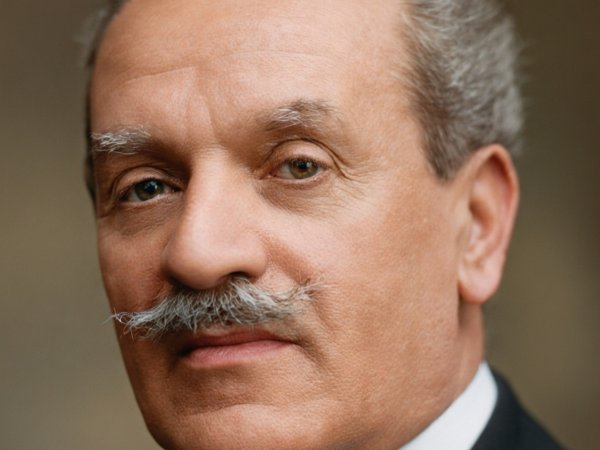
Bucharest has numerous streets named after scientists, artists, military figures, and public figures who contributed to Romania’s development. Among them is Dimitrie D. Gerota Street, in Sector 2, an artery that commemorates one of the most important Romanian physicians of the late 19th and early 20th centuries. Dimitrie Gerota’s name is primarily associated with the beginnings of Romanian radiology, but his work was much broader, encompassing anatomy, surgery, urology, medical research, and education. Gerota went down in the history of Romanian medicine as one of the pioneers who quickly understood the potential of a discovery that was still very recent at the time. X-rays had been discovered by Wilhelm Conrad Röntgen in 1895, and the new technology began to be tested in Romania almost immediately. Gerota distinguished himself, however, by turning his interest in this invention into a systematic medical pursuit, studying radiology, publishing works on the use of X-rays, and contributing to the training of the first Romanian specialists in the field.
A physician trained in Romania, Paris, and Berlin
Dimitrie Constantineanu Gerota was born in Craiova in 1867, into a family in which his father was a priest. He showed an early interest in learning and chose to pursue medicine, attending the Faculty of Medicine in Bucharest. During his student years, he became directly involved with anatomy and surgery, disciplines that would shape his entire career. In 1892, he obtained his medical doctorate, and a year later he received a Simionide scholarship, which enabled him to continue his training abroad.
The years he spent in Paris and Berlin were decisive for his professional development. Gerota studied anatomy and surgery in leading European medical centers, working with important figures in European medicine. In Paris, he came into contact with the surgical and anatomical schools, while in Berlin he studied anatomy at the institute headed by the famous anatomist Wilhelm Waldeyer. At the same time, he became familiar with modern research methods, including techniques for preserving and preparing anatomical specimens.
His experience in Germany would also influence his interest in radiology. Röntgen’s discovery of X-rays, announced in 1895, generated enormous enthusiasm throughout the European medical world, and Gerota quickly understood that the new technology could radically change the way physicians viewed the inside of the human body.
Gerota and the beginnings of Romanian radiology
Dimitrie Gerota played an important role in one of the most significant stages in the history of Romanian radiology. A historical clarification is necessary, however: the first X-ray demonstrations in Romania took place in 1896, including in Bucharest, through experiments associated with Dragomir Hurmuzescu and Constantin Dimitrescu-Severeanu. Gerota cannot therefore be regarded as the author of the first radiograph produced in Romania, since he was still abroad at the time. His role was nevertheless fundamental in transforming radiology into an organized medical field that could be systematically taught and practiced.
In 1898, Gerota published the work “Röntgen’s Rays or X-Rays,” which brought together lectures he had delivered in Craiova and Bucharest in 1897 and 1898. The publication was among the first Romanian works devoted to the new technology and to explaining its medical possibilities. A year later, in 1899, Gerota gave a course in radioscopy and radiography at the Military Medical Institute in Bucharest. Historical sources describe him as one of the first and, in terms of establishing the specialty, the first Romanian radiologist.
His importance was not limited to using the equipment. Gerota contributed to the development of an early school of radiology at a time when the technology was rudimentary and physicians knew very little about the risks of exposure. He also worked in connection with the Central Military Hospital, where he organized practical courses for personnel who needed to learn how to use equipment for radioscopy and radiography.
The anatomist whose name lives on in medicine
Although radiology brought him recognition in Romania, anatomy established Gerota’s international reputation. His research into the anatomical structures surrounding the kidneys led to the widespread use of the term “Gerota’s fascia,” a name still encountered in anatomy and medical practice. It refers to the renal fascia, a connective-tissue structure surrounding the kidney and perirenal fat.
Gerota also made important contributions to the study of the lymphatic system. In 1896, he published research on a technique for injecting lymphatic vessels, and his method became known in the scientific literature as the “Gerota method.” His studies addressed the lymphatic vessels of the abdominal and pelvic regions, while his anatomical interests also extended to organs such as the kidneys, urinary bladder, and intestines.
In 1916, Gerota became a corresponding member of the Romanian Academy. Until 1937, he played an important role in medical education in Bucharest, serving as a professor and directing work in applied anatomy and, later, as a professor of topographical anatomy. For him, research and teaching were inseparable from medical practice, and this approach explains the breadth of his influence on generations of physicians trained in Bucharest.
The professor who taught Constantin Brâncuși
A special chapter in Dimitrie Gerota’s biography is his connection with Constantin Brâncuși. Beginning in 1897, Gerota taught artistic anatomy at the School of Fine Arts in Bucharest, and the young Brâncuși was among his students. The relationship between the physician and the future great sculptor would go beyond that of a simple teacher and student.
Under Gerota’s guidance, Brâncuși created the famous “Écorché” around 1901–1902, a representation of the human body without skin, with the musculature clearly displayed. The work had an educational purpose and was intended for the study of anatomy. Historical research indicates that Brâncuși took part in dissection sessions and studied the structure of the human body under Gerota’s supervision before creating the sculpture. Several plaster versions of the work have survived, including examples at the National University of Arts in Bucharest and in collections in Craiova, Cluj, and Iași.
The relationship between the two men illustrates how broad Gerota’s understanding of anatomy was. For him, the study of the human body was important not only for physicians but also for artists. Anatomy had to be understood through direct observation, drawing, modeling, and research, and this approach helped Brâncuși during his formative years as an artist.
The sanatorium and his medical work in Bucharest
Gerota did not limit himself to research and teaching. He was also an active surgeon who was deeply concerned with organizing medical care. In 1907, he established his own sanatorium, and the institution expanded its activities in the years that followed. He practiced surgery there for decades and continued to provide medical services, including to people with limited financial means. Historical sources also describe him as a physician concerned with the philanthropic dimension of his profession.
His name subsequently remained closely associated with Bucharest’s medical infrastructure. Today, the “Prof. Dr. Dimitrie Gerota” Emergency Hospital of the Ministry of Internal Affairs operates in Sector 2, at 29–31 Vasile Vasilievici Stroescu Street. The institution preserves in its name the memory of the physician who made a decisive contribution to the development of modern Romanian medicine.
The price paid for pioneering work in radiology
The enthusiasm of the first researchers for X-rays also had a tragic side. At the end of the 19th century, the dangers of repeated exposure to radiation were not understood as they are today. Physicians and technicians who worked directly with X-ray equipment exposed their hands and bodies without the protective measures that later became mandatory.
Dimitrie Gerota was among those who suffered the consequences of this pioneering period. Exposure to X-rays caused a serious injury to his left hand, described in medical sources as an epithelioma, and in 1907 he underwent amputation of his left ring finger. The experience was one of the painful examples of the price paid by radiology pioneers before the dangers of radiation were fully understood.
A street in central Bucharest preserves his name
The memory of Dimitrie Gerota is also preserved in Bucharest’s street nomenclature. Dimitrie D. Gerota Street is located in Sector 2 and connects Carol I Boulevard with Batiștei Street. Official documents issued by the Bucharest Municipality identify the name as a tribute to the physician, surgeon, and philanthropist Dimitrie D. Gerota, who lived from 1867 to 1939.
The present-day street has had several names throughout its history. Bucharest’s official nomenclature lists, among its historical names, Polonă Street, Gogu Cantacuzino Street, Gheorghe Cantacuzino Street, Alexandru Sahia Street, and, for a section, Jean Louis Calderon Street. Through its current name, the city preserves in its public space the memory of a physician who contributed to transforming Romanian medicine into a more modern discipline based on anatomy, research, and technology.
An important name in Romanian medicine
Dimitrie Gerota died in Bucharest on March 3, 1939, after a life devoted to medicine, research, and education. He left behind a body of work that went far beyond a single specialty: he was an anatomist, surgeon, radiologist, researcher, and professor, while his name became associated with anatomical structures and laboratory techniques.
His story is particularly remarkable because it connects three seemingly different fields: medicine, science, and art. He contributed to the beginnings of radiology in Romania, conducted anatomical research that became part of medical terminology, and guided Constantin Brâncuși in the study of the human body. Today, in a Bucharest that has changed dramatically since the years when he worked there, Dimitrie D. Gerota Street quietly preserves the memory of the man regarded as Romania’s first major radiologist and one of the physicians who made a decisive contribution to the modernization of Romanian medicine.
We also recommend: Who Was Doctor Constantin Daniel and Why Is There a Street Named After Him in Central Bucharest?