Top 5 most popular cafés and restaurants in interwar Bucharest. This is where the capital’s elite socialized
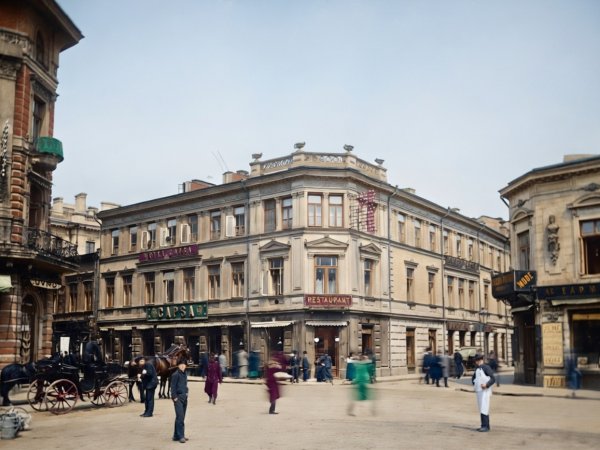
Interwar Bucharest was a city where, after nightfall, social life moved from private salons to cafés, restaurants, pastry shops, hotels, and terraces. Romania’s capital was undergoing a period of rapid modernization, while the city center had become a spectacular mix of politicians, aristocrats, artists, writers, journalists, businessmen, and adventurers. For the upper classes, going out was not simply about having a meal or drinking coffee, but also about socializing, displaying status, and, sometimes, putting on a show. Calea Victoriei and the area around University Square represented true axes of this fashionable social life. Cafés were places where newspapers were read, the latest political and cultural events were discussed, and friendships or alliances were formed. Restaurants offered menus inspired by European cuisine, while luxury hotels housed salons, restaurants, bars, and cafés frequented by the capital’s elite. Historical sources mention dozens of such establishments, including Modern, Continental, Splendid Parc, Ambasador, Lido, Cina, Elysée, Bulevard, Gambrinus, Monte Carlo, and Athénée Palace. Within this extremely lively world, several addresses stood out as genuine institutions of the city. Some were favored by politicians and aristocrats, others by writers and artists, while certain restaurants attracted a broader public. Five of them remained particularly strongly associated with interwar Bucharest.
1. Capșa, where politics, literature, and high society met
Of all the establishments in interwar Bucharest, Casa Capșa probably had the strongest reputation as a center of fashionable and intellectual life. Located on Calea Victoriei, the institution originated with the famous pastry shop founded in 1852 by the Capșa brothers. In 1886, Grigore Capșa added the hotel and opened the “Salonul de consumație,” which would become the celebrated Café Capșa.
During the interwar period, Capșa was no longer simply an elegant pastry shop. It was a complex that included a hotel, restaurant, café, and pastry shop and attracted an important part of Bucharest’s elite. Archival documents describe it as a meeting place for high society, political and artistic circles. Politicians, writers, actors, journalists, and members of old boyar families could all be found there.
The establishment’s reputation was also connected to its confectionery products. Casa Capșa had become famous for its chocolate and sweet specialties, prepared according to Western European models. In a Bucharest that sought to imitate the great European capitals, a visit to Capșa was also a declaration of social status.
The atmosphere of the café, however, was perhaps more important than the menu. Performances, books, scandals, and political events were discussed there, and the tables could become veritable tribunals of public life. Capșa thus remained one of the clearest symbols of a Bucharest that aspired to be European.
2. Corso, the café of writers and journalists
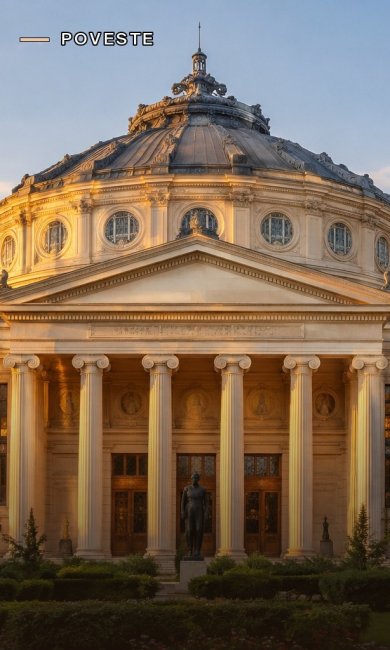
If Capșa brought together elites from several fields, Café Corso had a special reputation among the literary and journalistic worlds. The establishment was located on Calea Victoriei, opposite the Royal Palace and close to the Romanian Athenaeum, in one of the capital’s busiest areas. Corso became one of the favorite meeting places of intellectuals and Bucharest’s bohemian circles.
The café was associated with Finkelstein, known at the time as “Papa” or “Baron” Finkelstein, and was decorated in a style inspired by Central European cafés. Among those who crossed its threshold were writers and publicists such as Ion Vinea, Victor Eftimiu, Tudor Vianu, Zaharia Stancu, and Șerban Cioculescu. Memoirs and historical accounts also mention Mircea Eliade, Emil Cioran, and Petre Țuțea in connection with the atmosphere of this establishment.
Corso was particularly renowned for its “șvarț,” the black coffee that was popular in interwar Bucharest and influenced by the Central European tradition. For its customers, however, coffee was merely an excuse. The real attraction was conversation, and the café tables became places for debate, polemics, and observations about the city.
Corso disappeared in 1939, but it remained in the memory of literary Bucharest as one of the places where part of the capital’s intellectual atmosphere took shape. At a time when a café could serve as a genuine “office” for a writer, Corso was one of the best-known addresses of the city’s bohemian circles.
3. Continental, the elegant restaurant in the heart of the capital
The Continental Hotel and its restaurant belonged to another category of interwar Bucharest establishments: major hotels that offered their customers not only accommodation but also restaurants, cafés, and social spaces. The history of Bucharest’s cafés shows that the city’s important hotels gradually became genuine centers of public life. Continental was among these prestigious addresses.
Guides to Bucharest from the early 20th century presented Continental as a hotel and restaurant with an excellent location in the heart of the capital. The establishment was part of the circuit of the city’s most important addresses, frequented by visitors and Bucharest residents seeking Western-style services and atmosphere.
The restaurant fitted perfectly into the image of a Bucharest that was attempting to rival, at least in certain areas, the great European capitals. Around the luxury hotels gathered a clientele made up of businessmen, politicians, diplomats, and members of fashionable society.
Continental should also be viewed in the context of the culture of hotels and cafés that had developed in the city center. These spaces were not intended exclusively for tourists. They served as meeting places for Bucharest residents as well, while the hotel café offered an appropriate setting for conversations, reading, business, or simply observing the people passing through the center of the capital.
4. Athénée Palace, the preferred address of diplomats and high society
Athénée Palace occupied a special place in the landscape of interwar Bucharest. The hotel had opened in 1914, and its location close to the Romanian Athenaeum and the Royal Palace area made it one of the capital’s most prestigious addresses. The hotel quickly became associated with diplomats, politicians, journalists, and foreign visitors.
During the period between the two world wars, Athénée Palace was much more than a hotel. Its restaurant, cafés, and social spaces helped transform it into an important center of public life. People from very different worlds crossed paths there, from aristocrats and diplomats to journalists and representatives of the business community.
The hotel’s location was essential. The Athenaeum, Royal Palace, Calea Victoriei, and numerous cultural, administrative, and political institutions were nearby. For anyone who wanted to be seen in the heart of Bucharest, the area was one of the best choices.
Athénée Palace also became a landmark of the capital’s cosmopolitan life. The presence of foreigners, the widespread use of French, Western fashion, and the international hotel atmosphere all contributed to the image of a Bucharest that, during the interwar years, was consolidating its reputation as “Little Paris.”
5. Caru’ cu Bere, where the less aristocratic Bucharest also came to celebrate
A list of popular establishments in interwar Bucharest could not leave out Caru’ cu Bere. Unlike the exclusive salons of some hotels or the cafés favored by intellectuals, the famous beer house on Stavropoleos Street had a broader character, attracting customers from different social backgrounds. At the same time, its prestige and spectacular interior had turned it into one of the city’s landmarks.
The establishment’s history began in the 19th century. The Mircea brothers, originally from Transylvania, opened the beer house in 1879, while the present building dates from 1888. By the interwar period, Caru’ cu Bere was already one of the capital’s best-known beer houses, appreciated both for its service and its atmosphere.
The establishment offered a different kind of entertainment from Capșa or Corso. Here, the meal was more central, beer was an essential part of the experience, and the atmosphere could be much louder and more cheerful. Caru’ cu Bere represented the gastronomic and popular side of Bucharest without lacking elegance or prestige.
Its importance to the city’s history is also confirmed by the fact that beer houses represented a distinct category of Bucharest’s urban life. During the interwar period, other well-known establishments included Mircea, Trocadero, Bavaria, and Gambrinus.
Interwar Bucharest, a city that lived at the café
The five establishments illustrate, each in its own way, a part of interwar Bucharest’s social life. Capșa was associated with high society and political and cultural circles, Corso with writers and journalists, Continental with hotel elegance, Athénée Palace with the cosmopolitan and diplomatic world, while Caru’ cu Bere represented the tradition of the beer house and Bucharest’s culture of celebration.
They were far from the only places where the capital’s social life unfolded. Historical sources mention numerous other restaurants, cafés, and gardens, including Elysée, Modern, Lido, Cina, Monte Carlo, Bulevard, Frascati, Terasa Otetelișanu, Royal, Kübler, and High Life.
The interwar café played a role that modern establishments only partially fulfill. It was simultaneously a social space, an informal newsroom, a political stage, a meeting place, and a cultural center. Newspapers were read at the tables, while conversations about politics, theater, literature, or the scandals of the day could continue for hours.
That is why the history of these establishments tells more than the story of restaurants and cafés. It reconstructs the image of a capital where people went out to eat, drink coffee, or have a glass of beer, but also to be seen, learn the latest news, and take part in the life of the city. In interwar Bucharest, a meal at Capșa, a coffee at Corso, or an evening at Caru’ cu Bere could each represent, in its own way, a small journey into the vibrant world of “Little Paris.”
We also recommend: Symbols of Bucharest: Casa Capșa, “the only intellectual venue” of the interwar period, where writers had their “artistic baptism”