Bucharest neighborhoods for every lifestyle
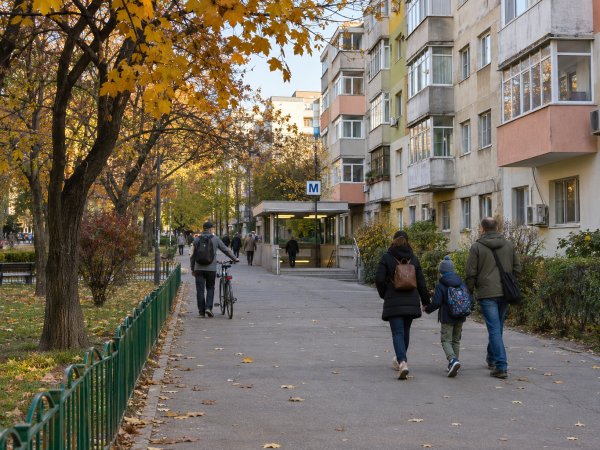
Drumul Taberei and Titan both belong on your shortlist if you want to walk to the park and the metro. Militari may be more practical if you take classes at Politehnica, while Rahova or Drumul Sării could shorten your commute if you work in the southwest of the city. If you’re moving to Bucharest from abroad, the choice is just as practical: starting work at nine in a Pipera office is one thing; catching the six o’clock minibus to a construction site is another.
How much difference does the neighborhood make to your monthly budget? In November 2026, the King property index put the median asking rent for a one-bedroom apartment (listed in Romania as două camere, or “two rooms”) at €450 in Drumul Taberei and Berceni, €460 in Rahova, €500 in Militari and Titan–Balta Albă, and €750 in Pipera. These figures come from listings over the previous 90 days, so they don’t necessarily reflect the rents tenants actually agreed to pay. Still, they put the choice in perspective: just €10 a month separated Drumul Taberei from Rahova. If living in one of them means you can walk to work, that may well decide it.
For families: Drumul Taberei and Titan for parks and metro access, Rahova to stay close to the people you rely on
In Drumul Taberei, a good place to start viewing homes is around Drumul Taberei Park, also known as Moghioroș. Look between the park and an M5 metro station, and taking your child outside needn’t mean getting back in the car. For a parent commuting into central Bucharest, the destination matters. The M5 takes you to Eroilor, where you can change to the M1 or M3. If you work near Eroilor, it’s a direct journey. If you need to go farther, allow time for the change.
In the east, Titan offers a similar combination around Alexandru Ioan Cuza Park, also known as IOR, and Titan metro station. If two apartments look equally good in the listings, one walk can help you choose: set off from the building, walk to the school, then carry on to the park entrance you’d use in the afternoon. With a young child or a stroller, the number of roads you have to cross tells you more than the straight-line distance.
Rahova is worth considering if your child’s preschool, their grandparents or your workplace is already in the southwest. If you’re looking near Sebastian, Sebastian Park gives you a destination for everyday outings. For an address closer to Piața Rahova, start with the stop you’d actually use. Two homes can appear under the same neighborhood name, yet one lets you pick up your child from their grandparents’ on foot while the other adds a separate trip every evening.
For students and young people starting their first job: Militari, Grozăvești or Drumul Sării?
In Militari, Gorjului and Lujerului are useful metro stations to look for if you have classes around Politehnica. Both are on the M3, as is Politehnica station, so you can live farther west and get there without changing trains. Check which building your classes are in, though. If you spend most days on another part of campus or much of your time in Regie, an apartment in Grozăvești could mean walking more and waiting less. Ask for the exact address when a listing says “Militari Residence,” too: a home in Chiajna and one near Gorjului metro station mean different commutes.
Drumul Sării is worth a search of its own, particularly if you work between western Bucharest and the city center. At the Răzoare end, check the walk to Academia Militară metro station. If the apartment is closer to Calea 13 Septembrie, you may use the bus more often: the Drumul Sării STB stops are on Calea 13 Septembrie itself. If you work on that road, being close to your workplace may be worth more than being close to the metro. Compare listings on the stretch of street you’re interested in rather than relying on an average rent for the neighboring area.
If you work in retail, in a restaurant or at events, check the journey home first. A good connection at 2 p.m., when your shift starts, tells you little about how you’ll get home after closing. Enter the address and your usual finishing time in InfoTB. If you’re choosing between a room near work and a cheaper one across town, factor in the rides you’d have to pay for on nights when public transport doesn’t get you home.
For people moving from abroad: where your shift starts matters more than the “expat neighborhood” label
Delivery work, construction sites, warehouses and restaurant kitchens all belong in a discussion about where to live when you move to Bucharest for work. An Economica.net analysis based on data from Romania’s General Inspectorate for Immigration lists freight handlers, couriers, construction laborers and kitchen assistants among the roles for which Romanian employers have recruited workers from abroad. The figures cover non-EU recruitment across Romania. They don’t tell us which jobs most foreign residents in Bucharest do, but they do show who gets left out of a guide focused entirely on offices in the north.
If you work on a construction site or in a warehouse, ask for the address where you’ll be working or the pickup point for the company minibus. If it collects the crew in western Bucharest, it makes sense to compare Militari and Drumul Taberei first. If it leaves from the south and you can reach it from Berceni without changing buses twice before sunrise, start there. For a temporary construction job, there’s another useful question to ask before signing a lease: will the pickup point stay the same when work moves to the next site?
If you make deliveries by bike, the viewing doesn’t end at the apartment door. Where can you keep the bike overnight? Will it fit in the lift, or will you have to carry it down four flights of stairs every morning? If you cover several areas, compare an address in Obor with one in Dristor, for example, by looking at where you usually start and finish your shift. Both neighborhoods had the same median asking rent for a one-bedroom apartment: €500. The better choice may come down to a part of your working day that the rent figure can’t capture.
Pipera remains an option if you work there or your child goes to school there and the rent fits your budget. But even a job by Pipera metro station doesn’t mean you have to live in the north. Piața Sudului and Apărătorii Patriei, both in the south, are on the same M2 line. If your workplace really is close to the station, you can compare rents at either end of the journey without having to factor in a change of trains. If the employer simply says the office is “in Pipera,” ask for the address: the walk from the metro exit to the building is part of your commute.
Read also: How night public transport works in Bucharest: 24 STB lines from Piața Unirii to the neighborhoods
Life beyond Bucharest: choosing between Bragadiru, Măgurele, Pantelimon, Berceni, Corbeanca and Snagov
If you’re moving to Ilfov County for a garden or an extra room, consider how much time you’ll actually have to enjoy it. A house farther from the city may suit someone who works from home and goes into Bucharest twice a week. For a family whose child starts school in the capital at 8 a.m. and whose parent finishes a shift at 10 p.m., the same address means a different daily routine. Bragadiru, Măgurele and Pantelimon are towns; Berceni, Corbeanca and Snagov are communes. More useful than the label “suburb” is the question: how many of your everyday journeys can you make without a car?
Bragadiru and Măgurele are worth comparing if work, school or family ties take you to southwestern Bucharest. From the Diamantului area of Bragadiru, bus 484 runs to Ghencea and the 485 serves Drumul Taberei Park. For a teenager with classes or sports practice in Sector 6, living within walking distance of those routes could mean getting home independently. In Măgurele, the journey varies even within the town: bus 464 links Vârteju to Depoul Alexandria, while express bus 781 connects the ELI-NP research campus to Basarab railway station. At a viewing, walk from the front gate to the stop. The distance from the town center won’t tell you how long that takes.
Pantelimon and Berceni each share a name with a Bucharest neighborhood, but the addresses aren’t interchangeable. If you work in eastern Bucharest and are considering the town of Pantelimon, one route to check is the 455, which runs between Victor Dumitrescu and Bulevardul Basarabia. To the south, bus 475 connects the Mega Parc area of Berceni commune to Piața Sudului. A house in the commune isn’t necessarily a few minutes’ walk from the metro. If you work shifts in a shop, restaurant or warehouse, use the Bucharest–Ilfov public transport timetable to find the service you’d take after closing. It may matter more than the morning connection.
To the north, Corbeanca and Snagov suit different priorities. If you work around Piața Presei, look in Corbeanca for a home near the 441 from Ostratu or the 441B from Tamași. Both give you an alternative to driving to that part of the city. In Snagov, the lake and forest may tip the balance if you work from home and want to spend time outdoors during the week. If you have older children, try their journeys too: could they visit a friend or get to practice on their own? A garden changes how a family spends its afternoons, but so does having to drive someone every time they want to go out.
Before settling on an address in Ilfov, go back on a weekday, first at the time you’d leave for work and then again in the evening. Try the walk to preschool with a stroller or the walk home from the bus stop. See whether you can pick up bread, stop at the pharmacy or collect your child from school without making a separate car trip. That’s when the difference between two homes becomes clear: one may give you a bigger garden, the other an extra hour at home every evening.