How Bucharest Belle Époque was seen through the eyes of foreign travelers: fashionable promenades in a Frenchified city
- Articles
- 25 MAY 26
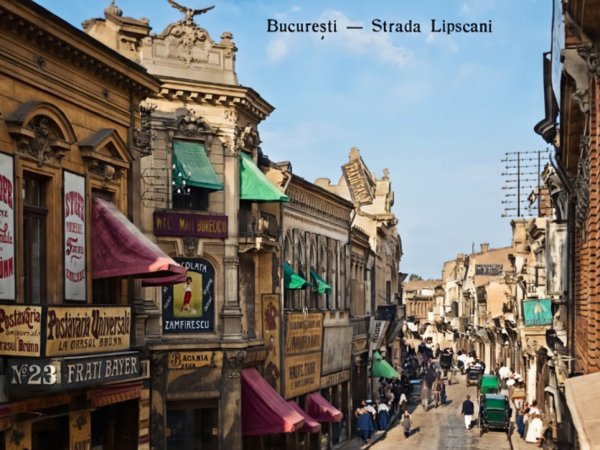
In the 19th century and at the beginning of the Romanian Belle Époque, Bucharest was a city of spectacular contrasts, of ostentatiously displayed luxury and of a continuous desire for westernization. The foreigners who arrived in the capital of Wallachia discovered an exotic city, situated between East and West, where French elegance permanently mixed with Levantine influences and with the realities of an urban space still dominated by muddy streets and dust. Memorialists, diplomats and Western travelers left numerous fascinating descriptions about the Bucharest of those times. Many of them were impressed by the impressive number of carriages, by the luxury of the boyars and by the spectacular fashionable promenades that transformed the city into a true social theatre. At the same time, those same visitors also observed the enormous differences between the social classes, between the opulence of the aristocracy and the difficult conditions of the Bucharest streets. For the visitors coming from Paris, Vienna or London, Bucharest seemed like a city in continuous transformation, a space in which the elites were trying to copy the Western style and to create a sophisticated society inspired by the great European capitals. For this reason, Bucharest would later receive the nickname “Little Paris”.
The carriage, the supreme symbol of social status
In the Bucharest of the first half of the 19th century, walking was not considered suitable for people from high society. The boyars and wealthy families traveled almost exclusively on horseback or by carriage, and the possession of an elegant vehicle represented an essential symbol of social prestige.
The streets of the Capital were often full of mud or dust, and moving around without a carriage became uncomfortable and even humiliating for someone who desired respectability. The British traveler Thomas Thornton observed that only ordinary people walked through the city, while for the boyars the carriage was both a luxury object and a necessity.
Another Western traveler remarked that Bucharest could rival the great European capitals regarding the number of carriages in relation to the population. The Frenchman F.G. Laurençon placed Bucharest among the most important cities in Europe from this point of view, and the impression was shared by other foreign visitors as well.
Around the year 1857, a British traveler noted that the value of a capital could be evaluated according to the number of private carriages, and Bucharest occupied a surprisingly high place in this hierarchy. Many boyars even had two vehicles: one intended for the lady of the house and another for the master.
The fashionable promenades at the Boulevard
The fashionable life of Bucharest had its own rituals, and carriage rides represented one of the most important social events of the day. The elegant ladies of the city used to go out for promenade at the Boulevard, in a true spectacle of fashion, wealth and social status.
These rides took place with almost ceremonial strictness, especially in the afternoon, between 4 PM and 6 PM. The favorite destination was the Herăstrău area, where the Bucharest elites met for socialization and for exposing themselves to the eyes of others.
The historian Adrian-Silvan Ionescu observed that the women from high society endured without complaint the dust or discomfort of the roads because the main purpose of the promenade was to be seen. In reality, the walk became a true social parade in which elegance, fashion and spectacular appearances were carefully analyzed.
Count Wilkinson related that at Herăstrău the strollers could refresh themselves with ice cream, a refined luxury for those times. Some of the participants in the promenade went even farther, to the Băneasa area, transforming the outing into a true fashionable excursion.
Foreigners transcribed the name of Herăstrău differently, depending on the language and hearing of each one: Hellesteo, Hellestoo, Kerestreo or Kilistrio. These variations show how exotic and difficult to understand Bucharest seemed for Western visitors.
The luxury of the carriages and the competition between boyars
Carriages had become a true field of competition between the great boyar families. Some vehicles were brought directly from Vienna or Paris and represented the newest European models, while others preserved old styles inspired by the splendor of Oriental and French courts.
The Scottish officer John Macdonald Kinneir described the spectacular contrasts between the different types of carriages encountered on the streets of Bucharest. Some were modern, elegant and pulled by Arabian, Russian or Austrian thoroughbred horses, while others seemed heavy and excessively ornamented, reminding one of the era of Louis XIV.
The imports of coaches and carriages from Vienna had become extremely important for the Romanian boyars. Numerous letters and commercial documents show the concern of the aristocracy for acquiring the most elegant and modern vehicles.
The historian Nicolae Iorga reproduces in his works the extravagant demands of the boyars who ordered Viennese carriages: these had to be modern, solid, elegant and different from anything else that already existed in Bucharest. The desire for exclusivity had become essential for the elites of the time.
The maintenance and repair of these vehicles was carried out by German carriage makers settled in the Principalities. Western craftsmen were extremely appreciated for their skill and contributed to the westernization of the appearance of the city.
The coachmen, the arnăuți and the spectacle of Oriental luxury
Not only the carriages were impressive, but also the people accompanying them. The coachmen, footmen and arnăuți were part of the spectacular image of aristocratic Bucharest and contributed to the display of the social status of their masters.
The wealthy boyars dressed their servants in sophisticated uniforms inspired either by Russian fashion or by Western hussar uniforms. At the back of the carriages stood servants in elegant liveries and bicorne hats, according to the Western model, or arnăuți wearing spectacular Oriental costumes.
The arnăuți, often Albanians by origin, represented one of the most exotic symbols of boyar luxury. The memorialist Emanoil Hagi-Mosco described in detail their costumes, filled with gold, silver, silk and cashmere.
The image of the arnăut standing on the carriage box was an impressive one: the turban, the cloak, the red vest and the decorative weapons gave him a martial and theatrical appearance. In contrast, the coachman often appeared modestly dressed, which further emphasized the visual effect of the entire entourage.
Even toward the end of the 19th century, some aristocrats continued to keep arnăuți in their service, although the fashion was already beginning to disappear. It was an attempt to preserve the perfume of a declining Oriental era.
Bucharest through the eyes of Western critics
Not all foreign travelers were however delighted by the social customs of the Capital. Some criticized the exaggerated dependence on carriages and the lack of a walking culture.
Westerners quickly observed that a foreigner without a carriage risked being looked upon with superiority and even contempt. The city seemed built for vehicles and less for pedestrians.
The Russian traveler Anatole de Demidoff, passionate about walking tours, criticized this fashion of permanent transportation by carriage because it limited his possibility to explore the city freely and to know the local society better.
At the same time, Western diplomats remarked the astonishing luxury of the public cabs that appeared in Bucharest around the years 1830-1840. These cabs could be rented and offered surprisingly elegant conditions, with red velvet benches and comfortable springs.
The French diplomat Edouard Antoine Thouvenel observed that even the public means of transportation in Bucharest preserved something of the aristocratic refinement specific to the city.
The spectacle of winter and the sleigh races
If during summer Bucharest was dominated by elegant carriages and promenades at the Boulevard, winter completely transformed the urban landscape. Snow brought into the foreground the luxurious sleighs, which had become true works of art.
William Wilkinson described sleighs carved in spectacular shapes of swans, shells or dragons, painted in striking colors in order to contrast with the whiteness of the snow. Some carried imaginary coats of arms, created according to the fantasy of the carriage craftsmen.
The horses were decorated with ornate harnesses and bells producing crystalline sounds. The atmosphere became festive and almost carnivalesque.
The sleigh races represented one of the most spectacular entertainments of the Bucharest winter. Nobles, merchants, clerks and foreigners participated in improvised races on the snow-covered streets.
Fashionable Bucharest and the spirit of Belle Époque
Through all these descriptions, Bucharest appears as a city in a permanent search for Western elegance. The Romanian elites adopted Parisian fashion, ordered Viennese carriages and tried to transform the Capital into a space comparable with the great European cities.
At the same time, however, the city preserved strong Oriental and Balkan influences, which gave it a special charm. Precisely this combination between East and West fascinated foreign travelers.
The fashionable promenades, the luxury of the coaches, the arnăuți in spectacular costumes and the sleigh competitions composed the image of a lively, exuberant and theatrical Bucharest. It was a city in which social appearances had enormous importance and where every public outing became a spectacle.
The Bucharest Belle Époque did not mean only modernization and French influence, but also a period in which the Capital built its fashionable and cultural identity. The city was beginning to transform itself into a cosmopolitan center, admired and criticized equally by Western visitors.
A city of contrasts and lost elegance
Seen through the eyes of foreign travelers, the Bucharest of the 19th century was a fascinating city, full of contradictions. On one hand there existed the extravagant luxury of the boyars and the desire for westernization, and on the other hand the reality of muddy streets and of a profoundly unequal society.
Nevertheless, the charm of Bucharest came precisely from these contrasts. The city had energy, color and a vitality that many visitors considered memorable.
Today, many of the fashionable rituals of that era have disappeared, and the elegant carriages have been replaced by automobiles and modern boulevards. However, the stories left by foreign travelers keep alive the image of a sophisticated, exuberant and deeply French-influenced Belle Époque Bucharest.
In the collective memory of the city, that era remains one of the most romantic and spectacular periods in the history of the Capital, a time in which the promenades at the Boulevard, the luxurious coaches and the elegance of the boyars transformed Bucharest into a true urban spectacle.
We also recommend: The Beauties of Belle Époque Bucharest and How It Transformed into a European Capital