Famous houses in Bucharest: Ecaterina and Eugenia, the twin villas in the heart of the Cotroceni neighborhood
- Articles
- 06 MAR 26
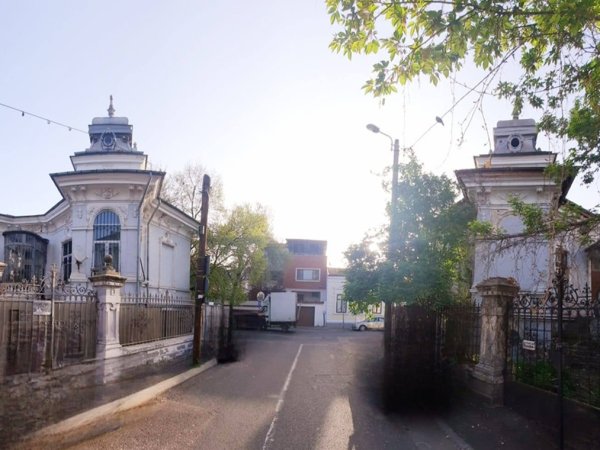
In the heart of the city of Bucharest, in a neighborhood considered by many to be the most beautiful residential area of the Capital, there are two buildings that immediately catch the eye through their elegance and their unique story. In Cotroceni, on Costache Negri Street, stand two villas built in mirror image, known as Ecaterina and Eugenia. Although today they seem to have different destinies, they were conceived as a unified whole, a symbol of balance and architectural refinement from the beginning of the 20th century.
Cotroceni, the aristocratic setting of an urban story
The two twin houses tell a story about family, prestige and the passing of time. Named after the daughters of the French general Francois Rignault, the villas were offered as dowry, thus marking an important moment in the life of a family with foreign roots, yet deeply connected to the life of old Bucharest. Today, Ecaterina and Eugenia are no longer identical, but precisely this difference turns them into a lesson about the fragility of heritage and about the way in which each building, like a human being, follows its own destiny.
Cotroceni neighborhood established itself over time as one of the most select and best-preserved historical areas of the Capital. Located near Palatul Cotroceni, the former royal residence, the neighborhood attracted, since the end of the 19th century, prominent personalities, diplomats, high-ranking military officers and members of the intellectual elite.
Its quiet streets, shaded by old trees, are flanked by villas built in varied styles – from Neo-Romanian to eclectic or neoclassical. The atmosphere has something intimate and bohemian, and the proportions of the houses, the secluded gardens and the carefully crafted architectural details give the area a Western air. It is no wonder that, for many Bucharest residents, Cotroceni remains synonymous with elegance and good taste.
In this privileged setting, on Costache Negri Street, the villas Ecaterina and Eugenia fit perfectly, yet stand out through their symmetry. Built in mirror image, they create the impression of a gateway to another era, in which harmony and proportion represented fundamental principles of residential architecture.
The villas Ecaterina and Eugenia, a dowry with symbolic value
The story of the two houses begins with the French general Francois Rignault, father of two daughters who were to give their names to these residences: Ecaterina and Eugenia. The villas were offered as dowry, a gesture which, in that era, was not only a practical one, but also a declaration of social status. To give a house meant to offer stability, security and a privileged position in a society in which real estate property was a clear sign of prestige.
Initially conceived as two almost identical constructions, the villas impress through their volumetric balance and their ornamental details. The façades, richly decorated, reflect Neo-Romanian and eclectic influences, with elegant frames, tall windows and decorative elements that refer to the refined taste of the early 20th century. Their symmetry was, originally, almost perfect, suggesting the idea of family harmony and continuity.
Over time, however, the lives of the two sisters and the historical changes left different marks on the houses. Like mirrors that no longer reflect the same image, Ecaterina and Eugenia began to differentiate themselves, each bearing the imprint of interventions and of the way in which it was inhabited or abandoned.
Different destinies under the same sky
Today, the villa Eugenia is inhabited and cared for. The presence of residents inevitably meant interventions on the structure or compartmentalization. Some modifications affected the initial charm of the building, diminishing the stylistic unity or the authenticity of the details. However, the fact that it is inhabited protects it from accelerated degradation, and the daily care ensures it a certain stability.
By contrast, the villa Ecaterina has largely preserved its original architecture, with all its charming details. The façade still speaks about the elegance of a bygone era, and the initial proportions have remained unaltered. Nevertheless, the lack of residents has turned it into an empty house. Like all uninhabited buildings, it begins to deteriorate: the plaster cracks, the decorative elements are affected by bad weather, and the garden loses its former order.
The contrast between the two villas is deeply symbolic. One has adapted to the times, at the cost of aesthetic compromises; the other has remained faithful to its original form, but pays through abandonment. Their situation reflects the frequent dilemma of Bucharest heritage: how do we preserve authenticity without condemning the building to oblivion?
Architecture as a witness of time
Ecaterina and Eugenia are not only two beautiful houses, but silent witnesses of the transformations through which Bucharest has passed in the last century. They survived wars, political changes, nationalizations and the post-communist transition. Each stage left its mark on them, sometimes discreetly, sometimes visibly.
Their architecture speaks about a period in which building a villa was an act of social representation. The proportions, the ornamentation, the placement on the plot – all were carefully thought out. It was not only about a living space, but about a visiting card of the family. The fact that they were offered as dowry once again underlines their symbolic importance.
Today, the two villas also raise a broader issue: that of protecting residential heritage in historical areas. In a city under continuous real estate pressure, old houses become vulnerable. They are either excessively modified, or left in disrepair, waiting for an uncertain fate.
A lesson about fragility and continuity
Viewed together, Ecaterina and Eugenia are more than two mirror constructions. They are a metaphor about life and the passing of time. Like people, each house has its own destiny, shaped by the decisions of those who inhabit it or abandon it.
The inhabited villa lives, breathes, adapts. The empty one preserves the memory of the past better, but slowly fades under the pressure of time. Between the two lies a subtle tension, which gives charm and melancholy to Costache Negri Street.
In the heart of Cotroceni, these twin villas remain a landmark of former elegance. They remind us that heritage is not only a matter of walls and façades, but also of responsibility. Each generation decides, through its actions, whether such houses will continue to tell stories or will become only photographs in an album of the lost city.
Ecaterina and Eugenia are, in essence, two faces of the same history. And their story, still open, is part of the living memory of Bucharest.
We also recommend: Famous houses in Bucharest: Cărturești Verona, the mansion of former Prime Minister Dimitrie A. Sturdza, founder of PNL, Cuza’s secretary