Famous houses in Bucharest: Cărturești Verona, the mansion of former Prime Minister Dimitrie A. Sturdza, founder of PNL, Cuza’s secretary
- Articles
- 02 MAR 26
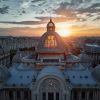
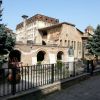
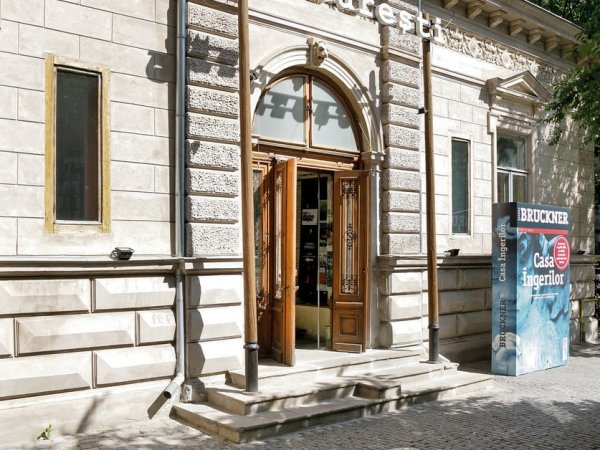
In the heart of Bucharest, on Pictor Arthur Verona Street 13-15, stands one of the city’s most impressive historic buildings, known today as Cărturești Verona. In the past, this was the residence of Dimitrie Alexandru Sturdza (1833–1914), a major politician, historian, economist, and member of the Romanian Academy. The house is an eloquent example of bourgeois dwellings from the 19th century, preserving both architectural charm and cultural and symbolic value. Since 2003, the space has hosted the Cărturești Verona bookstore, internationally recognized for its atmosphere and impressive book collection, awarded Bookstore of the Year at the London Book Fair International Excellence Awards 2021.
The architecture of the Sturdza house
The Dimitrie Sturdza house is a classic example of 19th-century bourgeois residential architecture. The floor plan is simple but efficient: a central hallway runs through the building, around which rooms are symmetrically arranged on both sides. This structure was not only practical but also reflected concern for aesthetics and order, a distinctive feature of the urban elite’s residences of the time.
The interior preserves the original ornamentation: ceiling moldings, door frames, and decorative neorenaissance and neoclassical details. Many doors are double and painted with arabesque motifs, giving the space a sophisticated character. In the right half of the house are two white stoves, which not only heated the rooms but also served as prestigious decorative elements. The exterior of the building is equally impressive, with elaborate ornaments emphasizing the social status of the owner.
The house is listed as a historical monument by the Ministry of Culture, confirming its historical and architectural value. It perfectly reflects the tastes and lifestyle of the political and intellectual elite of Bucharest at the end of the 19th and beginning of the 20th century.
Dimitrie A. Sturdza: a life dedicated to the state
Dimitrie A. Sturdza was one of Romania’s longest-serving prime ministers, leading the government in four terms between 1895 and 1909, totaling over ten years in the highest political office. Despite his professional success, the stress and multiple responsibilities severely affected his health, leading to nervous episodes and sometimes eccentric behavior. Legends of the time recount that during government meetings, Sturdza sometimes lost his temper and “barked” at ministers, a sign of the constant tension and pressure he endured.
Sturdza received a solid education at the Mihăileanu Academy, continuing with studies in law, economics, and history in Germany. His political career began in 1857 when he was appointed secretary of the ad hoc Divan in Moldova. After the Union of the Principalities in 1859, Alexandru Ioan Cuza appointed him personal secretary, but their relationship quickly deteriorated. For his opposition to Cuza, Sturdza was exiled to a monastery in Moldova, an experience that shaped his cautious and calculated attitude toward power.
After his release, Sturdza joined Ion Brătianu’s liberal government and contributed to the founding of the National Liberal Party (PNL), which he later led after Brătianu’s death. Throughout his political career, he held various ministerial portfolios: Agriculture, Commerce, Public Works, and Finance. Between 1882 and 1884, he was president of the Romanian Academy, further consolidating his prestige in cultural and intellectual circles.
Sturdza’s personality and reputation
Authors of the book “The Sturdzas: Chronicle of a Historic Family” describe Sturdza as an ambitious and vain politician, cautious about innovations and attached to the comfort of familiar surroundings. He had moments of pathos, moving rapidly from emotion to reason. A memorable episode was his reconciliation with General Manu at the laying of the cornerstone of Filaret Hospital, during which Sturdza, with tears in his eyes, said: “Here, where an asylum dedicated to human suffering is being built, here, where an act of Christian charity is being performed today, the hatred among well-meaning people must disappear. Allow me to embrace you.”
The first signs of illness appeared amid political tensions. During his term, party colleagues in the “Oculta” faction tried to remove him, and publicist attacks, such as Ion Brezianu’s book “D.A. Sturdza, alleged head of the Liberal Party. Calamity on the Romanian Country”, damaged his reputation further. Newspapers of the time, including Furnica and Adevărul, caricatured the internal political struggles, illustrating the constant pressure he faced.
Illness and withdrawal from public life
Sturdza’s health visibly deteriorated in the early 1900s, confirmed by foreign specialists in 1908. At that time, he was removed from all public offices and decided to retire to Paris. There, at the St. James Hotel, he suffered a violent nervous breakdown, which led to his hospitalization at the St. Antoine Hospital. Titu Maiorescu noted: “It is the end. Beginning of cerebral paralysis; episodes of senile alienation, sometimes with violent irritation, sometimes in the form of religious mania, crosses, requests for forgiveness.”
After this episode, Sturdza never returned to political life. He died at the age of 81, on October 8, 1914, in a sanatorium, leaving behind a complex legacy: an impressive political career, significant contributions to culture and social sciences, and a house that continues to symbolize modern Bucharest.
Cărturești Verona: the living legacy of a historic house
Today, the Sturdza house functions as the Cărturești Verona bookstore, a space that unites historical architecture with contemporary cultural life. Visitors can enjoy the interwar atmosphere of the building, the ornate ceilings, double doors with arabesques, and the extensive book collection and cultural events hosted here.
The house is located in Sector 1, Dorobanți neighborhood, near Magheru Boulevard and the Aro-Patria cinema, serving as a landmark for both locals and tourists. It illustrates how historical heritage can be integrated into contemporary urban life, transforming old buildings into vibrant spaces for culture and education.
We also recommend: Cărturești Carusel, the jewel inside the Chrissoveloni Palace. The history of the most beautiful bookstore in Romania