Eufrosina Popescu, the first great Romanian artist on the international stage, has a street named after her in Bucharest
- Articles
- 09 JUL 26
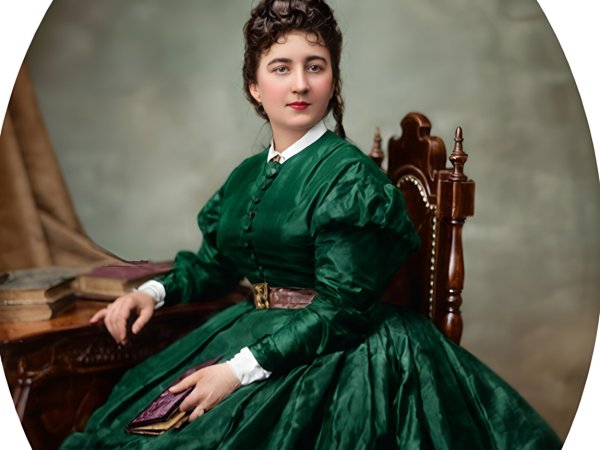
Few female personalities have played such an important role in the history of Romanian theatre as Eufrosina Vlasto Marcolini Popescu. Considered the first great Romanian artist to achieve genuine success on Europe's lyrical stages and, later, one of the most highly acclaimed actresses of the Romanian theatre of the 19th century, Eufrosina Popescu opened a path that future generations of performers would follow. At a time when women found it difficult to appear on stage and the acting profession was viewed with reservation even within aristocratic circles, she managed to transform her talent, discipline and education into an extraordinary career recognised both in Romania and in the great cultural centres of Europe. Today, her name is preserved not only in the history of Romanian theatre but also on the map of the Capital. A street in Bucharest bears her name, commemorating the artist who, in many respects, was a true pioneer.
The childhood of an artist born in an era of change
Eufrosina Vlasto was born in Bucharest on 20 October 1821, during a year marked by political and social unrest. She came from the family of the nobleman Vlasto and his wife, Maria, growing up in an environment where education and culture held an important place.
From an early age, she displayed a remarkable inclination towards music, dance and recitation. Her talent was immediately evident, and her family gave her the opportunity to cultivate these abilities at a time when artistic education in Romania was only beginning to take shape.
In 1834, at just thirteen years old, the young girl, then known as "Frosa" Vlasto, became one of the first students of the School of Vocal Music, Declamation and Literature of the Bucharest Philharmonic Society, the first institution of its kind in Wallachia. The establishment of this school represented a decisive moment in the development of Romanian theatre and music, and the fact that Eufrosina was among its first twenty students would profoundly influence her entire career.
A modern artistic education
The Philharmonic School did not provide only stage training. Its students received a comprehensive education intended to prepare them to perform on any European stage.
Together with her colleagues Caliopi, Ralița Mihăileanu, Elenca and Mrs Lang, Eufrosina completed her studies at the Duport and Vaillant boarding schools, where she perfected her knowledge of foreign languages.
According to contemporary accounts, she eventually spoke fluent French, German, English, Italian, Spanish and Polish, an exceptional achievement for a woman in early nineteenth-century Romania.
Her first acting lessons were given by Costache Aristia, one of the pioneers of Romanian theatre, while her musical education was entrusted to Professors Bongianini and Conti. This combination of theatrical and musical training would define her entire artistic development.
Her first successes on the Romanian stage
Contemporaries described a young woman of remarkable beauty—tall, elegant and expressive. She possessed lively eyes, a captivating smile and a melodious voice, while her stage presence impressed audiences from her very first appearances.
Critics of the time occasionally reproached her for excessive elegance and costumes considered too sophisticated for certain roles. Nevertheless, her personal charm and artistic talent made such observations quickly forgotten by the public.
In the Philharmonic School's performances she played a wide variety of roles, ranging from ingénues and romantic heroines to male roles performed in disguise. She became the first Romanian actress to portray Hyacinta in "Scapin's Deceptions" and Lucinda in "Love the Doctor", both by Molière.
Although her acting experience was still developing, her musical talent was already unquestionable. Whenever she began to sing, audiences were captivated by the beauty of her voice, and any occasional imperfections in her interpretation were completely overlooked.
The first lyrical performances in the Romanian language
In 1835, the musical activity of the Philharmonic School was enriched by the arrival of Ioan Andrei Wachmann, one of the most important musicians of the period.
On 11 December 1835, his students presented the vaudeville "The Triumph of Love", considered the school's first major public examination. Among the performers who attracted particular attention was Frosa Vlasto, appreciated both for her acting and for her vocal qualities.
One year later, in June 1836, the same generation of students entered history by staging Gioachino Rossini's opera "Semiramide", performed for the first time in the Romanian language.
Alongside Caliopi, Ralița Mihăilescu, Ion Curie, Nicu Andronescu and Constantin Mihăileanu, Eufrosina Popescu took part in what is regarded as the beginning of Romanian lyrical theatre, these performances laying one of the foundations of what would later become the Romanian National Opera.
Marriage and the beginning of a new life
At only sixteen years of age, Eufrosina married Colonel Theodor Popescu, aide-de-camp to Prince Alexandru Ghica.
Her family life, however, proved to be short-lived. After only a few years of marriage, she became a widow, an experience that profoundly changed the course of her life.
Rather than abandoning her artistic career, she decided to continue her musical studies abroad, a remarkably courageous decision for a woman of her time.
Studies in Vienna and Paris
A decisive moment in her life came with her meeting the celebrated Italian soprano Josefina Ronzi.While passing through Bucharest, the renowned singer heard Frosa perform at an aristocratic gathering and immediately recognised the young Romanian's extraordinary potential. Her advice was unequivocal: such a voice had to be cultivated in Europe's great musical centres.
As a result, Eufrosina travelled first to Vienna, and later to Paris, where she continued her vocal studies. Although her attempt to debut at the Paris Opera did not succeed, the experience provided her with valuable artistic training and important professional connections.
Marcolini – the name under which she conquered Europe
In 1847, after spending two years in the French capital, Eufrosina settled in Italy, where she completed her studies and perfected her vocal technique.
It was there that she adopted the stage name Marcolini, inspired by the surname of her mother's first husband, Mărculescu. Under this new identity began her spectacular European career.
From Milan to Turin, from Venice to Florence, Verona, Pisa, Palermo, Bari and Naples, the Romanian artist achieved extraordinary success. She performed at the famous Teatro La Fenice in Venice and at La Pergola Theatre in Florence, receiving invitations to sing before the Italian aristocracy and at festivities organised by princely courts.
Her voice, stage presence and natural elegance captivated audiences everywhere she appeared. Contemporary chronicles speak of standing ovations, flowers, jewellery and valuable gifts presented to the artist after her performances.
Her fame reached some of the greatest composers of the age. Gioachino Rossini is said to have been fascinated by the Romanian artist's talent and beauty, while Giacomo Meyerbeer sent her letters filled with admiration following her performances in Nice.
However, Eufrosina Marcolini's success was not based solely on her vocal abilities. She also impressed audiences with the way she built her characters, transforming every role into a genuine dramatic interpretation. At a time when many singers focused almost exclusively on vocal performance, the Romanian artist demonstrated that music and theatre could become a single artistic expression.
In Venice, she also became a symbol of feminine elegance. It was said that even Countess Orsini, recognised as the city's supreme authority on women's fashion, sought information about the celebrated Marcolini's dresses and hairstyles before important artistic events.
Thus, before reaching the age of forty, Eufrosina Popescu had already become the first Romanian artist to build a genuine international career on Europe's great stages, paving the way for the international recognition that future generations of Romanian performers would later achieve.
Returning to Romania and the beginning of a new era in the national theatre
After spending nearly two decades performing on Europe's lyrical stages, Eufrosina Marcolini returned to Romania in 1859, a symbolic year in the country's history, marked by the Union of the Romanian Principalities. While she had earned recognition in Italy and France as an acclaimed soprano, a new chapter of her life was about to begin at home, one devoted almost entirely to dramatic theatre.
The Romanian public rediscovered her under the name Frosa Popescu, and success came quickly. The experience she had gained in the West gave her an undeniable advantage over most actors of the time. She possessed flawless acting technique, impeccable diction, an elegant stage presence and, above all, a rare ability to convey emotion without exaggerated theatrical gestures.
Over the next thirty years, Eufrosina Popescu became one of the central figures of Romanian theatre, dominating the stage before Aristizza Romanescu emerged as the country's new great theatrical star.
An impressive career on the Romanian stage
Between 1859 and 1889, the actress was constantly present in Romanian theatrical life. She performed both on the stage of the Great Theatre in Bucharest and in Iași, as well as with the companies led by Matei Millo and Mihail Pascaly, two of the most influential figures of Romanian theatre during that period.
Her repertoire was remarkably diverse. She portrayed characters from world drama, including Alzira in Voltaire's play, Rosina in The Marriage of Figaro by Beaumarchais, the Queen in Don Carlos by Friedrich Schiller, Lucrezia Borgia in Victor Hugo's drama, and the Duchess of Marlborough in A Glass of Water by Eugène Scribe.
At the same time, she promoted Romanian dramatic literature, appearing in plays written by Vasile Alecsandri, V. A. Urechia, George Sion, and Alexandru Macedonski. For Eufrosina Popescu, Romanian theatre had to develop alongside the great European stages, and performing the works of Romanian playwrights was an essential part of that mission.
The actress who changed the style of performance
During the second half of the nineteenth century, Romanian theatre was going through a period of transition. On the one hand, the old Romantic style still prevailed, based on declamatory acting, exaggerated gestures and heightened emotional expression. On the other hand, a new direction inspired by Western realism was beginning to emerge, promoting naturalness and authenticity.
Eufrosina Popescu chose the second path without hesitation. Influenced by her experience in Europe's major theatres, she created believable characters while maintaining complete control over her expressive means. She did not rely on spectacular effects merely to impress audiences but preferred an introspective style based on psychological analysis and a profound understanding of each role.
Contemporary critics noticed this innovative approach. Emotion was achieved not through excess but through moderation, balance and artistic sincerity. For Romanian theatre at that time, this represented a genuine revolution.
Moreover, Eufrosina Popescu became the first major Romanian actress to consistently embrace the realistic style of acting, making a decisive contribution to the modernisation of female stage performance.
Memorable roles and the admiration of her contemporaries
Throughout her career, Eufrosina Popescu portrayed dozens of characters that remained in the memory of audiences. One of her greatest triumphs came with the role of Catherine in the tragedy 3 December, written by Alexandru Macedonski.
Deeply impressed by her performance, the writer addressed her a heartfelt letter, later published in the press of the time. Macedonski declared that he had written the play specifically for her and that her interpretation had transformed his text into a living masterpiece. According to the playwright, the audience had been so moved that the entire theatre burst into tears, regardless of age or social status.
Similar praise came from many other intellectuals of the period, who regarded Eufrosina Popescu as the model of a cultivated, disciplined actress profoundly devoted to her profession.
A landmark of modern Romanian theatre
In 1877, with the establishment of the Dramatic Society, organised after the model of the Comédie-Française, the professional status of Romanian actors was reorganised.
Only eight performers were initially admitted as full members, the highest professional rank that existed at the time. Eufrosina Popescu was among them, alongside Matei Millo, Constantin Dimitriade, Maria Flechtenmacher, Maria Vasilescu, Ana Popescu, Ioan Christescu, and Ștefan Iulian.
Her inclusion in this artistic elite confirmed the prestige she had earned after decades dedicated to Romanian theatre.
She did not limit her contribution to acting alone. She also served on both the representatives' committee and the society's budget committee, taking an active role in the administration of theatrical life.
The courage to confront the authorities
One of the most remarkable chapters of her biography unfolded in 1889. On 8 October, the Theatrical Committee led by Grigore Cantacuzino decided to force her into retirement, citing her advanced age. The great actor Matei Millo suffered the same fate.
Eufrosina Popescu regarded the decision as an abuse of authority and reacted immediately. In a letter sent to the management and later published in the press, she protested against the way she was being treated after three decades devoted to Romanian theatre.
The tone of the letter was firm and completely devoid of submission. She emphasised that the Theatre Law did not grant the management the right to retire her under such circumstances and reminded them that she had sacrificed her entire professional life in the service of the public.
In response, the theatre administration fined her 200 lei, accusing her of showing disrespect in her correspondence.
Eufrosina Popescu, however, refused to be intimidated.
The first actress to defend her rights before a court of law
At a time when very few artists dared challenge the decisions of public authorities and women had only a limited role in public life, Eufrosina Popescu took an unprecedented step. She sued the Directorate of Theatres, requesting the annulment of the forced retirement decision.
The legal proceedings lasted five months and included appeals and further legal actions. Eventually, the court ruled in her favour, and the retirement decision was annulled.
Her victory, however, proved to be short-lived. The theatre administration subsequently amended the legal framework, introducing provisions that allowed actors considered too old for stage performance to be retired.
The new decision could no longer be challenged, and Eufrosina Popescu was compelled to leave the stage permanently.
After a lifetime devoted to the theatre, she withdrew into a modest existence, living on two pensions whose combined value was far from reflecting the immense contribution she had made to the development of Romanian theatre.
Her final years and her wish for a discreet farewell
Her modest character remained unchanged until the end of her life. Eufrosina Popescu did not wish for grand ceremonies, ostentatious mourning or lavish public tributes. She requested that her funeral take place in the evening and with as much discretion as possible.
She passed away on 3 November 1900, leaving behind a career that had spanned more than six decades. Her grave in Bellu Cemetery is simple, exactly as she had wished, reflecting the modesty that characterised her throughout her life.
A legacy that endures
Looking back, Eufrosina Popescu's career can be described as a remarkable succession of pioneering achievements. She was among the first students of the Bucharest Philharmonic School, participated in the first lyrical performances in the Romanian language, became the first Romanian artist to build a genuine international career, the first major Romanian actress to promote realistic stage performance, and one of the first women to defend her professional rights before a court of law.
Today, her contribution is recognised both by theatre historians and by Bucharest, the city where she was born and where her extraordinary artistic journey began. A street bearing her name reminds passers-by of the woman who demonstrated that talent, education and perseverance could overcome the barriers of an era and open the way for an entire generation of performers.
Eufrosina Vlasto Marcolini Popescu remains one of the most important female figures in Romanian culture, a symbol of professionalism and courage, and the artist who brought Romania's name to the great stages of Europe long before such international recognition became commonplace.
We also recommend: From Bucharest to Paris, actress Alice Cocea caused a sensation among men. Three gentlemen met their end longing for Aristizza Romanescu’s student