Doctor Calistrat Grozovici, founder of the infectious diseases school at Colentina Hospital, has a street bearing his name in Bucharest
- Articles
- 25 MAY 26
Bucharest preserves in the names of its streets the memory of personalities who contributed decisively to the development of Romanian medicine, culture or science. Among them is also Calistrat Grozovici, one of the pioneers of infectious medicine in Romania and founder of the infectious diseases school at Colentina Hospital. Although his name is not today as well known as that of other great Romanian physicians, his contributions had a major impact on the development of the Romanian medical system and on the way infectious diseases were treated at the beginning of the 20th century. As a sign of recognition for his exceptional activity, a street in Sector 2 of the Capital bears his name. Located near Șoseaua Ștefan cel Mare and the Colentina medical area, Doctor Calistrat Grozovici Street reminds people of the man who laid the foundations of a medical tradition continued today by some of the most important healthcare institutions in Romania. The story of physician Calistrat Grozovici is connected not only to the progress of Romanian medicine, but also to the fight against epidemics during a period in which contagious diseases represented one of the greatest threats to the population.
Who was doctor Calistrat Grozovici
Calistrat Grozovici was born in 1862 and became one of the most important figures of Romanian medicine from the end of the 19th century and the beginning of the 20th century. In an era in which modern medicine was beginning to develop rapidly in Europe, Grozovici understood the importance of studying infectious diseases and the necessity of organizing specialized medical services for combating epidemics.
At that time, Romania frequently faced serious epidemics of scarlet fever, typhus, cholera or tuberculosis. The healthcare system was still insufficiently developed, and the lack of specialized centers made the control of contagious diseases difficult. In this context, the activity of Calistrat Grozovici became essential for the development of Romanian epidemiological medicine.
The physician built his reputation through professionalism, rigor and permanent interest in medical research. He was one of the specialists who contributed to the introduction of modern methods of diagnosis and treatment during a period in which Romanian medicine was trying to align itself with Western standards.
The specialization in Paris and Berlin
An extremely important aspect in the professional training of Calistrat Grozovici was his international preparation. The physician specialized in contagious diseases and epidemiology in two of the most important European medical centers of the time: Paris and Berlin.
At the end of the 19th century, these cities represented true capitals of worldwide medical research. Here the modern theories about bacteria, infections and methods of preventing epidemics were being developed. The discoveries of Louis Pasteur and of other great researchers had completely changed the way physicians understood the transmission of diseases.
The experience accumulated in France and Germany gave Grozovici access to the newest treatment methods and to the most advanced medical concepts of the era. Returned to Romania, the physician applied this knowledge in his activity in Bucharest and became one of the promoters of the modernization of Romanian medicine.
His Western education helped him understand the importance of organizing specialized wards for contagious patients and the necessity of isolating the sick in order to limit epidemics. These principles were going to become fundamental for the development of infectious medicine in Romania.
The activity at Colentina Hospital
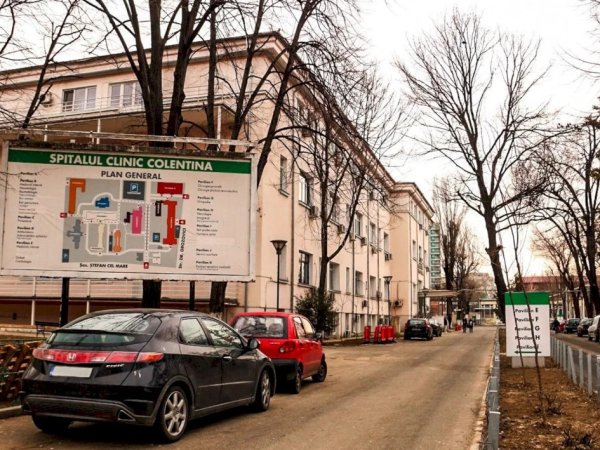
The most important part of Calistrat Grozovici’s career is connected to Spitalul Colentina, where he led the contagious diseases ward between 1900 and 1919.
During that period, the Colentina contagious diseases ward had become one of the main medical centers dedicated to treating infectious diseases in the Capital. The activity carried out here contributed decisively to the development of a true Romanian school of infectious diseases.
Under the leadership of Grozovici, the ward began to function according to modern principles inspired by the great European hospitals. The emphasis was placed on rapid diagnosis, isolation, careful monitoring of patients and prevention of the spread of infections.
In a period in which epidemics frequently affected Bucharest and other cities of the country, the physicians at Colentina had an extremely difficult and important role. They were confronting daily serious, often deadly diseases, in a context in which modern treatments and antibiotics did not yet exist.
The activity of Calistrat Grozovici was essential for the professionalization of the treatment of contagious diseases and for the training of a new generation of physicians specialized in this field.
The discovery of Pastia’s sign
One of the most important scientific contributions associated with the name of Calistrat Grozovici is the description of a clinical manifestation specific to scarlet fever, made together with his intern, doctor Pastia.
During the studies and clinical observations carried out on patients suffering from scarlet fever, the two physicians identified the appearance of reddish lines in the area of the elbow folds, a characteristic sign of the disease.
This manifestation remained known in international medical literature as “Pastia’s sign” and is mentioned both in French and English specialized medical treatises.
The importance of the discovery was major for the medicine of the time because it helped the faster and more accurate diagnosis of scarlet fever, an extremely dangerous disease in that era, especially for children.
Although the internationally associated name is that of doctor Pastia, the contribution of Calistrat Grozovici to this clinical observation was fundamental. The discovery demonstrates the high level of medical research carried out in Bucharest during that period.
Pioneer of infectious medicine in Romania
The activity of Calistrat Grozovici transformed him into a true pioneer of infectious diseases in Romania. Before the appearance of modern specialized institutions, he contributed to the organization and development of a coherent system for treating epidemics.
During the period in which he led the contagious diseases ward at Colentina, Romanian medicine was making important steps toward professionalization and modernization. Grozovici’s role was to bring Western experience and to adapt modern methods to the healthcare realities of Romania.
Through his clinical activity and through the training of other physicians, he laid the foundations of a medical tradition that was going to be continued by the following generations.
Also, Grozovici contributed to consolidating the idea that infectious diseases must be treated in specialized centers, with trained personnel and with strict rules of hygiene and isolation.
In that era, such measures represented a true medical revolution and had an important role in reducing the spread of epidemics.
The connection with the “Matei Balș” Institute
The professional legacy left by Calistrat Grozovici is closely connected to the later development of Romanian infectious medicine and to the appearance of the current Institutul Național de Boli Infecțioase „Prof. Dr. Matei Balș”.
The activity carried out at the Colentina contagious diseases ward represented one of the foundations upon which the medical tradition of the institute specialized in infectious diseases was later built.
Throughout the decades, this medical school continued to train specialists and to play an essential role in combating epidemics and in the development of Romanian medical research.
The name of Calistrat Grozovici thus remains connected to one of the most important healthcare institutions in Romania and to the evolution of modern epidemiological medicine.
His professional legacy became even more evident during periods of healthcare crisis, when the role of physicians specialized in infectious diseases proved essential for protecting the population.
The street bearing his name in Bucharest
As a tribute to his medical contribution, Bucharest preserved the memory of doctor Calistrat Grozovici through the naming of a street in Sector 2 of the Capital.
Strada Doctor Calistrat Grozovici is located near Șoseaua Ștefan cel Mare and the Colentina medical area, a place with profound significance for his professional activity.
For many residents of the Capital, the name of the street may seem only a simple urban designation. In reality, however, it hides the story of a physician who dedicated his life to the fight against contagious diseases during an extremely difficult period for Romanian medicine.
Such streets represent true forms of collective memory and keep alive the remembrance of personalities who contributed to the development of Romanian society.
An important name in the history of Romanian medicine
Although he is not as well known to the general public as other medical personalities, Calistrat Grozovici occupies an essential place in the history of Romanian medicine.
Through his activity at Colentina, through the research carried out and through the contribution to the development of the infectious diseases school, he helped modernize the Romanian healthcare system during a crucial period.
His legacy continues today through the medical institutions that evolved from the tradition created by him and through the generations of physicians trained in the spirit of professionalism and scientific research.
The street bearing his name in Bucharest represents not only a symbolic tribute, but also a reminder of the fundamental role that pioneer physicians had in the development of modern medicine in Romania.
We also recommend: The history of Colentina Hospital: “New Pantelimon,” inaugurated by Alexandru Ioan Cuza