Bucharest vs. Belgrade vs. Sofia: Three Balkan Capitals Competing for the Same European Tourist – Who Wins, and Why?
By Eddie Țone
- Articles
- 21 OCT 26
Western Europeans have become increasingly interested in the Balkans. The typical traveller is between 30 and 50 years old, frequently flies with low-cost airlines, heads off on Thursday and returns on Sunday, appreciates good restaurants, and stoically puts up with the occasional unpredictable pavement as long as the city offers a good story in return. They've already seen Paris, which has become rather unsafe and rebellious anyway. They've probably been to Rome twice. And Barcelona has taken enough of their money to make them start studying the map of Europe again.
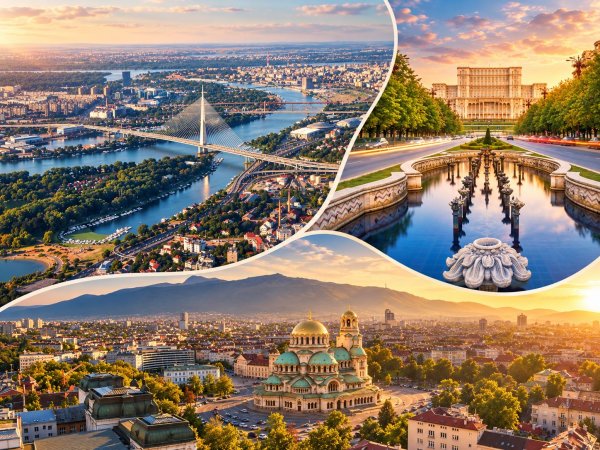
This is where Bucharest, Belgrade and Sofia enter the picture.
The three capitals are geographically close enough, and sufficiently similar in price, to compete for the same European city-break market. All three offer complicated histories, architecture with sudden mood swings, good food and nights that stretch well beyond the hour when a Scandinavian tourist would have sensibly retired to their hotel.
But beyond these similarities lies a more interesting question from a tourism strategy perspective: which of these cities does the best job of turning itself into a product that foreign visitors can understand, buy and, ideally, recommend?
The figures from two years ago provide an excellent starting point. Why 2024? Because complete data for 2025 is not yet available for Belgrade and, to some extent, Sofia.
First, Let's Look at the Scoreboard
The official statistics for 2024 paint the following picture:
Indicator | Bucharest | Belgrade | Sofia |
Tourist arrivals | Approx. 2.0 million | 1.536 million | Approx. 1.27 million |
Overnight stays | 3.955 million | 3.712 million | Approx. 2.9 million* |
Average length of stay | Approx. 2.0 nights | 2.42 nights | 2.3 nights |
Airport passenger traffic, 2024 | 16.05 million, both airports combined | 8.4 million | 7.9 million |
For Sofia, the figure is an estimate based on approximately 1.27 million tourists and an average stay of 2.3 nights, as reported by Visit Sofia.
According to Romania's National Institute of Statistics (INS), Bucharest recorded approximately 1.999 million tourist arrivals and 3.955 million overnight stays in registered accommodation establishments in 2024. Belgrade welcomed 1,536,132 tourists, who generated 3,712,038 overnight stays, according to statistics published by the city administration. Sofia received nearly 1.27 million tourists, a 10% increase compared with 2023, while Visit Sofia reports an average stay of 2.3 nights.
These figures come from national statistical systems with their own methodologies, so a little caution is advisable when comparing them down to the last decimal point. The overall picture, however, is quite clear.
At first glance, Bucharest walks into the room carrying the biggest stack of numbers under its arm.
Bucharest Wins the Battle of Volume
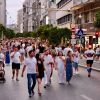
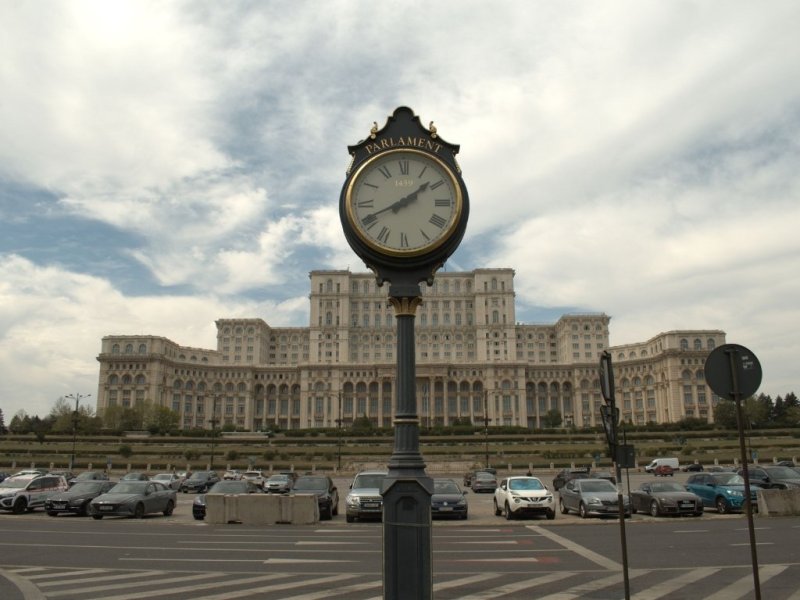 Bucharest - Photo: Jack Paschalidis / Pexels.com
Almost two million tourist arrivals in a single year make a fairly convincing argument. Romania's capital exceeds Belgrade by roughly 30% in tourist arrivals and Sofia by more than 50%. The airport figures reinforce the city's position.
Henri Coandă Airport handled 15,946,791 passengers in 2024. Together with Băneasa Airport, Bucharest's airport system reached 16,053,878 passengers, an increase of 9.22% over 2023. Sofia recorded approximately 7.9 million passengers during the same year, while Belgrade handled around 8.4 million.
The difference is enormous.
Bucharest benefits from the size of Romania's domestic market, its diaspora, business travel and an extensive network of low-cost airlines. Henri Coandă currently offers scheduled flights to dozens of countries, while Băneasa has once again become a relevant component of the capital's airport system.
For European tourists, connectivity acts as a destination's first advertisement. A city that regularly appears in a flight-search app with a €39.99 fare starts with an advantage that no marketing campaign featuring poetic slogans and sunset photographs can easily overcome.
And here, Bucharest has the biggest engine of the three.
Belgrade Is More Effective at Turning Foreign Visitors into Tourists
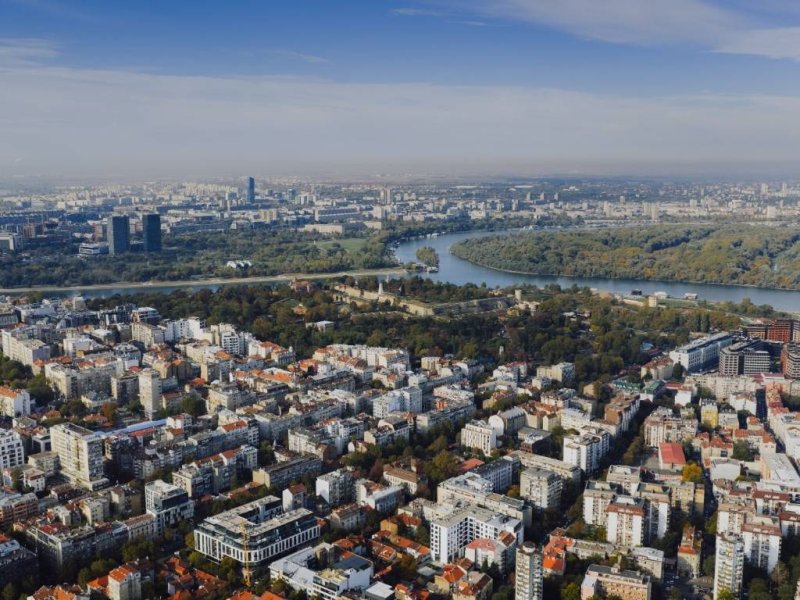 Belgrade - Photo: K / Pexels.com
Then comes the detail that changes the conversation.
Of the 1,536,132 tourists registered in Belgrade in 2024, approximately 1.34 million were international visitors, according to Serbian statistics. Foreign tourists accounted for 3,193,823 of the city's total 3,712,038 overnight stays.
This means that Belgrade operates to an impressive extent as an international tourist destination.
Turkey is a huge source market for the Serbian capital: nearly 200,000 Turkish tourists visited the city in 2024, generating approximately 436,000 overnight stays. Other important markets include Russia, China and Germany.
According to compilations based on INS data, Bucharest received approximately 1.03 million foreign tourists in 2024. The Bucharest–Ilfov region accounted for almost half of all foreign tourist arrivals recorded in Romania, highlighting the capital's enormous role as a gateway to the country.
The strategic difference lies in the proportions. For Belgrade, the foreign visitor is at the very heart of its tourism product. The city appears to be developed and promoted with this idea constantly in mind.
Belgrade Knows Exactly What Story It's Selling
There is an old problem in tourism marketing: a city can have a thousand interesting things to see and still leave visitors with just one question in their heads: "Right, so what exactly was the point of this place?"
Belgrade answers that question rather quickly.
Kalemegdan Fortress dominates the confluence of the Sava and Danube rivers. Skadarlija provides the bohemian setting. The city vigorously promotes its gastronomy and nightlife. Ada Ciganlija expands the tourism offering during the warmer months. The local administration explicitly promotes heritage, events and city breaks, while the city's event-tourism portfolio includes more than 700 events presented in its promotional materials.
The message is easy to grasp.
Air Serbia also functions as an indirect tourism marketing tool. Belgrade Nikola Tesla Airport handled 8.4 million passengers in 2024, rising to 8.91 million in 2025. During the summer 2025 season, direct flights connected the city to 116 destinations in 40 countries, including intercontinental routes.
For a city with a smaller population and domestic market than Bucharest, that performance deserves a closer look.
Bucharest Probably Has the Greatest Untapped Tourism Potential
Bucharest has the Palace of Parliament, the Old Town and a spectacular collection of interwar architecture. It also has historic neighbourhoods, industrial heritage and a food scene mature enough to justify an entire weekend devoted exclusively to eating. On top of all that comes the story of communism, a particularly compelling subject for Western visitors.
From a tourism perspective, the city resembles an enormous department store filled with excellent merchandise, except that the signs directing customers between departments are still being negotiated.
The Palace of Parliament provides an instantly recognisable landmark, but Bucharest needs clearer narratives connecting the monument with the city around it. In this respect, Belgrade currently seems more disciplined in the way it presents its tourism product.
Bucharest's paradox lies in the figures themselves. The city attracts more tourists than either of its rivals, yet its average length of stay, calculated from the ratio between arrivals and overnight stays, remains around two nights. Belgrade manages approximately 2.42.
An extra half-night, multiplied by hundreds of thousands of tourists, starts to look considerably less romantic and considerably more economic.
Sofia Plays a Different Game: City in the Morning, Mountains in the Afternoon
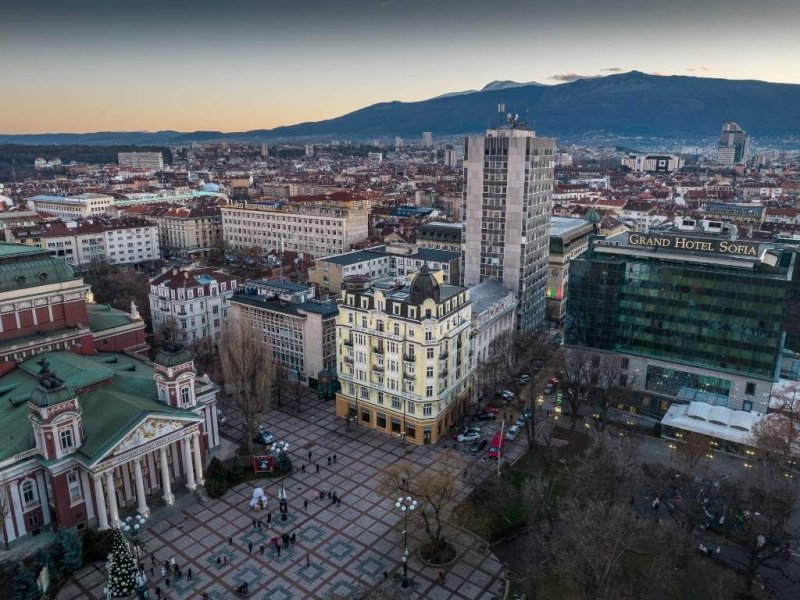 Sofia - Photo: Orlin Ratchev / Pexels.com
Sofia records the lowest tourism volume of the three capitals, but it possesses the most easily photographed geographical advantage: Vitosha Mountain rises directly above the city.
The mountain reaches 2,290 metres at Cherni Vrah Peak, and hiking trails begin in areas on the outskirts of the capital that can also be reached by public transport. Visit Sofia promotes this proximity as one of the destination's defining features.
For the modern European city break, the combination makes perfect sense. You can start your morning near Alexander Nevsky Cathedral and find yourself on a mountain trail later the same day. Few European capitals can offer such a natural change of scenery.
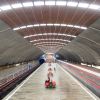
Sofia also has an important logistical advantage. The metro runs directly to Terminal 2 of the airport (Bucharest, although working on it, still has some waiting to do), and Line M4 connects the airport with the central part of the city.
Bucharest has a direct train service to Gara de Nord, its main railway station, with a journey time of approximately 20 minutes and departures every 40 minutes, around the clock. Belgrade relies mainly on road-based public transport connections between the airport and the city.
Sofia earns a small bonus for urban elegance here. You step off the plane, enter the metro and quickly escape the universal ritual of arriving at a foreign airport and staring at a ticket machine as though it were the final round of a competitive logic examination.
Prices Are No Longer the Balkans' Secret Weapon
For a long time, the three cities could be marketed in Western Europe with an almost brutally simple argument: cheap. Everything was cheap!
By 2026 (in fact, ever since the pandemic), the situation had become considerably more nuanced.
Figures from Numbeo, which are based on user contributions and are best treated as indicative benchmarks, suggest that a meal at an inexpensive restaurant in Sofia costs around €13.90, while dinner for two at a mid-range restaurant costs approximately €50.
In Belgrade, the corresponding figures are around €10 and almost €50. In Bucharest, the same database places an inexpensive meal at roughly €12 and a mid-range dinner for two at around €57.
But prices are rising rapidly.
In other words, the absolute price advantage has narrowed. Western visitors can still save money compared with major Western European capitals, but the Balkans have entered a phase in which the value of the experience matters increasingly more.
This shifts the competition precisely where things become interesting: which city does the best job of explaining why it's worth visiting?
EXPO 2027 Could Seriously Change the Game for Belgrade
Belgrade is preparing for a rare tourism accelerator in the region: Expo 2027.
The city and the Serbian government are linking the event to infrastructure development, expanded hotel capacity and improved transport connections. Authorities have spoken about a new urban development covering approximately 167 hectares in the Surčin area, as well as investments in airport connectivity.
The most significant impact may come after the exhibition closes.
A major international event places a city in search engines, tour operators' programmes and the professional consciousness of the MICE industry (Meetings, Incentives, Conferences and Exhibitions).
Sava Centar, renovated and heavily promoted as a congress venue, reinforces this direction. At IMEX Frankfurt in 2026, Belgrade positioned itself through precisely this combination of connectivity, hotel capacity and event infrastructure.
So, Who Wins?
It depends on what we're measuring.
Bucharest wins on volume and air connectivity. Two million tourist arrivals, almost four million overnight stays and more than 16 million passengers passing through the capital's airports create the largest platform of the three cities. From an economic potential perspective, Bucharest has the most powerful engine.
Sofia wins on efficiency and its city-meets-nature combination. Vitosha is an advantage that tourism marketing can communicate in a single second, while the direct airport metro connection makes arriving in the city particularly convenient. The 10% increase in tourist numbers in 2024 suggests that the formula is delivering results.
Belgrade currently wins on the coherence of its international tourism product. Its exceptionally high proportion of foreign tourists, longer average stays and clearly defined tourism identity give it a strategic advantage. Add to that the global exposure expected from Expo 2027.
If the question is "which of these three capitals currently knows best how to turn a Balkan weekend into a European tourism product?", Belgrade starts slightly ahead.
But if the question becomes "which city has the potential to go furthest?", the answer shifts towards Bucharest. It already has the air traffic, the critical mass of tourists and the wealth of heritage required.
The challenge for the coming years is to package the city into a simple, recognisable tourism narrative, one capable of extending the average stay from two nights towards three.
Unfortunately, with the city suddenly undergoing extensive repair works and lacking any form of international tourism promotion, Bucharest has little reason to feel particularly optimistic about the next two or three years.
Meanwhile, Sofia sits quietly beside Vitosha, watching the contest unfold. Occasionally, one suspects, with the satisfaction of a city that knows a 2,290-metre mountain is a rather difficult marketing advantage for its competitors to relocate elsewhere.
You may also like: Tourist visa for Bucharest: how to avoid the most common mistakes