Bucharest Ranked 4th Worst City in the World. What Happy City Index 2026 Says About Romania's Capital
- Articles
- 09 JUN 26
Bucharest, June 9, 2026 — Romania's capital ranks 248th out of 251 cities analyzed in the Happy City Index 2026, one of the most comprehensive international studies on urban quality of life. The result places Bucharest among the lowest-scoring cities in the world, just above the bottom three positions held by Guadalajara (Mexico), Nashville, and Dallas (USA).
What Is the Happy City Index
The Happy City Index is an annual international ranking that evaluates quality of life across hundreds of cities worldwide. Unlike other similar studies, it does not measure happiness in a subjective sense — instead, it analyzes the objective conditions that allow residents to live better, more balanced lives.
The index draws on dozens of indicators grouped into key domains:
- public administration and local governance
- economy and labor market
- urban mobility and transportation
- public health
- environment and green spaces
- civic participation and social cohesion
The 2026 edition covers 251 cities across all continents, providing a detailed comparative picture of how cities around the world succeed — or fail — in ensuring decent living conditions for their residents.
Where Bucharest Stands
With a score of 4.994 points, Bucharest sits in 248th place, making it the fourth lowest-ranked city in the entire study. The only cities below it are Guadalajara (251st), Nashville (250th), and Dallas (249th).
The other cities rounding out the bottom of the ranking are Indianapolis, Tucson, Aguascalientes (Mexico), Chicago, Kuching (Malaysia), and Rabat (Morocco).
One detail stands out: Bucharest is the only capital city in the European Union found in this zone of the ranking, and one of the very few European capitals ranked this low in the global urban quality of life hierarchy.
What Lies Behind This Result
Bucharest's positioning comes as little surprise to those familiar with the city's everyday realities. Romania's capital has long struggled with a series of structural problems that directly affect the quality of life of its residents.
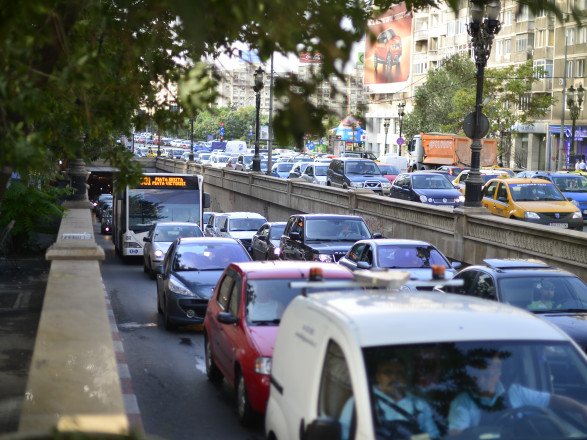
Traffic and mobility remain among the most visible and widely discussed issues. The road infrastructure is chronically overburdened, and the public transport network, while extensive in coverage, has not managed to offer a sufficiently attractive alternative to private cars. High commute times and persistent congestion affect millions of people every day.
Air pollution is another major vulnerability. Bucharest regularly features among European capitals with the highest levels of fine particulate matter in the atmosphere — a problem with direct consequences for public health.
Green spaces are unevenly distributed across the city, and many neighborhoods, particularly those built during the communist era, suffer from a severe lack of recreational areas and urban greenery.
Utility infrastructure — from water and sewage networks to the condition of buildings and roads — is worn down in many parts of the city, and the pace of rehabilitation work remains slow relative to the scale of need.
On top of all this comes the demographic pressure of a city with over two million registered residents, plus a significant number of daily commuters and unregistered inhabitants.
The Top Cities: What Makes the Difference
At the opposite end of the ranking are cities that have consistently and strategically invested in urban quality of life. The top ten positions are held by Copenhagen (Denmark), Helsinki (Finland), Geneva (Switzerland), Uppsala (Sweden), Tokyo (Japan), Trondheim (Norway), Bern (Switzerland), Malmö (Sweden), Munich (Germany), and Aarhus (Denmark).
Nine of the top ten cities are European, and six come from the northern part of the continent — a region that has become synonymous with sustainable urban planning, efficient public transport, transparent governance, and high-quality public services.
What sets these cities apart is not just economic prosperity, but a coherent long-term vision for urban development: investment in green infrastructure, active mobility (walking and cycling), digitalization of public services, and genuine citizen involvement in administrative decisions.
What Bucharest Could Do
Urban planning and public administration experts point out that meaningful improvements in urban quality of life do not happen overnight — but there are clear directions where focused efforts could yield visible results in the medium term.
Public transport and mobility is arguably the domain with the greatest potential impact. Expanding and modernizing the metro network, creating dedicated corridors for buses and trams, and developing cycling infrastructure are measures that have transformed comparable cities in Central and Eastern Europe.
Green spaces and air quality can be improved through urban planting programs, traffic restrictions in certain areas, and accelerating the transition to low-emission vehicles in public transport.
Digitalization of services provided by the City Hall and its subordinate institutions would reduce bureaucracy and increase administrative efficiency, contributing to a better score in the governance category.
Infrastructure rehabilitation — residential buildings, utility networks, roads — requires multi-year programs and diversified funding sources, including EU funds available in the current programming period.
Conclusion
Bucharest's 248th place in the Happy City Index 2026 is, above all, an objective indicator of the gap separating Romania's capital from the urban standards of Western and Northern Europe. It is not a final verdict, but a reference point that can and should guide local administration priorities and the public debate about the city's future.
The cities that today occupy the top spots in rankings like this did not transform overnight — they chose, over decades, to invest consistently in people, infrastructure, and the environment. Bucharest has the human resources and the potential to do the same. Whether it will also find the political and administrative will to turn a warning signal into a starting point remains to be seen.