Bucharest, a bike friendly city? 56 kilometers of lanes, half of them blocked by cars
- Articles
- 20 JUL 26
The city's own planning document, the Velo Masterplan, gives an exact figure: 25.38 kilometers of functional bike lanes across the entire city. Another 30.92 kilometers exist on paper and on asphalt, but fail to meet minimum standards and need work before anyone can safely ride on them. The gap between those two numbers is really the gap between the map City Hall promotes and the route someone actually rides to get to work.
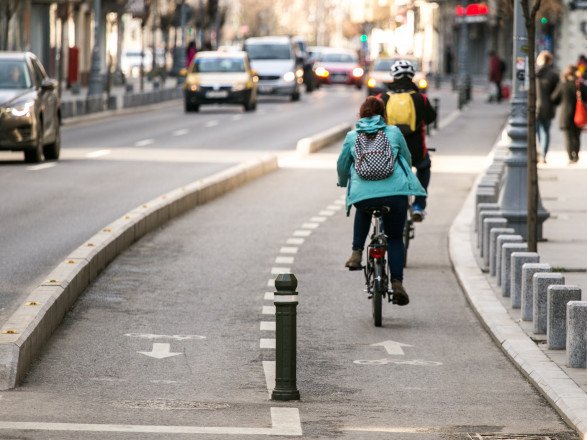
The most-cited case is Splaiul Independenței. The lane runs along the first traffic lane on both directions, between Piața Națiunile Unite and Podul Grozăvești. On the ground, illegally parked cars occupy long stretches of it. In other sections, STB buses and trolleybuses simply use it as a regular traffic lane when things get congested. Someone riding from Cotroceni toward Piața Unirii on this route ends up merging back into car traffic several times, right where the risk is highest.
The situation isn't even across the city. Sector 1 holds close to a quarter of the existing network and remains the most coherent stretch, especially around Piața Victoriei and along Calea Victoriei. Further south and west, lanes turn into isolated fragments — a stretch here, another one there, with no real connection between them.
What actually changed in 2026
This year brought more movement on bike-sharing than on physical infrastructure. On March 30, the i'velo system relaunched with over 450 bikes, both classic and electric, and a network of 26 physical stations plus more than 60 virtual ones based on app geofencing. The physical stations cover spots like Piața Victoriei, Piața Universității, Piața Romană, Unirii, Operei, Arcul de Triumf, Herăstrău, and Politehnica — areas with heavy pedestrian and office traffic, not necessarily areas with dedicated lanes. Pricing starts with a 5 lei unlock fee, with the first 15 minutes free on classic bikes and 5 minutes free on electric ones.
On June 8, a second system, CICLO, launched for free, running daily from 6 AM to midnight through its own separate app. The two systems operate in parallel, which means, for now, riders need two different apps installed to access both networks.
On the lane-building side, progress is happening in pieces. Sector 6 is preparing a lane on Strada Preciziei rather than on Iuliu Maniu, because district mayor Paul Moldovan explained that on Iuliu Maniu, between Valea Cascadelor and the A1 highway, there's simply no physical room left for a lane built to proper standards — two lanes per direction, a row of trees, and sidewalks already take up all the available space. Preciziei runs parallel to Iuliu Maniu and offers the room that's missing. Sector 1, meanwhile, approved EU-funded financing in May for lanes along Bulevardul Ion Mihalache and Calea Griviței.
Herăstrău and Tineretului
Herăstrău is the one place where the lane doesn't collide with the rest of traffic. The link toward Aviatorilor and the stretch through Parcul Tineretului are also part of the i'velo station network, so you can pick up a bike right at the entrance and drop it off there too, without parked cars in the lane and without a driver cutting across the markings.
Everything else is a plan, not a route yet. The Velo Masterplan, adopted in 2025, sets a target of over 560 kilometers by 2035, with about 150 of those meant to be finished by 2030. Mayor Ciprian Ciucu announced, on World Bicycle Day, June 3, that 12.8 kilometers are budgeted for next year, on streets that are already scheduled for other repairs. Anyone crossing the city by bike today still sticks to the parks and to the isolated stretches in Sector 1.
Also recommended Bucharest by bicycle in 2026: routes, dangers and useful tips
Photo: Adel Al-Haddad/ Inquam Photos