Bucharest 2026: Where Teenagers Go When They Say "I'm Going Out With Friends"
- Articles
- 12 MAR 26
If you have a teenager at home and you've ever asked "where are you going?", you've probably gotten something vague back — "out", "with friends", "around". It's because his world and yours occupy different geographies, even in the same city.
Bucharest in 2026 is a city in rapid transformation — new neighborhoods, cultural spaces emerging in renovated buildings, an urban scene constantly reinventing itself. And its teenagers have adapted faster than anyone. Here's where you'll actually find them.
1. The Mall — But Not the Way You Know It
The mall is no longer just a place to go shopping. For a Bucharest teenager, AFI Cotroceni, ParkLake or Sun Plaza are more like social infrastructure — the place where you meet up, hang out, grab something cheap to eat and kill a few hours without needing a reason.
What do they actually do there? The cinema remains the anchor — going to a movie is still one of the most socially acceptable outings at any age between 13 and 18. But around it have gathered food courts with new options, gaming zones, and more recently, aesthetically curated cafés where photos are taken for Instagram or TikTok.
ParkLake has the unique advantage of being built directly inside Titan Park — you can step out of the mall into the park within seconds, making it the go-to destination for teenagers from the eastern side of the city.
2. The Old Town — Still, Inevitably
Lipscani has been through every phase: it was too cool, then too crowded, then too touristy. Bucharest teenagers know it by heart and keep coming back, because nowhere else in the city offers the same density of street life.
Cărturești Carusel remains a genuine draw — not just for readers, but for anyone looking for a memorable space to spend an hour without being rushed. Cafés and gelaterias like Saint Gelato near Universitate are woven into the classic walking route along Calea Victoriei.
The umbrella street on Calea Victoriei — a colorful alley a few minutes from the Military Circle — is one of those instagrammable spots that stands the test of time, visited and revisited whenever there's someone new in the group who hasn't seen it yet.
3. Skateparks — The Community That Doesn't Show Up on Google Maps
For a segment of Bucharest's teenagers, a different map overlays the city — the map of skate spots. The skatepark in Herăstrău, the one in Tineretului Park and the one in IOR are the fixed points of this community, most active on weekends.
What connects these places is something hard to find elsewhere: a sense of community built on skill and mutual respect, not money or social status.
4. Climbing and Indoor Sports — The Trend That Exploded
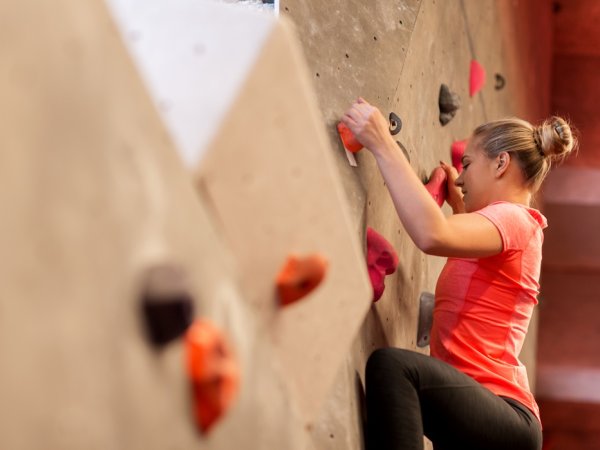
If ten years ago gyms were for adults, in 2026 teenagers have found their sport: climbing. Blokx and Climb Again are two of the most popular centers, with routes that change regularly and an atmosphere closer to a social club than a sports facility.
The accessible price — around 50 lei per entry — and the fact that you don't need your own equipment have secured their popularity. But the real reason teenagers keep coming back is that climbing is done in groups, filmed easily and looks great on social media.
Also in the active sports category: Cyberjump in ParkLake — a 2,500 square meter trampoline park — and Hype Arena, with diverse themed zones ranging from Ninja Warrior to ski simulators.
5. Parks — The Unexpected Comeback
The park has made a powerful comeback as a social space for young people, and this isn't nostalgia — it's a real shift in behavior. Herăstrău, Cișmigiu, Tineretului and IOR are frequented by groups of teenagers who come simply to be there — on the grass, with headphones in, with food picked up nearby.
Parcul Liniei, lesser known to the general public, has become a favorite among teenagers from the Lujerului area — modern, well-designed, with cycling and scooter paths and a sense of open space that the big, crowded parks don't always offer anymore.
This return to the park is a reaction to urban noise and the cost of traditional outings. The park is free, it belongs to everyone and asks nothing of you.
6. Neighborhood Terraces and Gelaterias
Teenagers in 2026 have clear tastes and gravitate toward smaller, more authentic or more "instagrammable" spots over big chains. The gelateria has become, paradoxically, one of the most social formats around. A "gelato walk" — strolling between several gelaterias along a route — has established itself as a go-to group outing, with Friddi at Piața Victoriei and Velocita on Calea Victoriei among current favorites.
7. Unconventional Cultural Spaces
A smaller but vocal segment of Bucharest's teenagers has discovered the independent theatre scene, small-venue concerts and cultural events in unexpected locations.
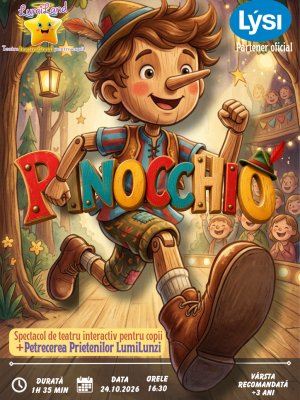
Teatrul Replika, Unteatru and Excelsior draw young audiences who wouldn't have pictured themselves at the theatre a few years ago. Opera Comică pentru Copii has achieved something rare — bringing teenagers to musicals without it feeling like something their parents dragged them to. Hip-hop dance concerts and festivals — including Freedom Dance Festival and Hip Hop International România — draw massive young crowds.
What All of This Says About Them
The Bucharest teenager in 2026 is selective, curious and more present in the city than they appear. They want experiences worth telling or filming, communities where they feel accepted for who they are, and the freedom to build their own geography of the city.
Their map is different from yours — and that's precisely what makes it fascinating.